



Why Cybersecurity Protection Services Matter More Than Ever
Cybersecurity protection services are professional solutions that defend your organization against cyber threats through continuous monitoring, threat detection, incident response, and security management. These services range from Managed Security Service Providers (MSSPs) and Managed Detection and Response (MDR) to specialized offerings like endpoint protection, compliance management, and security awareness training.
Quick Overview: What You Need to Know
- What they are: Professional services that monitor, detect, and respond to cyber threats 24/7
- Why you need them: 73% of small and mid-sized businesses experienced a data breach or cyberattack in 2023
- Common types: MDR, Endpoint Protection, Incident Response, Compliance (GRC), Security Awareness Training
- Key benefit: Expert protection without building an in-house security team
- Critical feature: 24/7/365 monitoring (76% of attacks happen after hours or during weekends)
The threat landscape has never been more dangerous for growing businesses. With 63% of small businesses facing ransomware and advanced threats, and attacks becoming more sophisticated every day, the question isn’t whether you need professional cybersecurity protection—it’s which services will best protect your specific organization.
Many business leaders feel overwhelmed by the complexity of modern cybersecurity. You’re juggling antivirus software, firewall management, employee training, compliance requirements, and the constant fear of what might slip through the cracks. Meanwhile, cybercriminals are working around the clock, targeting businesses just like yours with phishing campaigns, ransomware attacks, and business email compromise schemes.
The good news? You don’t have to steer this alone.
Professional cybersecurity protection services bring expert threat hunters, advanced AI-powered detection tools, and rapid incident response capabilities to your organization—without the overhead of building an internal Security Operations Center (SOC). Whether you’re a 20-person company or a 200-person enterprise, the right services can transform your security posture from reactive and vulnerable to proactive and resilient.
This guide breaks down the landscape of cybersecurity protection services, helping you understand what’s available, how these services actually protect your business, and most importantly, how to choose the right partner for your unique needs.
I’m Reade Taylor, founder and CEO of Cyber Command, and I’ve spent my career helping businesses transform their approach to cybersecurity protection services—from my engineering days at IBM Internet Security Systems to building security-first technology ecosystems for organizations today. My goal is to help you cut through the complexity and make informed decisions about protecting your business.
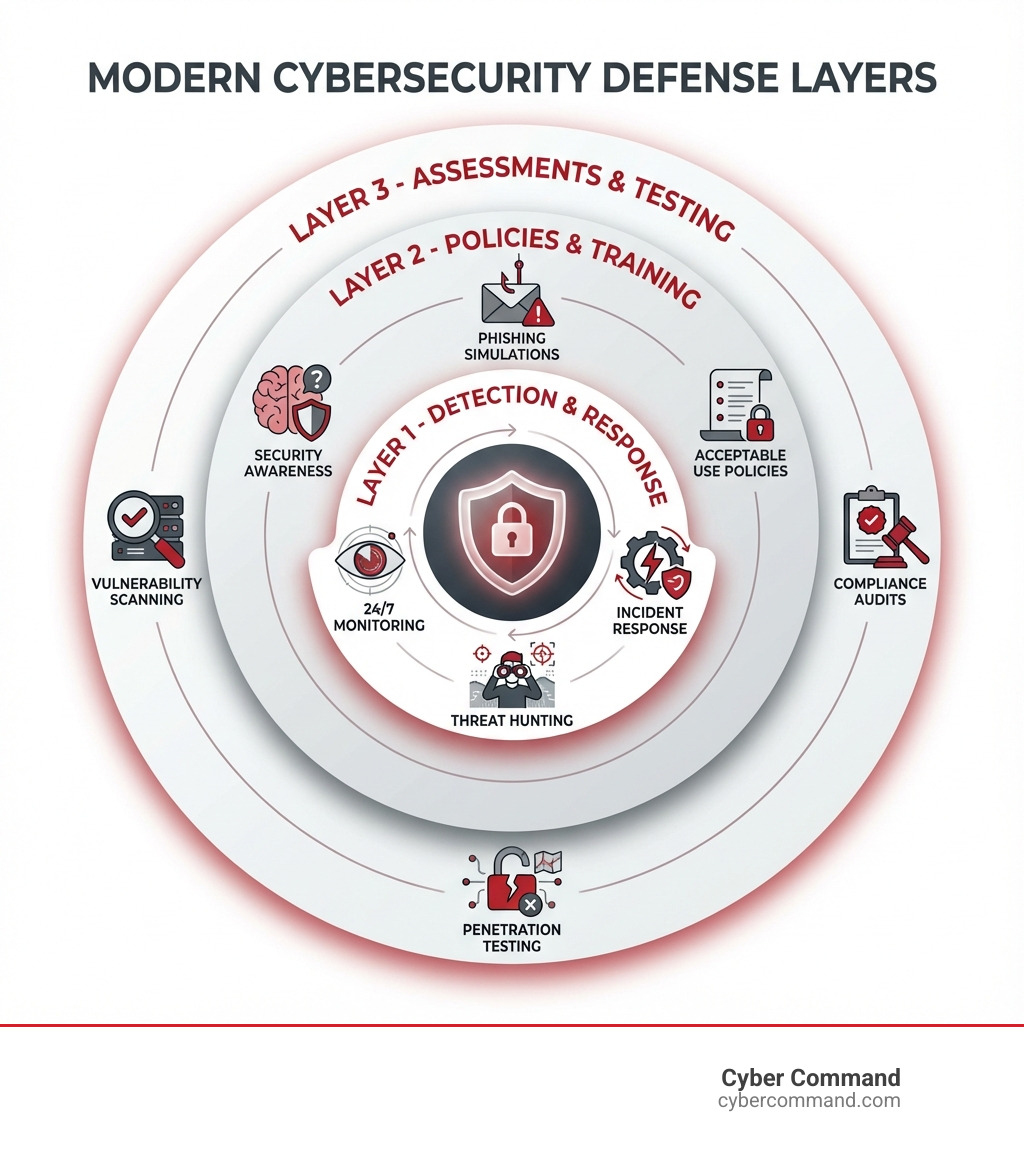

The Spectrum of Modern Cybersecurity Defenses
The world of cybersecurity protection services is vast, encompassing a range of specialized offerings designed to tackle different facets of the digital threat landscape. Think of it like building a fortress: you need strong walls, vigilant guards, quick-response teams, and clear rules for everyone inside. Our goal is to help you understand these components so you can build your own digital fortress.
Here are some of the key types of cybersecurity protection services we encounter:
- Managed Security Services (MSSP): This is often the umbrella term for outsourcing your organization’s security needs to a third-party provider. An MSSP can manage everything from firewalls and intrusion detection systems to vulnerability management and security monitoring. It’s like having an entire security department without the overhead.
- Managed Detection and Response (MDR): A more advanced and proactive service than traditional MSSPs, MDR focuses on rapid threat detection, investigation, and response. It combines technology (like Endpoint Detection and Response – EDR) with human expertise to hunt for threats that automated tools might miss. We’ll dive deeper into this crucial service shortly.
- Endpoint Protection (EPP): This refers to securing individual devices like laptops, desktops, and mobile phones from malware and other threats. Modern EPP goes beyond traditional antivirus, using machine learning and behavioral analysis to detect and prevent sophisticated attacks.
- Network Security: Services that protect your network infrastructure from unauthorized access, misuse, malfunction, modification, destruction, or improper disclosure. This includes firewalls, intrusion prevention systems, and secure network configurations.
- Cloud Security: As more businesses move to the cloud, protecting data and applications hosted on platforms like AWS, Azure, or Google Cloud becomes paramount. Cloud security services ensure that your cloud environments are configured securely and continuously monitored for vulnerabilities.
- Data Loss Prevention (DLP): These services focus on preventing sensitive information from leaving your organization’s control. DLP solutions monitor, detect, and block unauthorized transmission of confidential data, whether intentionally or accidentally.
- Incident Response: This is your emergency crew. Incident response services prepare your organization for potential breaches, provide immediate assistance during an attack, and help you recover quickly afterwards.
- Compliance (GRC – Governance, Risk, and Compliance): Many industries have strict regulatory requirements around data security and privacy. GRC services help your organization meet these compliance standards (like HIPAA, CMMC, or GDPR) through assessments, policy development, and continuous monitoring.
- Security Awareness Training: Often overlooked, this service educates employees about cybersecurity best practices, helping them identify phishing attempts, avoid social engineering tactics, and understand their role in protecting the organization. As we often say, your people are your strongest firewall, or your weakest link!
- Vulnerability Management: This involves systematically identifying, evaluating, treating, and reporting on security vulnerabilities in systems and software. Regular vulnerability scanning and penetration testing are key components.
Understanding these different types is the first step in building a comprehensive defense. For a broader perspective on how these types fit into the overall security landscape, you can explore What are the Five Types of Cybersecurity?.
Core Features and How They Protect Your Organization


Now that we’ve covered the spectrum, let’s zoom in on some core features and how these cybersecurity protection services actively shield your business. It’s not just about having tools; it’s about how those tools are wielded by experts.
The Role of Managed Detection and Response (MDR)
Imagine having a team of elite cyber defenders watching over your systems 24 hours a day, 7 days a week, 365 days a year. That’s the power of MDR. It’s the proactive guardian that never sleeps, especially considering that a staggering 76% of attacks happen after hours or during the weekend when your internal teams might be recharging.
MDR services combine:
- 24/7 Threat Hunting: Unlike traditional security tools that only react to known threats, MDR actively hunts for subtle signs of compromise, even those “never-before-seen” attacks. Top providers offer constant monitoring and threat elimination with a “human-led, AI-supported” approach, recognizing that AI improves SOC analysts rather than replacing them. This means eyes are always on your digital assets in places like Orlando, Tampa, or Plano.
- AI-powered Detection: Modern threats are too numerous and complex for humans alone. MDR leverages advanced AI and machine learning to analyze vast amounts of data, identify anomalies, and flag potential threats with incredible speed. Leading services boast planetary-scale data ingestion and analysis, integrating AI capabilities to surface critical context and generate detections.
- Human-led Analysis: This is where the magic happens. AI flags the suspicious, but human experts investigate, confirm, and understand the context of an alert. They distinguish between a false alarm and a genuine threat, ensuring rapid and accurate responses. This blend of AI and human intelligence is crucial for effective cybersecurity protection services.
- Rapid Response: Once a threat is confirmed, MDR services don’t just alert you; they take immediate action to contain and remediate the threat, often before it can cause significant damage. This swift action is vital in minimizing the impact of a cyberattack.
For those looking to understand the strategic advantage of continuous vigilance, dig into The Business Case for Continuous Threat Hunting Explained.
The Critical Importance of Incident Response
Even the best defenses can’t guarantee 100% immunity. When an attack inevitably happens, incident response is your lifeline. Think of it as the fire department for your digital infrastructure.
Effective incident response services provide:
- Breach Containment: The immediate priority is to stop the spread of the attack and isolate affected systems to prevent further damage. This is a race against time, as every minute counts.
- Forensic Investigation: Understanding how the breach occurred, what data was accessed or compromised, and who was responsible is crucial for recovery and preventing future incidents.
- Recovery Planning: Getting your systems back online and operational as quickly and securely as possible. This involves restoring data from backups, patching vulnerabilities, and verifying system integrity.
- Minimizing Downtime: A rapid and efficient incident response minimizes the operational and financial impact of an attack. Quality providers offer 24-hour hotlines to provide immediate assistance, ensuring help is available when you need it most, whether you’re in Jacksonville or Winter Springs.
The pathway to effective recovery from a ransomware attack, a common and devastating cyber event, is detailed in Ransomware Incident Response Paths to Effective Recovery.
Specialized Cybersecurity Protection Services
While many cybersecurity protection services focus on the corporate network, some address unique and often overlooked vulnerabilities.
Digital Executive Protection
In today’s interconnected world, the personal lives of high-profile individuals can become a significant attack vector for the organizations they lead. We’ve seen that 42% of CISOs have reported cyber attacks on their executives’ personal lives. Cybercriminals target executives’ personal devices, home networks, and online presence to gain access to corporate secrets or launch impersonation attacks.
Digital Executive Protection services focus on:
- Protecting Personal Devices: Safeguarding executives’ and their families’ smartphones, tablets, and laptops from malware, phishing, and data leakage. Studies show that a high percentage of executives’ personal devices are often found to be leaking data.
- Securing Home Networks: Home networks often lack enterprise-grade security, making them a soft target. These services extend protection to routers, smart home devices (IoT), and personal Wi-Fi.
- Protecting Personal Identifiable Information (PII): It’s common for executives’ personal information to be exposed on data broker websites. These services work to reduce an executive’s digital footprint and remove exposed PII, minimizing the attack surface.
For a deeper understanding of what constitutes sensitive personal data and why its protection is vital, refer to What is PII in Cybersecurity?. These specialized services recognize that a breach in an executive’s personal life can have devastating corporate consequences.
How to Choose the Right Cybersecurity Protection Services
Selecting the right cybersecurity protection services isn’t a one-size-fits-all decision. It requires careful consideration of your unique needs, risks, and resources. Here’s how we help businesses in Florida and Texas steer this critical choice.
Conducting a Security and Needs Assessment
Before you can protect something, you need to know what you have and what you’re up against. This foundational step involves:
- Defining Security Goals: What are you trying to protect (customer data, intellectual property, operational continuity)? What are your biggest fears?
- Business Size Considerations: Small businesses often have different needs and budgets than larger enterprises. Some solutions are specifically designed for SMBs, recognizing that they need powerful yet easy-to-use protection.
- Budgeting: Cybersecurity is an investment, not an expense. Understanding what you can realistically allocate will guide your choices.
- Industry-Specific Threats: Healthcare organizations face HIPAA, financial services have GLBA, and government contractors must contend with CMMC. Your industry dictates specific threats and compliance mandates.
A thorough How to Conduct a Cyber Security Risk Assessment is the starting point for any robust security strategy.
Evaluating a Cybersecurity Partner
Choosing a cybersecurity provider is like choosing a business partner. You want someone reliable, knowledgeable, and genuinely invested in your success.
When we evaluate partners for our clients, we look for:
- Partnership vs. Vendor: Do they just sell you a product, or do they become an extension of your team, understanding your business and providing ongoing guidance?
- 24/7/365 Support: Cyberattacks don’t adhere to business hours. Our commitment at Cyber Command is to provide 24/7/365 U.S.-based support, ensuring you have expert assistance whenever you need it, day or night.
- Expertise & Certifications: Do they have a proven track record? Are their teams certified and continuously trained on the latest threats and technologies?
- Technology Stack: Do they leverage cutting-edge tools like Next-Gen Antivirus (NGAV), Endpoint Detection and Response (EDR), and Security Information and Event Management (SIEM)? Do they integrate well with your existing infrastructure?
- Transparent Pricing: Surprises are great for birthdays, not for billing. We believe in transparent, all-inclusive pricing, so you know exactly what you’re getting without hidden fees.
The benefits of entrusting your cybersecurity to managed services are extensive. Learn more in Explore Benefits of Cybersecurity in Managed Services.
Achieving and Maintaining Compliance
For many businesses, cybersecurity protection services aren’t just about avoiding breaches; they’re about meeting regulatory obligations. Failure to comply can lead to hefty fines, reputational damage, and loss of trust.
- HIPAA: Critical for healthcare providers in Orlando and across Florida, ensuring patient data privacy.
- CMMC: Essential for defense contractors in Texas and beyond, demonstrating robust cybersecurity practices.
- GDPR: Even if you’re in the U.S., if you handle data from EU citizens, this applies.
- SOX: Important for publicly traded companies, governing financial reporting and data integrity.
Many modern security platforms integrate Governance, Risk, and Compliance (GRC) modules, helping businesses streamline compliance and risk management. This is particularly important for regulations like CMMC, as many businesses are not yet ready to meet the requirements. We understand the complexities of these regulations and help our clients in Texas and Florida steer them effectively.
To truly master these requirements, check out Master Cybersecurity Compliance for IT Managed Services.
Leveraging Free and Government Resources
Sometimes, the best offense is a good, free defense! The U.S. government offers valuable resources that can help businesses, particularly small and medium-sized ones, bolster their defenses.
- CISA’s No-Cost Tools: The Cybersecurity and Infrastructure Security Agency (CISA) provides a curated database of no-cost cybersecurity protection services and tools. These resources are designed to reduce cybersecurity risk across critical infrastructure partners and state, local, tribal, and territorial governments.
- Cybersecurity Performance Goals (CPGs): CISA also offers CPGs, a common set of practices that all organizations should implement to kickstart their cybersecurity efforts. These goals help small and medium-sized organizations prioritize investments in essential actions with high-impact security outcomes.
- Foundational Measures: CISA emphasizes taking foundational measures like connecting with a Regional Cybersecurity Advisor and signing up for Cyber Hygiene Services to secure internet-facing systems from weak configurations and known vulnerabilities.
These resources are an excellent starting point, especially for those with limited budgets. You can explore CISA’s database of no-cost cybersecurity services and tools for more information.
The Future of Cybersecurity: Trends and Innovations


The cyber threat landscape is a constantly evolving beast, and cybersecurity protection services must evolve with it. Sticking with yesterday’s solutions is like bringing a butter knife to a gunfight. Here’s a glimpse into the innovations shaping the future of digital defense.
Key Innovations in Cybersecurity Protection Services
- AI & Machine Learning: AI isn’t just a buzzword; it’s a game-changer in cybersecurity. From detecting subtle anomalies to automating threat response, AI is supercharging our ability to fight cyber threats. Modern security operations now integrate advanced AI for context surfacing, detection generation, and playbook creation. This focus on “human-centric security” improved by AI recognizes that technology can protect both humans and the emerging AI agents in the modern workspace. We are constantly integrating these advancements to provide state-of-the-art protection for our clients in Jacksonville, Tampa, and beyond. Learn more about Understanding the Role of AI and ML in Threat Detection.
- Extended Detection and Response (XDR): XDR takes MDR a step further by integrating security data from a wider range of sources – including endpoints, networks, cloud, and email – to provide a more holistic view of threats. This allows for faster detection and more comprehensive response across your entire digital ecosystem. The industry’s consolidation around XDR highlights the growing importance of this integrated approach.
- Secure Access Service Edge (SASE): This emerging architectural model converges network security functions (like firewalls and secure web gateways) with WAN capabilities into a single, cloud-native service. SASE simplifies security management, improves performance, and provides consistent security for users regardless of their location. Many modern security platforms now integrate SASE to protect users accessing resources from anywhere.
- Human-centric Security: A key principle in modern security is that human actions are often behind security incidents. This approach focuses on protecting the people who are often targeted by attackers. It involves custom training, identity protection, and securing collaboration tools to build a resilient human firewall.
Adopting a Modern Security Framework
Beyond specific technologies, the way we think about security is changing.
- Zero Trust Architecture: The old “trust but verify” model is dead. Zero Trust operates on the principle of “never trust, always verify.” Every user, device, and application must be authenticated and authorized, regardless of whether it’s inside or outside the traditional network perimeter. This drastically reduces the risk of insider threats and lateral movement by attackers. The Importance of Zero Trust Architecture for Modern Security cannot be overstated.
- Proactive Defense: The shift is from reacting to threats to anticipating and preventing them. This involves continuous threat hunting, vulnerability management, and intelligence-driven security operations.
- Cyber Resilience vs. Cybersecurity: While cybersecurity aims to prevent attacks, cyber resilience focuses on an organization’s ability to withstand, recover from, and adapt to cyberattacks. It’s about ensuring business continuity even in the face of adversity.
Adopting structured approaches like the What is the NIST Cybersecurity Framework? can provide a solid foundation for your security strategy.
Frequently Asked Questions about Cybersecurity Protection
We hear a lot of questions from businesses in Florida and Texas about cybersecurity protection services. Here are some of the most common ones, and our straightforward answers.
What is the most common cyber attack on small businesses?
Unfortunately, small businesses are not immune; in fact, they are often prime targets. The 2023 Business Impact Report found that 73% of small and mid-sized businesses experienced a data breach or cyberattack in 2023. Among the most prevalent attacks we see are:
- Phishing: These are deceptive emails or messages designed to trick employees into revealing sensitive information or clicking malicious links. Phishing is incredibly common, with 31% of security incidents involving phishing.
- Ransomware: This malicious software encrypts your data, demanding a ransom for its release. 63% of small businesses face ransomware and advanced threats, and these attacks often strike when you least expect them – 76% happen after hours or during the weekend.
- Business Email Compromise (BEC): Attackers impersonate a CEO, vendor, or trusted contact to trick employees into transferring funds or sensitive data. This can be devastating, with industry reports indicating tens of millions of such attacks per year.
For a deeper dive into these threats, check out What is the most common cyber attack on small businesses?.
Can antivirus alone prevent ransomware?
In short: no. While traditional antivirus (AV) software is a necessary baseline, it’s no longer sufficient on its own. Legacy AV relies on signatures to detect known threats, meaning it can’t protect against new, never-before-seen malware.
- Legacy AV Limitations: Legacy antivirus solutions rely on obsolete signatures that can only stop threats they already know about. This leaves you vulnerable to zero-day attacks.
- Next-Gen Antivirus (NGAV): Modern NGAV goes beyond signatures, using machine learning, behavioral detection, and artificial intelligence to identify and block both known and unknown threats. This is a significant leap forward in cybersecurity protection services.
- Layered Defense: True protection against ransomware requires a multi-layered approach. This includes NGAV, strong firewalls, regular backups, security awareness training, and crucially, Endpoint Detection and Response (EDR) to monitor and respond to suspicious activity on your devices.
- EDR Importance: EDR provides deep visibility into endpoint activity, allowing for proactive threat hunting and rapid response to sophisticated attacks that might bypass traditional AV.
We strongly advocate for a multi-layered defense. You can learn more about this in Can Antivirus Prevent Ransomware?.
What is the first step in building a cybersecurity program?
The very first step, before you even think about tools or vendors, is to understand your current landscape. This means conducting a comprehensive risk assessment.
- Asset Identification: What digital assets do you have? (Servers, workstations, cloud data, customer databases, intellectual property, etc.)
- Vulnerability Assessment: Where are your weaknesses? (Outdated software, weak passwords, unpatched systems, lack of employee training.)
- Threat Landscape Analysis: What threats are most likely to target your business or industry?
- Impact Analysis: What would be the business impact if a specific asset were compromised by a specific threat?
Once you have a clear picture of your risks, you can then define your security goals and begin to implement solutions. Utilizing established frameworks like the NIST Cybersecurity Framework or CISA’s Cybersecurity Performance Goals (CPGs) can provide an excellent roadmap for building a robust program custom to your business, whether you’re in Winter Springs, Plano, or anywhere else.
Conclusion: Building a Resilient Security Posture
Navigating the complex world of cybersecurity protection services can feel like a daunting task, but it doesn’t have to be. As we’ve explored, building a resilient security posture isn’t about finding a single magic bullet; it’s about implementing a layered defense, adopting a proactive mindset, and most importantly, choosing the right partners.
We’ve seen that the threat landscape is more challenging than ever, with small and mid-sized businesses frequently targeted and attacks often occurring outside of typical business hours. From MDR and incident response to specialized executive protection and robust compliance frameworks, the array of cybersecurity protection services available is designed to meet these evolving challenges.
At Cyber Command, we believe that cybersecurity protection services should be an extension of your business, not just another vendor relationship. Our approach is built on providing enterprise-grade IT, cybersecurity, and platform engineering services with proactive, 24/7/365 U.S.-based support and transparent, all-inclusive pricing. We act as your dedicated security team, ensuring your business in Florida or Texas is protected around the clock, allowing you to focus on what you do best.
Don’t let the complexity of cybersecurity deter you. With the right strategy and the right partner, you can transform your security posture from vulnerable to resilient.