



Why Cloud Computing in Insurance Matters Now More Than Ever
Cloud computing in insurance is fundamentally changing how carriers operate, compete, and serve their customers in today’s digital economy. Here’s what you need to know:
Quick Overview:
- What it is: Moving insurance data, applications, and infrastructure from traditional on-premise servers to internet-based cloud platforms
- Why it matters: Enables faster product launches, reduces IT costs by 15-30%, and improves customer experience through real-time access
- Key benefits: Operational agility, cost optimization, improved data analytics, and improved scalability
- Current adoption: Over 90% of insurers now use cloud technology, with plans to move 80% of operations to the cloud within five years
- Business impact: Projected to generate $70-110 billion in value for the insurance sector by 2030
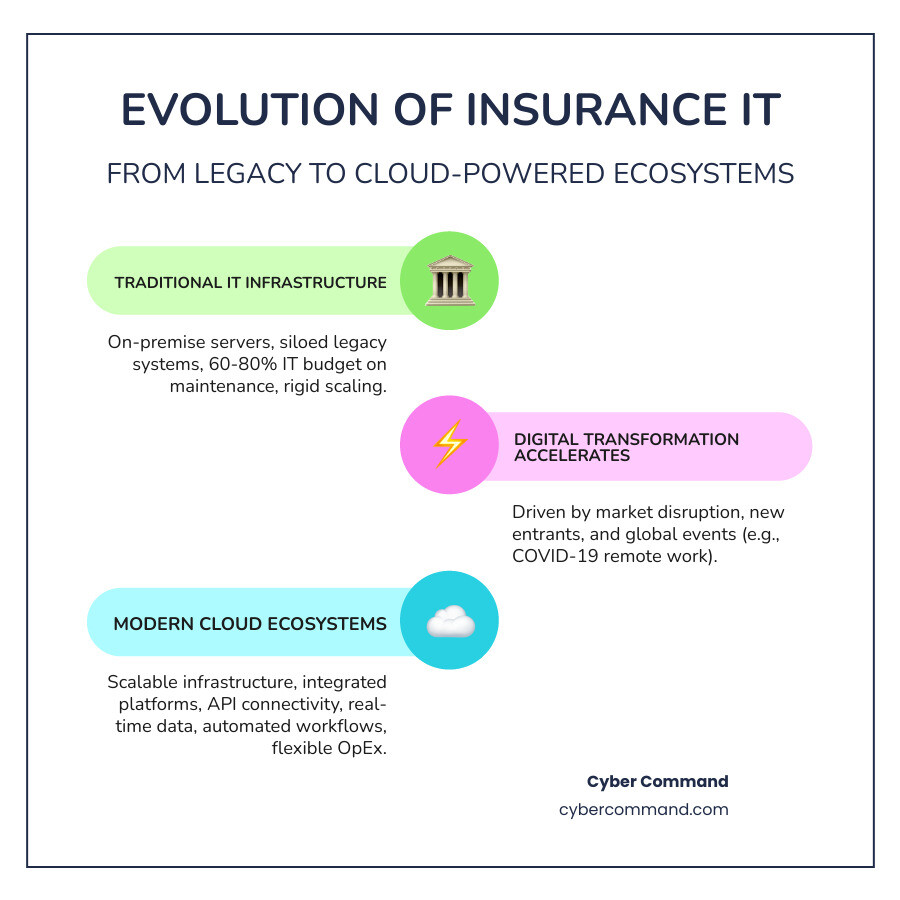
The insurance industry stands at a critical inflection point. For decades, carriers relied on expensive on-premise data centers and legacy systems—some built with programming languages from the 1970s like COBOL. These aging infrastructures now consume 60-80% of IT budgets just for maintenance, leaving little room for innovation.
Meanwhile, digital-native competitors and insurtechs are launching products in weeks instead of months. Customer expectations have shifted dramatically. Policyholders now demand instant quotes, seamless mobile experiences, and personalized coverage—the same frictionless service they receive from retail and banking apps.
The COVID-19 pandemic accelerated this urgency. Remote work became standard overnight. Digital channels exploded. According to research, over 90% of insurers reported accelerating their digital change initiatives since 2020. The message became clear: modernize or risk obsolescence.
Cloud computing offers the path forward. It’s not just about moving servers to someone else’s data center. It’s about fundamentally rethinking how insurance operates—enabling real-time data analytics, AI-powered underwriting, automated claims processing, and flexible scaling during peak demand periods like natural disasters.
The numbers tell a compelling story. Insurers implementing cloud strategies report 40% faster product development cycles, 30% improvements in claims processing efficiency, and 15-20 point increases in customer satisfaction scores. Early adopters are already seeing competitive advantages that will be difficult for laggards to overcome.
I’m Reade Taylor, founder and CEO of Cyber Command, and I’ve spent my career helping businesses—including insurance carriers—steer complex technology changes securely and strategically. My work in cloud computing in insurance has shown me how the right cloud strategy can turn IT from a cost center into a competitive weapon.

The Core Benefits: Why Cloud Adoption is Reshaping the Insurance Landscape


In the dynamic world of insurance, the ability to adapt, innovate, and serve customers efficiently is paramount. Cloud computing isn’t just an IT trend; it’s a strategic imperative that provides a multitude of benefits, reshaping the industry from the ground up. As a McKinsey report highlights, cloud computing is a “generational opportunity” that allows insurers to serve customers better, faster, and more efficiently.
Driving Efficiency and Slashing Costs
One of the most compelling advantages of cloud computing in insurance is its profound impact on operational efficiency and cost management. Traditional on-premise infrastructure demands significant capital expenditure (CapEx) for hardware, software licenses, and ongoing maintenance. US companies, for example, spend an estimated $85 billion on legacy systems maintenance, with 70% of C-suite executives admitting it severely limits their IT innovation capabilities.
With cloud adoption, this paradigm shifts dramatically. We see a transition from CapEx to operational expenditure (OpEx), allowing insurers to pay only for the resources they consume. This model offers greater financial flexibility and can lead to substantial savings. Cloud computing presents an opportunity to integrate disparate systems into cohesive platforms, reducing operational costs by an estimated 15-30% compared to traditional infrastructure models. Comprehensive analyses indicate typical five-year Total Cost of Ownership (TCO) reductions of 20-30% for cloud implementations across insurance technology platforms.
Cloud-based solutions also introduce high levels of automation. For instance, cloud integration has reduced policy issuance times from days to minutes and improved claims processing efficiency by an average of 30%. Some insurers implementing cloud-based automation have even seen policy issuance times cut by up to 60% and claims processing efficiency improve by 40%. This not only saves money but also frees up staff to focus on more complex, customer-centric activities.
| Feature | On-Premise Infrastructure | Cloud Infrastructure (mid-sized insurer) |
|---|---|---|
| Initial Cost | High CapEx | Low CapEx, High OpEx |
| Maintenance | High internal IT team | Managed by provider, lower internal burden |
| Scalability | Limited, costly upgrades | On-demand, flexible |
| TCO Reduction | N/A | 20-30% over five years |
| Innovation Pace | Slow, constrained | Faster, access to new technologies |
This table illustrates how the shift to cloud can significantly alter an insurer’s financial and operational landscape. For more on how migrating to the cloud can impact your bottom line, explore our insights on Cloud Migration Cost Savings.
Enhancing Agility and Customer Engagement
In today’s market, agility is a non-negotiable asset. The cloud empowers insurers to respond rapidly to market changes, launch new products, and adapt their services. Organizations that have acceptd cloud technologies report significantly higher agility, with product development cycles shortened by up to 40% compared to competitors relying on legacy infrastructure. Cloud-native development approaches have reduced new product launch timelines from 6-8 months to as little as 8-10 weeks, a crucial advantage in evolving insurance markets.
But agility isn’t just about internal operations; it directly translates to an improved customer experience. Cloud computing in insurance enables insurers to offer personalized products and custom recommendations by integrating data from various touchpoints. Insurers implementing cloud-enabled omnichannel strategies have measured 15–20-point improvements in customer satisfaction scores and 25% increases in digital engagement rates. Carriers leveraging cloud-based personalization achieve approximately 20% higher conversion rates on digital channels and 15% improvements in policy renewal rates. Providing real-time capabilities through cloud platforms results in 30% higher satisfaction scores for digital interactions and significantly improved customer retention.
For us, delivering seamless and responsive service is at the heart of our mission. Cloud-based solutions facilitate this by providing real-time data access, supporting mobile applications, and enabling instant communication channels. This level of responsiveness is vital for fostering trust and loyalty. Moreover, the cloud underpins robust business continuity and disaster recovery plans, ensuring that customer service remains uninterrupted even in the face of unforeseen events. Learn more about safeguarding your operations with our guidance on Business Continuity and Disaster Recovery Planning for IT Professionals. This comprehensive approach to digital change is key to staying competitive. Find how we help organizations achieve this at Insurance Company Digital Transformation.
Key Use Cases and Applications of Cloud Computing in Insurance
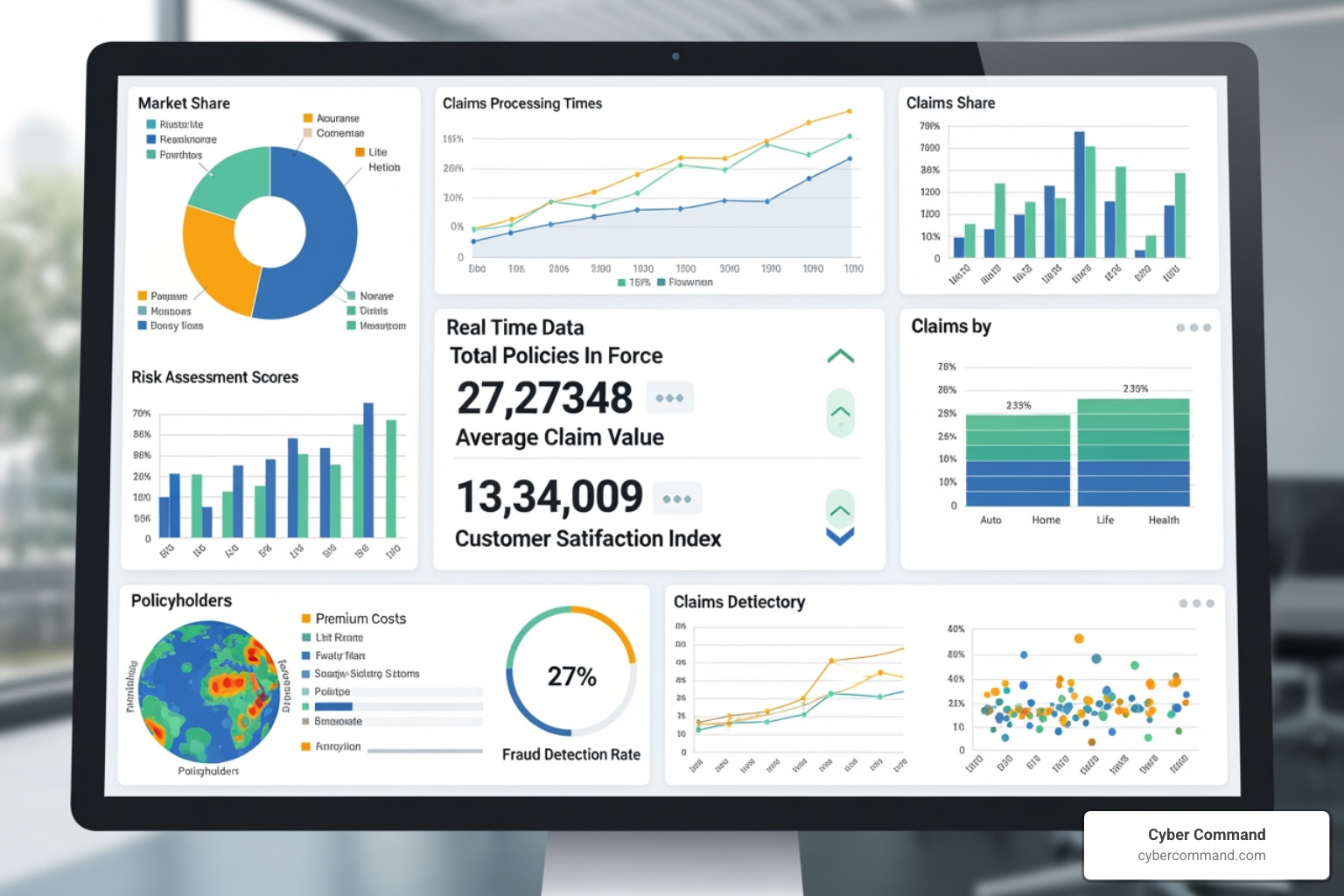
The versatility of cloud computing means its applications span across the entire insurance value chain, from initial policy underwriting to claims settlement and customer relationship management. It’s not merely a backend infrastructure; it’s a catalyst for innovation in every aspect of the business.
Modernizing Core Insurance Operations
Cloud computing in insurance is revolutionizing core operations by enabling unprecedented levels of automation and intelligence.
- Underwriting: Cloud platforms provide the scalable compute power and storage needed to analyze vast amounts of data from diverse sources—including telematics, IoT devices, and external databases—for more accurate risk assessment and personalized pricing. This allows for automated underwriting processes, significantly speeding up policy issuance. An insurtech, for example, achieved 90% automation in underwriting, allowing them to offer instant quotes for small business insurance.
- Claims Management: The cloud streamlines the entire claims lifecycle. It supports digital submission, instant verification, and automated routing of claims. Cloud-based AI can analyze photos for damage assessment, detect fraudulent patterns, and facilitate straight-through processing. This dramatically reduces processing times and improves the customer experience. As an IBM report highlights, cloud-based solutions are changing how insurers handle claims. Learn more about this change at The cloud-based insurance claim.
- Fraud Detection: Leveraging the cloud’s immense processing capabilities, insurers can employ advanced analytics and machine learning algorithms to identify suspicious patterns in claims data that would be impossible to detect manually. This helps in proactive fraud prevention and mitigation. Insurers using cloud exclusively report 34% more use of AI to detect fraudulent claims than those on-premise.
- Telematics and IoT Integration: The cloud is essential for handling the massive influx of data from telematics devices in vehicles, connected homes, and wearable health monitors. This data enables real-time risk assessment, dynamic pricing, and proactive loss prevention services. For instance, during catastrophic events, carriers utilizing IaaS can scale their computing resources by up to 400% within hours instead of days or weeks, demonstrating cloud’s critical role in managing fluctuating demands.
These advancements are driven by cloud automation, which is critical for streamlining complex processes. Explore how we implement intelligent automation at Cloud Automation.
Leveraging Data for Strategic Advantage
Data is the lifeblood of the insurance industry. The cloud provides the infrastructure to not only store but also effectively leverage this data for strategic advantage.
- Big Data Platforms & Predictive Analytics: Cloud-based data platforms allow insurers to build massive data lake houses, consolidating structured and unstructured data from internal systems and external sources. This forms the foundation for powerful predictive analytics and machine learning models. Insurance organizations implementing cloud-based data platforms report 35% improvements in data quality and accessibility, leading to more accurate underwriting decisions and personalized customer interactions.
- Customer Segmentation & Personalized Marketing: By analyzing customer data stored in the cloud, insurers can gain deep insights into customer behaviors, preferences, and needs. This enables precise customer segmentation and the creation of highly personalized marketing campaigns, improving conversion and retention rates.
- API-Enabled Ecosystems: Cloud platforms facilitate API-first architectures, allowing insurers to easily integrate with third-party partners, insurtechs, and digital ecosystems. This fosters innovation, enabling the creation of new products and services, and expanding distribution channels. By 2025, approximately 30% of new insurance premium volume will flow through API-enabled ecosystem partnerships.
The ability to analyze vast datasets for patterns and anomalies is also crucial for cybersecurity. Understanding the role of AI and ML in threat detection is vital for protecting sensitive customer data in these cloud environments. Dig deeper into this topic with our guide on Understanding the Role of AI and ML in Threat Detection.
A Practical Guide to Cloud Implementation: Models, Challenges, and Best Practices
Starting on a cloud journey is a strategic undertaking that requires careful planning and execution. It’s not a one-size-fits-all solution, and understanding the nuances of deployment models, potential challenges, and best practices is crucial for success.
Choosing the Right Cloud Deployment Model
The cloud offers various deployment models, each with distinct advantages suited for different insurance workloads:
- Public Cloud: Services are delivered over the public internet by a third-party provider (e.g., AWS, Azure, Google Cloud). This model offers maximum scalability, flexibility, and cost-effectiveness. Organizations transitioning to public cloud report an average reduction in infrastructure costs of 30-50%, with 71% experiencing improved system reliability and 99.95% availability. Public cloud is excellent for non-sensitive applications, development environments, and applications with fluctuating demand. Capital One, for instance, fully migrated its infrastructure to AWS’s public cloud services.
- Private Cloud: Dedicated cloud resources are used exclusively by a single organization, either on-premises or hosted by a third party. This offers improved control, security, and compliance. 58% of insurers with premium volumes exceeding $5 billion maintain private cloud environments for core systems, citing improved security controls and regulatory compliance as primary drivers. Boutique banks, like Seattle Bank, have moved their core banking systems to a private cloud for greater control.
- Hybrid Cloud: A combination of public and private clouds, allowing data and applications to be shared between them. This model provides the best of both worlds, balancing the scalability and cost-efficiency of public cloud with the security and control of private cloud. The hybrid approach has become the dominant strategy among mid-size and large insurers, with adoption rates increasing to 64% in recent years and organizations reporting 42% improvement in resource utilization. The U.S. Treasury itself adopts a hybrid cloud infrastructure for department-wide use cases.
- Multi-Cloud: Utilizing multiple public cloud providers (e.g., AWS for some workloads, Azure for others). This strategy helps avoid vendor lock-in, leverages best-of-breed services, and improves resilience. 53% of insurance IT leaders have implemented multi-cloud strategies, with these organizations reporting 60% lower risk exposure to provider-specific outages and an average cost optimization of 18% through competitive pricing and workload-appropriate placement.
Choosing the right model involves assessing your organization’s specific needs for security, compliance, performance, and cost. A recent report from the U.S. Department of Treasury provides valuable insights into how financial institutions steer these choices, offering lessons applicable to the insurance sector. You can read more about it here: A recent report from the U.S. Department of Treasury.
Overcoming Common Implementation Problems
While the benefits are clear, the path to cloud adoption isn’t without its problems. We frequently help our clients steer these challenges:
- Legacy System Integration: Insurance companies often rely on decades-old legacy systems that are deeply embedded in core processes. Integrating these with modern cloud services can be complex and costly. 64% of insurance executives identify legacy systems as the primary obstacle to digital change, and these systems account for approximately 30-40% of IT maintenance costs.
- Data Migration Complexity: Moving vast amounts of sensitive customer data from on-premise systems to the cloud requires meticulous planning. Data migration challenges extend project timelines by an average of 35% beyond initial estimates, with data cleansing activities consuming approximately 30% of migration budgets. Our expertise in Data Center Migration to Cloud ensures a smooth transition for your critical assets.
- Security and Compliance Concerns: Insurance handles highly sensitive personal and financial data, making security and regulatory compliance paramount. Approximately 75% of insurance executives consider compliance as their primary concern when migrating to the cloud, with regulatory requirements adding an average of 3-4 months to implementation timelines.
- Resistance to Change: Any major technological shift can face internal resistance. Employees accustomed to traditional systems may be hesitant to adopt new cloud-based workflows. Approximately 65% of stalled cloud initiatives result from organizational resistance.
- Vendor Lock-in: Over-reliance on a single cloud provider can limit flexibility and increase costs in the long run. Approximately 75% of insurance IT leaders express concern about vendor lock-in, though only about 35% implement specific mitigation strategies.
- Skills Gap: The demand for cloud-skilled professionals often outstrips supply. Approximately 70% of insurance IT leaders identify skill gaps as a significant barrier to cloud adoption, with cloud specialists commanding 25-35% salary premiums.
Best Practices for a Successful Transition
To ensure a smooth and successful cloud migration, we recommend a strategic, phased approach:
- Develop a Clear Strategy and Goals: Define what you want to achieve with the cloud. Is it cost reduction, innovation, agility, or a combination? Establishing clear objectives is the first step.
- Phased Migration: Don’t try to move everything at once. Start with less critical applications or new development projects to gain experience and refine your approach.
- Prioritize Security and Compliance: Security should be baked into your cloud strategy from day one, not an afterthought. This includes robust data encryption, access controls, and continuous monitoring. Insurers implementing comprehensive cloud security frameworks experience up to 65% fewer security incidents and reduce breach remediation costs by approximately 40%.
- Establish a Cloud Center of Excellence (CCoE): A dedicated team or cross-functional group that drives cloud strategy, governance, and best practices across the organization. Organizations with formal cloud governance frameworks achieve approximately 40% greater cost efficiencies and experience roughly 65% fewer compliance issues.
- Employee Training and Upskilling: Invest in training your IT staff and end-users on new cloud technologies and workflows. This helps overcome resistance and addresses the skills gap.
- Choose the Right Partner: Selecting an experienced cloud solution provider is critical. Look for a partner with deep industry expertise, a proven track record, and strong support capabilities. They can help steer complexities and accelerate your journey. We’ve compiled a comprehensive Cloud Migration Checklist to guide your planning.
Securing the Cloud and Embracing Future Trends
The journey to the cloud is ongoing, marked by continuous evolution in security practices and emerging technological trends. For insurers, staying ahead means not only securing current cloud deployments but also anticipating future innovations.
Enhancing Data Security and Ensuring Compliance
For an industry built on trust, data security is paramount. While major cloud providers invest heavily in security infrastructure, it’s crucial to understand the Shared Responsibility Model. This model clarifies that while the cloud provider secures the “cloud itself” (the underlying infrastructure), the customer (the insurer) is responsible for security in the cloud (their data, applications, configurations, and access management). Over 60% of cloud security incidents stem from misunderstandings regarding security responsibilities.
Key security controls and practices we advocate for include:
- Effective Data Encryption: Encrypting data at rest, in transit, and in use is fundamental. McKinsey reports that more than 70% of data breaches could be avoided with encryption and secure access management. Learn more about best practices for data protection at Effective Data Encryption: Best Practices for Data Protection.
- Identity and Access Management (IAM): Implementing strong IAM policies, including a “least privilege” principle and a Zero Trust architecture, ensures only authorized users and systems can access sensitive data. Data Breach Incident Reports reveal that 20% of data breaches happen because of ‘privilege creep’.
- Multi-Factor Authentication (MFA): Adding extra layers of authentication significantly reduces the risk of unauthorized access, even if passwords are compromised. We emphasize the importance of MFA in strengthening identity access management; see our insights at Role of MFA in Strengthening Identity Access Management.
- Regular Backups and Disaster Recovery: Cloud environments facilitate robust backup and recovery strategies. Studies show that 62% of financial institutions restored encrypted data using their backups after a ransomware attack.
- Continuous Monitoring and Threat Detection: Implementing tools for real-time monitoring, logging, and threat detection helps identify and respond to security incidents promptly.
- Vendor Risk Management: Thoroughly vet cloud providers and any third-party services for their security posture and compliance certifications.
- Security Awareness Training: Human error remains a leading cause of breaches. Regular training for all employees is essential.
Compliance with regulations like HIPAA for health data, CCPA for California consumer data, and the principles of GDPR (General Data Protection Regulation) for data privacy is non-negotiable. Insurers must ensure their cloud configurations and data handling practices align with these stringent requirements. Our expertise in Cybersecurity Insurance Industry helps clients steer this complex landscape.
The Future of Cloud Computing in Insurance
The evolution of cloud computing in insurance is far from over. We anticipate several key trends shaping the industry’s future:
- Hyper-automation: The combination of cloud, AI, and robotic process automation (RPA) will lead to end-to-end automation of complex workflows, from claims processing to customer service. Insurers implementing cloud-based automation have seen significant reductions in manual tasks.
- Connected Insurance (IoT and Wearables): Edge computing, which processes data closer to the source (e.g., IoT devices), will become critical. This enables real-time risk assessment for telematics in auto insurance, connected home devices, and health wearables, leading to more dynamic and personalized policies. Edge computing in insurance is projected to grow approximately 35% annually through 2026.
- AI-Driven Underwriting and Claims: AI and Machine Learning capabilities, readily available on cloud platforms, will continue to revolutionize underwriting accuracy, fraud detection, and the efficiency of claims processing. Serverless computing, growing at approximately 40% annually, will further abstract infrastructure management, allowing insurers to focus on developing these advanced AI applications.
- Blockchain for Transparency: While still nascent, blockchain technology, often hosted on cloud platforms, could improve transparency and trust in areas like claims processing and policy management, potentially reducing fraud and administrative costs.
- API-First Ecosystems: The trend towards open APIs will accelerate, enabling insurers to seamlessly integrate with a vast network of partners, insurtechs, and data providers, fostering innovation and creating new value propositions.
The future of cloud computing in insurance is one of continuous innovation, driven by the need for greater efficiency, personalized customer experiences, and robust security. A deeper dive into these trends and their regulatory implications can be found in discussions like The Future of Cloud Computing and AI in the EU Insurance Sector, which, while EU-focused, highlights universal technological advancements.
Frequently Asked Questions about Cloud in the Insurance Sector
We often encounter common questions about cloud adoption from our insurance clients. Here are some of the most frequent ones:
How does the cloud improve claims processing?
The cloud significantly improves claims processing by enabling automation, centralizing data access, and providing scalable compute for advanced analytics. This means AI can power damage assessment from photos, fraudulent claims can be detected more efficiently, and workflows can be streamlined. The result is a reduction in processing time from days to minutes, improved accuracy, and improved transparency for the customer, keeping them informed every step of the way.
Is the cloud really more secure than on-premise data centers?
Yes, when configured correctly, the cloud can be significantly more secure than most on-premise data centers, especially for mid-sized and smaller insurers. Major cloud providers invest billions in physical security, network security, and advanced cybersecurity tools far exceeding what most individual organizations can afford. They offer sophisticated encryption, real-time threat detection, and compliance certifications. However, security in the cloud is a shared responsibility. While the provider secures the infrastructure, you are responsible for securing your data, applications, and configurations within that infrastructure. A robust cloud security strategy, like those we implement, is crucial. Explore how we approach this at Cloud Migration Security.
What is the biggest challenge when moving insurance systems to the cloud?
The biggest challenge typically lies in two interconnected areas: integrating modern cloud services with decades-old legacy core systems and managing the complex data migration process without disrupting business operations. Insurance companies often have critical policy administration and claims systems built on outdated technologies. Migrating these, or integrating them with new cloud-native applications, requires careful planning, specialized tools, and expertise to ensure data integrity, system compatibility, and continuous regulatory compliance throughout the transition. Organizational resistance to change and a lack of cloud-skilled personnel also present significant problems.
Conclusion
The shift from traditional data centers to the cloud is no longer a question of “if,” but “when” and “how” for the insurance industry. The benefits are clear: unparalleled efficiency, substantial cost savings, improved agility, and the ability to deliver superior customer experiences. Cloud computing in insurance is a strategic imperative that opens up innovation, improves operational efficiency, strengthens customer relationships, and future-proofs operations against a rapidly evolving market.
Navigating this transformative change requires a partner with deep expertise in both cloud technologies and robust security. At Cyber Command, we provide proactive, enterprise-grade Cloud Services for Insurance to help your organization harness the full potential of the cloud. With our 24/7/365 U.S.-based support and transparent, all-inclusive pricing, we act as an extension of your team, ensuring your cloud journey in Florida, Texas, and across the United States is secure, efficient, and strategically aligned with your business goals.