


Why Understanding Managed IT Management is Critical for Your Business
Managed IT management is the practice of outsourcing your organization’s IT operations, monitoring, and maintenance to a specialized third-party provider called a Managed Service Provider (MSP). Instead of fixing problems after they occur, this proactive approach keeps your systems running smoothly, secure, and aligned with your business goals—all for a predictable monthly cost.
Quick Answer: What is Managed IT Management?
- What it is: Outsourcing IT tasks to an expert provider who monitors, maintains, and secures your technology infrastructure 24/7
- How it works: MSPs operate under Service Level Agreements (SLAs) that define response times, uptime guarantees, and scope of services
- Key benefit: Shifts IT from reactive “break-fix” to proactive prevention, reducing downtime by up to 50%
- Cost model: Fixed monthly fee based on users or devices, eliminating surprise repair bills
- Who needs it: Growing businesses without dedicated IT teams, or those wanting to improve existing staff with specialized expertise
Modern businesses rely on technology, but managing it is complex and resource-intensive. The traditional “break-fix” model—calling for help only after a problem arises—is no longer viable. Downtime is costly, security breaches are devastating, and juggling multiple vendors creates unacceptable risks.
Managed IT management offers a transformative solution. Instead of waiting for disasters, MSPs continuously monitor systems, patch vulnerabilities, and plan strategic upgrades aligned with your growth. This proactive shift is reflected in the global managed services market, projected to reach $475 billion by 2029.
I’m Reade Taylor, Founder and CEO of Cyber Command. After years as an engineer with IBM Internet Security Systems building enterprise-grade cybersecurity and infrastructure solutions, I founded Cyber Command to change how businesses experience managed IT management—making it proactive, communicative, and genuinely easy to work with. My team and I have helped countless organizations transform their technology from a cost center into a competitive advantage.

The Evolution and Core Concept of Managed IT Services
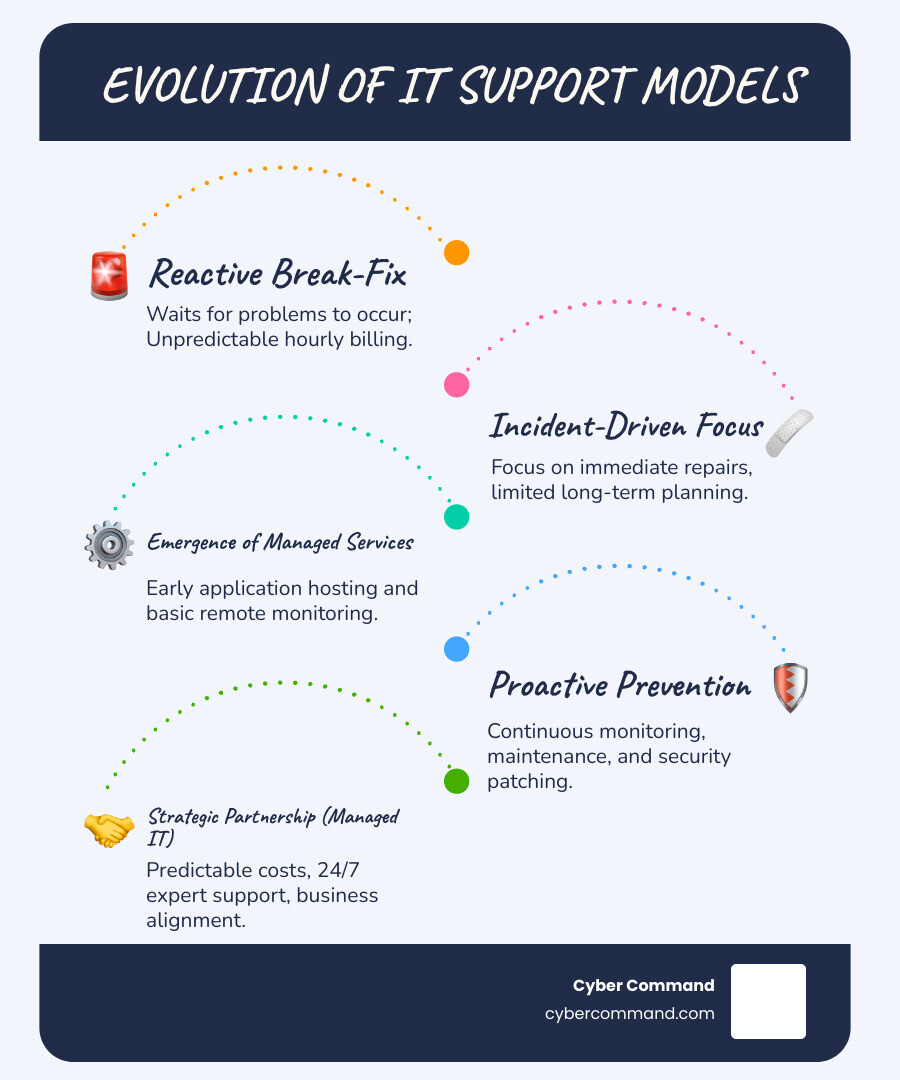
The concept of managed services has evolved significantly from its origins in the late 1990s with Application Service Providers (ASPs). Early providers offered basic application hosting, but as technology advanced, so did the offerings, leading to today’s comprehensive MSP model.
The significant shift occurred when the industry moved from the reactive “break-fix” model to a proactive approach. Instead of fixing problems after they happened, MSPs began focusing on preventing issues through continuous monitoring and strategic planning. The rise of cloud computing in the early 2000s further enabled us to offer more scalable and flexible solutions.
A cornerstone of the MSP relationship is the Service Level Agreement (SLA). This document defines the scope of services, uptime guarantees, and response times, ensuring transparency and accountability. At Cyber Command, we prioritize clear, detailed SLAs.
Managed IT management is about forging a strategic partnership. We become an extension of your business, deeply understanding your operations and aligning our IT strategies with your overarching business goals. This is far more than just technical support; it’s about enabling your success through technology.
What is a Managed Service Provider?
A Managed Service Provider (MSP) is a third-party company that remotely manages a customer’s IT infrastructure and end-user systems on a proactive, subscription basis. We assume complete responsibility for defined technology services, delivering them proactively based on a comprehensive SLA.
MSPs like us offer a wide range of services, including cybersecurity, helpdesk support, cloud services, and network monitoring. The process typically begins with an assessment of your current IT infrastructure, followed by a customized service strategy designed to meet your specific needs.
There are different types of MSPs, including full-service providers (like us!), specialized providers, and co-managed providers who work alongside your in-house team. We often work with small and medium-sized businesses (SMBs), non-profits, and government agencies, performing essential day-to-day management and offering strategic advice.
Managed Services vs. Traditional IT Support
The distinction between managed IT management and traditional IT support (“break-fix”) is fundamental. It’s the difference between preventative care and emergency room visits for your IT infrastructure.
| Feature | Managed IT Services | Traditional IT Support (Break-Fix) |
|---|---|---|
| Approach | Proactive: Prevents issues through continuous monitoring, maintenance, and strategic planning. | Reactive: Addresses problems only after they occur and cause disruption. |
| Cost Model | Predictable Monthly Fee: A fixed subscription fee for predictable budgeting. | Unpredictable Hourly Billing: Billed by the hour, leading to fluctuating and unexpected costs. |
| Focus | Strategic Alignment: Aligns technology with business goals to drive growth and efficiency. | Incident-Based Focus: Solely focused on fixing immediate problems, not long-term strategy. |
| Relationship | Partnership: Acts as an extension of your team, offering ongoing guidance and support. | Vendor-Client: A transactional relationship where services are rendered as needed. |
| Downtime | Minimized: Proactive maintenance and 24/7 monitoring significantly reduce downtime. | Frequent & Costly: Downtime is common as issues are addressed only after they occur. |
| Security | Improved & Continuous: Proactive threat detection, regular patching, and continuous security monitoring. | Limited: Security is often an afterthought, addressed only after a breach. |
| Team Access | Full Team Access: Access to a diverse team of IT experts with specialized skills. | Limited Internal Staff: Relies on a small internal team or ad-hoc external consultants. |
| Responsibility | Shared & Continuous: We take ongoing responsibility for the health and performance of your IT environment. | Client-Driven: You bear the primary responsibility for IT management. |
| Innovation & Upgrades | Planned & Strategic: Provides insights and recommendations for technology upgrades that support business objectives. | Ad-Hoc: Upgrades are typically driven by necessity rather than a long-term strategic plan. |
Why Businesses are Shifting to Managed IT Management
The shift towards managed IT management is a strategic imperative. The global managed services market is projected to grow from $274.04 billion in 2022 to $474.73 billion in 2029, at a Compound Annual Growth Rate (CAGR) of 8.18%. By 2025, 70% of all IT infrastructure is expected to be managed by MSPs. This growth is driven by tangible benefits.


The primary drivers for adopting managed IT services are compelling:
- Cost Savings (65%): Managed services replace unpredictable repair costs with a fixed monthly fee, often saving businesses 25-45% compared to maintaining a diverse in-house IT team. This allows for better budgeting and eliminates large capital expenses.
- Access to Expertise (58%): The IT landscape is too complex for most in-house teams to master. MSPs provide access to a deep bench of specialists in areas from cybersecurity to cloud architecture, bringing enterprise-level knowledge to businesses of all sizes.
- Improved Security (52%): With cyber threats growing more sophisticated, the proactive monitoring and advanced security measures offered by MSPs are essential for protecting business data and systems.
Beyond these top drivers, businesses also gain:
- Scalability and Flexibility: Managed services are highly scalable, allowing us to adjust service levels as your business evolves without major infrastructure investments.
- Business Continuity: We focus on preventing outages and ensuring rapid recovery through automated backups, disaster recovery planning, and robust redundancy.
- Focus on Core Competencies: By offloading day-to-day IT management, your internal teams can concentrate on innovating, serving customers, and driving your business forward.
This strategic shift empowers businesses to leverage technology for growth. Why Choose Managed IT Services? The answer is simple: to thrive in today’s digital economy.
Gaining a Competitive Edge
When technology dictates success, managed IT management offers a significant competitive advantage. For small and medium-sized businesses (SMBs), it’s about leveling the playing field with larger enterprises.
- Operational Efficiency: Proactive monitoring and maintenance minimize IT issues, reducing downtime and boosting employee productivity. When tech runs smoothly, your team can focus on core tasks instead of troubleshooting.
- Reduced Downtime: Our proactive approach can reduce IT-related downtime by up to 50%, ensuring your business remains operational and profitable.
- Access to Enterprise-Grade Technology: We bring advanced tools, software, and infrastructure that might be too costly for an individual business to implement on its own.
- Strategic IT Planning: We don’t just fix things; we help you plan. Our strategic consulting aligns your technology roadmap with your business objectives, ensuring IT investments drive growth. This is particularly beneficial for IT Managed Services for Small Business.
Enhancing Your Security Posture
In an age of escalating cyber threats, robust cybersecurity is non-negotiable. Managed security services are a growing market segment, with a projected CAGR of 13.5% from 2022 to 2029.
- Proactive Threat Hunting and 24/7 Monitoring: We don’t wait for a breach; we actively hunt for threats. Our 24/7/365 U.S.-based monitoring ensures constant vigilance, allowing us to detect and respond to suspicious activities in real-time.
- Compliance Management: We help you steer complex regulatory landscapes like HIPAA, PCI-DSS, and GDPR, ensuring your systems meet compliance standards and reducing legal and operational risks.
- Vulnerability Assessments and Patch Management: Regular assessments identify weaknesses, while diligent patch management closes common security loopholes before they can be exploited.
- Cybersecurity and Ransomware Protection: We implement multi-layered security, including firewalls, endpoint protection, and employee training. Our focus on Ransomware Protection is paramount, deploying best practices to prevent, detect, and recover from these devastating attacks.
Exploring the Spectrum of Managed Services and Their Costs
The beauty of managed IT management lies in its versatility. We offer a comprehensive suite of services that can be customized to your specific needs, whether you’re a small business in Orlando or a multi-location enterprise across Florida and Texas.
- Managed Security Services: Includes firewall management, threat hunting, incident response, and comprehensive security audits.
- Managed Cloud Infrastructure: Covers cloud strategy, migration, configuration, and cost optimization for platforms like AWS, Azure, and Google Cloud.
- Network Monitoring and Management: Ensures your network infrastructure is secure, optimized, and running smoothly.
- Managed Backup and Disaster Recovery: Automated backups, off-site data storage, and comprehensive disaster recovery planning to minimize downtime and data loss.
- IT Help Desk and User Support: 24/7/365 U.S.-based support for your employees to resolve technical issues and provide user assistance.
- IT Infrastructure Management: Monitoring and maintenance of all your hardware and software for optimal performance.
- Strategic IT Consulting: Expert guidance on strategic planning, budget optimization, and technology selection.
- Endpoint Management: Securing and managing all network-connected devices, including computers, printers, and mobile phones.
- Server Maintenance: Ensuring servers run smoothly through performance monitoring, data backup, and downtime reduction.
- Project-Based Services: Handling one-time IT projects without disrupting your in-house team’s daily operations.
- Data Analytics Services: Interpreting data to identify trends, find insights, and support data-driven decision-making.


Common Types of Managed IT Services
Let’s dive deeper into some of the most critical services we provide:
- Managed Security Services: In today’s threat landscape, this is paramount. We provide comprehensive protection through firewalls, endpoint security, advanced threat detection, and employee training to keep your digital assets safe.
- Managed Cloud Infrastructure: Whether you’re on AWS, Azure, Google Cloud, or a hybrid setup, we manage and optimize your cloud resources. Our Cloud Computing Solutions ensure you harness the full power of the cloud.
- Network Monitoring and Management: Your network is your business’s backbone. We proactively monitor its performance, identify potential bottlenecks, and ensure its security and reliability.
- Managed Backup and Disaster Recovery: Data loss can be catastrophic. We implement robust backup strategies and detailed disaster recovery plans. Our Backup and Disaster Recovery Solutions ensure your critical data is always protected and quickly recoverable.
- IT Help Desk and User Support: When your team needs help, they need it fast. Our U.S.-based help desk provides responsive, expert support around the clock, which is a core part of our IT Support and Maintenance offerings.
Understanding Managed IT Service Pricing Models
One of the most attractive aspects of managed IT management is cost predictability. Unlike the unpredictable hourly rates of break-fix models, managed services typically operate on a subscription basis.
Common pricing models include:
- Per-User Pricing: A fixed monthly fee per user, ideal for businesses where employees use multiple devices.
- Per-Device Pricing: A fixed monthly fee per device, which works well for businesses with a clear hardware inventory.
- Tiered Bundles: Service packages offered at different price points (e.g., basic, standard, premium).
- All-Inclusive Model: A comprehensive package covering most IT needs for a single, predictable monthly fee. This is our preferred model at Cyber Command, offering transparent pricing that eliminates hidden costs.
- Value-Based Pricing: A less common model that aligns pricing with the value delivered to the client, such as improved productivity or reduced risk.
Factors influencing cost include company size, service complexity, and SLA requirements. Our goal is to provide clear, upfront pricing. For a comprehensive overview, explore our Managed IT Services Cost: Complete Guide.
Choosing Your Strategic Partner: How to Select and Integrate with an MSP
Selecting the right MSP for your managed IT management needs is a critical business decision. It’s not just about finding tech support; it’s about finding a strategic partner who understands your vision. A thorough vetting process is essential.
When evaluating potential partners, consider these top criteria for selecting a managed services provider:
Key Considerations When Selecting a Provider
- Experience and Certifications: A proven track record and relevant industry certifications demonstrate expertise and commitment to best practices. Our decades of experience ensure you’re in capable hands.
- Technical Expertise: Do they have specialists in areas crucial to your business, such as cybersecurity or cloud computing? Our team offers enterprise-grade IT, cybersecurity, and platform engineering services.
- Client Testimonials and References: What do their current clients say? Look for feedback on responsiveness, problem-solving, and the quality of the partnership.
- Response Times and SLAs: Ensure their Service Level Agreement clearly defines response times for different issues. Our proactive, 24/7/365 U.S.-based support addresses issues swiftly.
- Security and Compliance Protocols: How do they protect your data? Do they understand your industry’s compliance regulations (e.g., HIPAA, GDPR)?
- U.S.-Based Support: This is a crucial differentiator for us. Our U.S.-based teams ensure clear communication and rapid response for businesses in Winter Springs, Orlando, Jacksonville, Tampa Bay, Central Florida, Florida, Plano, and Texas.
- Transparent Pricing: Are their pricing models clear and free of hidden fees? We pride ourselves on transparent, all-inclusive pricing for predictable budgeting.
For more detailed guidance, check out our insights on How to Choose the Right Managed Service Partner: Expert Tips.
The Impact of managed it management on Your Business
The adoption of managed IT management profoundly impacts your business.
- Impact on In-House IT Teams: Managed services augment, rather than replace, in-house IT. By handling routine monitoring, maintenance, and help desk support, we free your internal team to focus on strategic initiatives. This co-managed IT model allows your team to retain control while gaining specialized expertise and resources. Explore What are the Benefits of Co-Managed IT?
- Improving Overall Business Operations: With a proactive MSP, you experience increased uptime, improved system performance, and improved security. This leads to greater employee productivity, reduced operational risks, and better alignment of technology with your business objectives.
Transitioning and Addressing Potential Limitations of managed it management
Transitioning to a managed IT management model is a structured process designed to be seamless.
- Initial Assessment and Planning: We start with a thorough evaluation of your existing IT infrastructure.
- Onboarding: This phase involves resolving critical issues, configuring monitoring tools, and establishing service protocols.
- Communication Strategy: Clear and consistent communication is vital throughout the partnership.
- Integration Plan: We integrate our tools and processes with your existing environment, ensuring minimal disruption.
While the benefits are substantial, it’s important to be aware of potential limitations:
- Loss of Direct Control (Perceived): Some businesses worry about losing direct control. However, with clear SLAs and a strong partnership, you maintain strategic oversight while delegating operational tasks.
- Finding the Right Cultural Fit: Your MSP should feel like an extension of your team. It’s crucial to find a provider whose values and communication style align with your company culture.
- Ensuring Provider Accountability: This circles back to the importance of strong SLAs. Regularly review performance metrics to hold your MSP accountable.
Frequently Asked Questions about Managed IT Services
We often encounter common questions as businesses explore managed IT management. Let’s address some of them directly.
What is the difference between managed IT services and IT outsourcing?
Information Technology Outsourcing is a broad term for delegating any IT task, from one-time projects to simple repairs. In contrast, managed IT services are a specific, proactive model of outsourcing. An MSP takes long-term responsibility for managing and supporting your entire IT environment under a subscription-based Service Level Agreement (SLA), acting as a strategic partner, not just a task-based vendor.
Are managed IT services the same as SaaS?
No, they are not the same, though they often work together.
- SaaS (Software as a Service): This is a software product you subscribe to, hosted by a third party and delivered over the internet (e.g., Microsoft 365, Salesforce).
- Managed IT Services: This is a comprehensive service that manages your entire IT environment. This can include managing your SaaS applications to ensure they are properly configured, secured, and supported. It’s the management of the technology, not just the technology itself.
How do managed services improve business continuity?
Business continuity is about ensuring your critical functions can continue during and after a disruption. Managed IT management improves this through:
- Proactive Maintenance and Monitoring: By preventing issues before they occur, we reduce the likelihood of unexpected downtime.
- Robust Data Backup and Recovery: We implement automated, secure, and redundant backup solutions. Our detailed Disaster Recovery Planning outlines precise steps to restore your systems and data quickly.
- Redundancy and Resilience: We design your IT infrastructure with redundancy in mind, ensuring that if one component fails, another can take over.
- Rapid Incident Response: In an emergency, our 24/7/365 U.S.-based support teams respond quickly to minimize downtime and restore functionality.
Conclusion
In today’s digital world, managed IT management is no longer a luxury but a necessity. We’ve explored how it differs from traditional IT support, offering a proactive, strategic partnership that transforms your technology from a reactive expense into a powerful business driver.
The benefits are clear: significant cost savings, unparalleled access to specialized expertise, improved cybersecurity, improved operational efficiency, and the scalability your business needs to grow. By entrusting your IT to a dedicated MSP, you free your internal teams to innovate and focus on core competencies, gaining a crucial competitive edge.
Choosing the right partner is paramount, requiring careful consideration of experience, expertise, transparency, and a commitment to your success. At Cyber Command, we pride ourselves on being that partner – offering enterprise-grade IT, cybersecurity, and platform engineering services with proactive, 24/7/365 U.S.-based support and transparent, all-inclusive pricing. We act as an extension of your business, ensuring your IT infrastructure in Winter Springs, Orlando, Jacksonville, Tampa Bay, Central Florida, Florida, Plano, and Texas is secure, efficient, and always aligned with your goals.
Don’t let IT challenges hold your business back. Lift your business with our comprehensive Managed IT Services. Let us handle the complexities of technology so you can focus on what you do best.