
The Unbreakable Business: Crafting Your Continuity Plan


Why Business Continuity Planning Is the Lifeline Your Business Can’t Afford to Ignore
Business continuity planning ensures your organization can maintain critical operations during and after a disaster or major disruption. Here’s what you need to know:
Key Elements of a Business Continuity Plan:
- Risk Assessment – Identify threats like cyberattacks, natural disasters, and power outages
- Business Impact Analysis (BIA) – Determine which functions are critical and prioritize recovery
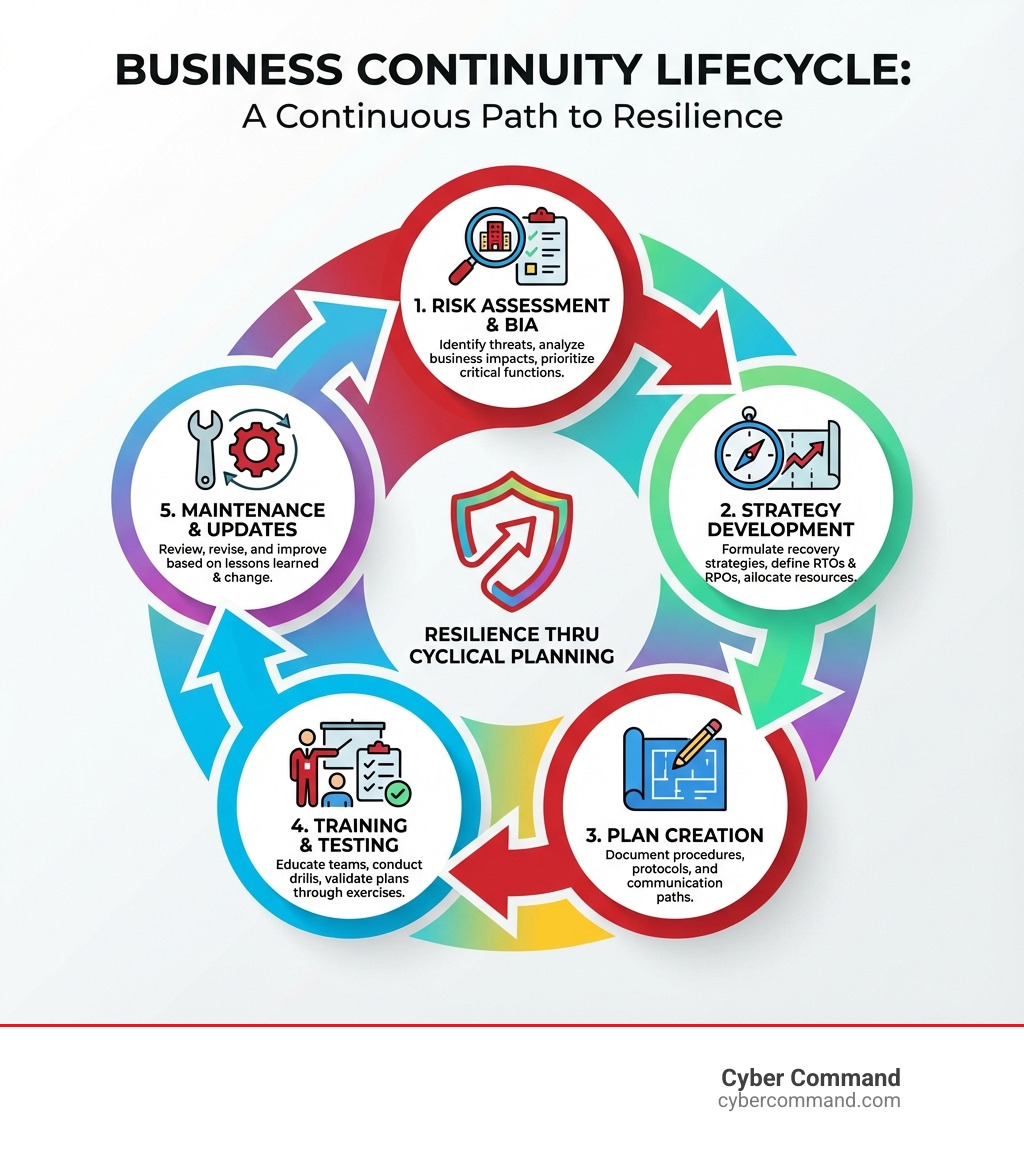
- Recovery Strategies – Document procedures for maintaining operations
- Communication Plans – Establish protocols for employees, customers, and suppliers
- Testing & Maintenance – Regularly validate your plan through exercises and updates
It’s Tuesday morning. You’re sipping coffee when the alerts start flooding in. Systems crash. Communications go dark. Your team is scrambling for answers. A ransomware attack has locked down your network.
Without a plan, this scenario becomes a nightmare. With one, it’s a manageable crisis.
The statistics are sobering: an estimated 80 percent of companies without a well-conceived and tested business continuity plan go out of business within two years of a major disaster. That’s not fear-mongering—it’s reality. Disasters, cyberattacks, equipment failures, and pandemics don’t announce themselves. They strike when you’re least prepared.
Business continuity planning isn’t just about IT recovery. It’s broader than that. While disaster recovery focuses on restoring technology systems and data, business continuity planning takes a comprehensive approach to ensure your entire organization—from customer service to supply chains—can keep functioning when things go wrong.
The good news? A dollar spent in loss prevention can prevent seven dollars of disaster-related economic loss. Business continuity planning is an investment in your organization’s survival and resilience.
This isn’t a one-time project you complete and file away. It’s an ongoing process that evolves with your business. You’ll need to identify risks, assess their potential impact, develop recovery strategies, train your team, and test your plans regularly. The process involves everyone from senior management to frontline staff.
I’m Reade Taylor, Founder and CEO of Cyber Command. Throughout my career building secure, highly available IT environments—from my time as an engineer with IBM Internet Security Systems to helping businesses today—I’ve seen how Business continuity planning transforms technology from a liability into a competitive advantage. The organizations that thrive aren’t the ones that avoid disruption—they’re the ones prepared to handle it.
Let’s build your unbreakable business together.
The Foundation: Business Impact Analysis and Risk Assessment
Before you can plan for continuity, you need to understand what you’re trying to protect and from what. This is where the dynamic duo of Business Impact Analysis (BIA) and Risk Assessment (RA) comes into play. They form the bedrock of your entire business continuity planning effort.
A Business Impact Analysis (BIA) is a deep dive into your operations, identifying the effects a disruption would have on your business functions and processes. It’s about figuring out which parts of your business are truly essential and how quickly they need to be back online. The BIA helps us make informed decisions about recovery priorities and strategies. It defines critical activities, dependencies (people, processes, vendors, technology, and facilities), and assesses the impact of disruptions across financial, operational, reputational, and legal dimensions.
Parallel to the BIA is the Risk Assessment (RA). While the BIA looks at the impact of a disruption, the RA focuses on the likelihood of various threats occurring and their potential severity. It’s about asking: “What could go wrong?” and then, “How bad would it be?” This process helps us prioritize which risks need our immediate attention and resources.
The BIA also helps us determine critical metrics like:
- Recovery Time Objective (RTO): The maximum acceptable amount of time to restore a function or system after a disruption. If a function is critical, its RTO will be very short.
- Recovery Point Objective (RPO): The maximum acceptable amount of data loss measured in time. For instance, an RPO of one hour means you can only afford to lose one hour’s worth of data.
Understanding these objectives is crucial because they dictate the recovery strategies we’ll implement. For a deeper dive into evaluating your business’s vulnerabilities, you can download a helpful Business Impact Analysis Worksheet from Ready.gov.

Identifying Common Threats
When developing a business continuity planning, consider a wide array of potential threats. Think of it as preparing for every possible curveball life might throw your business’s way. While the specific threats might vary by industry and location, some common culprits always make the list.
Here are some of the most common threats businesses in places like Florida and Texas should consider:
- Natural Disasters: For our clients in Florida and Texas, this category is particularly relevant. We’re talking hurricanes, tropical storms, floods, wildfires, and extreme weather events that can cause widespread damage and power outages.
- Cyberattacks: These are a growing menace for businesses of all sizes. Ransomware, phishing scams, data breaches, and denial-of-service (DoS) attacks can cripple operations, steal sensitive information, and severely damage reputation. The average cost of a data breach can be nearly $5 million, making cybersecurity a non-negotiable part of business continuity planning.
- Pandemics/Epidemics: Recent history has shown us how quickly a health crisis can impact workforce availability and supply chains.
- Power/Utility Outages: Losing electricity, internet, or water can halt operations instantly. This could be due to weather, infrastructure failure, or even human error.
- IT System Failures: Hardware malfunctions, software bugs, or network outages can bring productivity to a standstill.
- Supplier Failures: If a critical supplier can’t deliver, your operations could be impacted.
- Human Error: Accidents happen. Misconfigurations, accidental data deletion, or security breaches due to human mistakes are common.
-
Theft or Sabotage: Physical theft of equipment or malicious acts can cause significant disruption.
-
Hurricanes and tropical storms
- Flooding
- Wildfires
- Cyberattacks (ransomware, data breaches)
- Power outages
- Internet service disruptions
- Key software/hardware failures
- Supply chain disruptions
- Loss of critical personnel
- Physical damage to facilities
- System misconfigurations
- Employee error
- Acts of vandalism
The Role of a Business Impact Analysis (BIA)
The BIA is arguably the most important part of developing your business continuity planning. It’s not just a checklist; it’s a strategic process that gives us a clear picture of our vulnerabilities and priorities. By performing a BIA, we identify functions and related resources that are time-sensitive, allowing us to make informed decisions about recovery.
Through the BIA, we evaluate:
- Prioritizing Processes: Which business processes are absolutely critical to keep the doors open and customers happy? Which ones can wait a little longer? The BIA helps us rank them.
- Financial Impact: What would be the monetary cost of downtime for each critical process? This includes lost revenue, regulatory fines, and increased operational costs. We know a single hour of downtime can cost enterprises hundreds of thousands of dollars.
- Operational Impact: How would a disruption affect daily operations, productivity, and the ability to deliver products or services?
- Reputational Damage: How would a prolonged outage or a security breach affect our public image and customer trust? This is often an overlooked but critical consequence.
- Legal Implications: Are there regulatory requirements or contractual obligations that could lead to legal repercussions if violated during a disruption?
- Maximum Tolerable Period of Disruption (MTPD): This is the absolute longest time a business function can be unavailable before the organization suffers unacceptable consequences. Knowing this helps us set realistic RTOs for our recovery strategies.
Without a thorough BIA, your business continuity planning is essentially a shot in the dark. It helps us avoid wasting resources on non-critical areas and focus our efforts where they matter most.
The Core Steps of Business continuity planning
Once we understand the potential impacts and risks through our BIA and RA, it’s time to roll up our sleeves and build the actual business continuity plan. This is where we transition from analysis to action, creating a comprehensive guide for navigating any crisis.
The core steps involve:
- Assembling Your Team and Defining Roles: You can’t do this alone!
- Developing and Documenting Your Plan: Putting pen to paper (or pixels to screen) with clear strategies and procedures.
- A Comprehensive Guide to Business continuity planning: Detailing all the essential components of your plan.

Step 1: Assembling Your Team and Defining Roles
A successful business continuity plan requires a dedicated team with clear roles and responsibilities. This isn’t a task for a single department; it needs cross-functional collaboration.
- Management Buy-in: First and foremost, securing senior management endorsement and commitment is crucial. Without their support, the project lacks credibility and visibility, making it difficult to generate staff interest.
- Cross-Departmental Team: Form a business continuity planning team with representatives from all key departments – IT, HR, operations, finance, marketing, and legal. Each department brings unique insights into its critical functions and potential vulnerabilities.
- Defining Responsibilities: Clearly assign roles and responsibilities for each phase of the plan – before, during, and after a disruption. Who declares an emergency? Who communicates with staff? Who initiates recovery procedures?
- Backup Personnel: For every critical role, identify backup individuals. What if the primary person is unavailable? Cross-training is essential here.
- Contact Lists: Maintain up-to-date contact lists for employees, management, key customers, critical suppliers, and emergency services. These lists should be accessible even if your primary systems are down.
Step 2: Developing and Documenting Your Plan
This is where the strategies and procedures take shape. Your documented plan becomes the “user’s manual” for how your business will operate during a crisis.
One common point of confusion is the difference between a Business continuity planning and a Disaster Recovery (DR) plan. While often used interchangeably, they have distinct focuses:
| Feature | Business Continuity Planning (BCP) | Disaster Recovery (DR) Plan |
| :—————- | :——————————————————————————————————————————————————————————————————————————————————————————————————————————————————————————————————————————————————————————————————————————————————————————————————————————————————————————————————————————————————————————————————————————————————————————————————————————————————————————————————————————————————————————————————————————————————————————————————————————————————————————————————————————————————————————————————————————————————————————————————————————————————————————————————————————————————————————————————————————————————————————————————————————————————————————————————————————————————————————————————————————————————————————————————————————————————————————————————————————————————————————————————————————————————————————————————————————————————————————————————————————————————————————————————————————————————————————————————————————————————————————————————————————————————————————————————————————————————————————————————————————————————————————————————————————————————————————————————————————————————————————————————————————————————————————————————————————————————————————————————————————————————————————————————————————————————————————————————————————————————————————————————————————————————————————————————————————————————————————————————————————————————————————————————————————————————————————————————————————————————————————————————————————————————————————————————————————————————————————————————————————————————————————————————————————————————————————————————————————————————————————————————————————————————————————————————————————————————————————————————————————————————————————————————————————————————————————————————————————————————————————————————————————————————————————————————————————————————————————————————————————————————————————————————————————————————————————————————————————————————————————————————————————————————————————————————————————————————————————————————————————————————————————————————————————————————————————————————————————————————————————————————————————————————————————————————————————————————————————————————————————————————————————————————————————————————————————————————————————————————————————————————————————————————————————————————————————————————————————————————————————————————————————————————————————————————————————————————————————————————————————————————————————————————————————————————————————————————————————————————————————————————————————————————————————————————————————————————————————————————————————————————————————————————————————————————————————————————————————————————————————————————————————————————————————————————————————————————————————————————————————————————————————————————————————————————————————————————————————————————————————————————————————————————————————————————————————————————————————————————————————————————————————————————————————————————————————————————————————————————————————————————————————————————————————————————————————————————————————————————————————————————————————————————————————————————————————————————————————————————————————————————————————————————————————————————————————————————————————————————————————————————————————————————————————————————————————————————————————————————————————————————————————————————————————————————————————————————————————————————————————————————————————————————————————————————————————————————————————————————————————————————————————————————————————————————————————————————————————————————————————————————————————————————————————————————————————————————————————————————————————————————————————————————————————————————————————————————————————————————————————————————————————————————————————————————————————————————————————————————————————————————————————————————————————————————————————————————————————————————————————————————————————————————————————————————————————————————————————————————————————————————————————————————————————————————————————————————————————————————————————————————————————————————————————————————————————————————————————————————————————————————————————————————————————————————————————————————————————————————————————————————————————————————————————————————————————————————————————————————————————————————————————————————————————————————————————————————————————————————————————————————————————————————————————————————————————————————————————————————————————————————————————————————————————————————————————————————————————————————————————————————————————————————————————————————————————————————————————————————————————————————————————————————————————————————————————————————————————————————————————————————————————————————————————————————————————————————————————————————————————————————————————————————————————————————————————————————————————————————————————————————————————————————————————————————————————————————————————————————————————————————————————————————————————————————————————————————————————————————————————————————————————————————————————————————————————————————————————————————————————————————————————————————————————————————————————————————————————————————————————————————————————————————————————————————————————————————————————————————————————————————————————————————————————————————————————————————————————————————————————————————————————————————————————————————————————————————————————————————————————————————————————————————————————————————————————————————————————————————————————————————————————————————————————————————————————————————————————————————————————————————————————————————————————————————————————————————————————————————————————————————————————————————————————————————————————————————————————————————————————————————————————————————————————————————————————————————————————————————————————————————————————————————————————————————————————————————————————————————————————————————————————————————————————————————————————————————————————————————————————————————————————————————————————————————————————————————————————————————————————————————————————————————————————————————————————————————————————————————————————————————————————————————————————————————————————————————————————————————————————————————————————————————————————————————————————————————————————————————————————————————————————————————————————————————————————————————————————————————————————————————————————————————————————————————————————————————————————————————————————————————————————————————————————————————————————————————————————————————————————————————————————————————————————————————————————————————————————————————————————————————————————————————————————————————————————————————————————————————————————————————————————————————————————————————————————————————————————————————————————————————————————————————————————————————————————————————————————————————————————————————————————————————————————————————————————————————————————————————————————————————————————————————————————————————————————————————————————————————————————————————————————————————————————————————————————————————————————————————————————————————————————————————————————————————————————————————————————————————————————————————————————————————————————————————————————————————————————————————————————————————————————————————————————————————————————————————————————————————————————————————————————————————————————————————————————————————————————————————————————————————————————————————————————————————————————————————————————————————————————————————————————————————————————————————————————————————————————————————————————————————————————————————————————————————————————————————————————————————————————————————————————————————————————————————————————————————————————————————————————————————————————————————————————————————————————————————————————————————————————————————————————————————————————————————————————————————————————————————————————————————————————————————————————————————————————————————————————————————————————————————————————————————————————————————————————————————————————————————————————————————————————————————————————————————————————————————————————————————————————————————————————————————————————————————————————————————————————————————————————————————————————————————————————————————————————————————————————————————————————————————————————————————————————————————————————————————————————————————————————————————————————————————————————————————————————————————————————————————————————————————————————————————————————————————————————————————————————————————————————————————————————————————————————————————————————————————————————————————————————————————————————————————————————————————————————————————————————————————————————————————————————————————————————————————————————————————————————————————————————————————————————————————————————————————————————————————————————————————————————————————————————————————————————————————————————————————————————————————————————————————————————————————————————————————————————————————————————————————————————————————————————————————————————————————————————————————————————————————————————————————————————————————————————————————————————————————————————————————————————————————————————————————————————————————————————————————————————————————————————————————————————————————————————————————————————————————————————————————————————————————————————————————————————————————————————————————————————————————————————————————————————————————————————————————————————————————————————————————————————————————————————————————————————————————————————————————————————————————————————————————————————————————————————————————————————————————————————————————————————————————————————————————————————————————————————————————————————————————————————————————————————————————————————————————————————————————————————————————————————————————————————————————————————————————————————————————————————————————————————————————————————————————————————————————————————————————————————————————————————————————————————————————————————————————————————————————————————————————————————————————————————————————————————————————————————————————————————————————————————————————————————————————————————————————————————————————————————————————————————————————————————————————————————————————————————————————————————————————————————————————————————————————————————————————————————————————————————————————————————————————————————————————————————————————————————————————————————————————————————————————————————————————————————————————————————————————————————————————————————————————————————————————————————————————————————————————————————————————————————————————————————————————————————————————————————————————————————————————————————————————————————————————————————————————————————————————————————————————————————————————————————————————————————————————————————————————————————————————————————————————————————————————————————————————————————————————————————————————————————————————————————————————————————————————————————————————————————————————————————————————————————————————————————————————————————————————————————————————————————————————————————————————————————————————————————————————————————————————————————————————————————————————————————————————————————————————————————————————————————————————————————————————————————————————————————————————————————————————————————————————————————————————————————————————————————————————————————————————————————————————————————————————————————————————————————————————————————————————————————————————————————————————————————————————————————————————————————————————————————————————————————————————————————————————————————————————————————————————————————————————————————————————————————————————————————————————————————————————————————————————————————————————————————————————————————————————————————————————————————————————————————————————————————————————————————————————————————————————————————————————————————————————————————————————————————————————————————————————————————————————————————————————————————————————————————————————————————————————————————————————————————————————————————————————————————————————————————————————————————————————————————————————————————————————————————————————————————————————————————————————————————————————————————————————————————————————————————————————————————————————————————————————————————————————————————————————————————————————————————————————————————————————————————————————————————————————————————————————————————————————————————————————————————————————————————————————————————————————————————————————————————————————————————————————————————————————————————————————————————————————————————————————————————————————————————————————————————————————————————————————————————————————————————————————————————————————————————————————————————————————————————————————————————————————————————————————————————————————————————————————————————————————————————————————————————————————————————————————————————————————————————————————————————————————————————————————————————————————————————————————————————————————————————————————————————————————————————————————————————————————————————————————————————————————————————————————————————————————————————————————————————————————————————————————————————————————————————————————————————————————————————————————————————————————————————————————————————————————————————————————————————————————————————————————————————————————————————————————————————————————————————————————————————————————————————————————————————————————————————————————————————————————————————————————————————————————————————————————————————————————————————————————————————————————————————————————————————————————————————————————————————————————————————————————————————————————————————————————————————————————————————————————————————————————————————————————————————————————————————————————————————————————————————————————————————————————————————————————————————————————————————————————————————————————————————————————————————————————————————————————————————————————————————————————————————————————————————————————————————————————————————————————————————————————————————————————————————————————————————————————————————————————————————————————————————————————————————————————————————————————————————————————————————————————————————————————————————————————————————————————————————————————————————————————————————————————————————————————————————————————————————————————————————————————————————————————————————————————————————————————————————————————————————————————————————————————————————————————————————————————————————————————————————————————————————————————————————————————————————————————————————————————————————————————————————————————————————————————————————————————————————————————————————————————————————————————————————————————————————————————————————————————————————————————————————————————————————————————————————————————————————————————————————————————————————————————————————————————————————————————————————————————————————————————————————————————————————————————————————————————————————————————————————————————————————————————————————————————————————————————————————————————————————————————————————————————————————————————————————————————————————————————————————————————————————————————————————————————————————————————————————————————————————————————————————————————————————————————————————————————————————————————————————————————————————————————————————————————————————————————————————————————————————————————————————————————————————————————————————————————————————————————————————————————————————————————————————————————————————————————————————————————————————————————————————————————————————————————————————————————————————————————————————————————————————————————————————————————————————————————————————————————————————————————————————————————————————————————————————————————————————————————————————————————————————————————————————————————————————————————————————————————————————————————————————————————————————————————————————————————————————————————————————————————————————————————————————————————————————————————————————————————————————————————————————————————————————————————————————————————————————————————————————————————————————————————————————————————————————————————————————————————————————————————————————————————————————————————————————————————————————————————————————————————————————————————————————————————————————————————————————————————————————————————————————————————————————————————————————————————————————————————————————————————————————————————————————————————————————————————————————————————————————————————————————————————————————————————————————————————————————————————————————————————————————————————————————————————————————————————————————————————————————————————————————————————————————————————————————————————————————————————————————————————————————————————————————————————————————————————————————————————————————————————————————————————————————————————————————————————————————————————————————————————————————————————————————————————————————————————————————————————————————————————————————————————————————————————————————————————————————————————————————————————————————————————————————————————————————————————————————————————————————————————————————————————————————————————————————————————————————————————————————————————————————————————————————————————————————————————————————————————————————————————————————————————————————————————————————————————————————————————————————————————————————————————————————————————————————————————————————————————————————————————————————————————————————————————————————————————————————————————————————————————————————————————————————————————————————————————————————————————————————————————————————————————————————————————————————————————————————————————————————————————————————————————————————————————————————————————————————————————————————————————————————————————————————————————————————————————————————————————————————————————————————————————————————————————————————————————————————————————————————————————————————————————————————————————————————————————————————————————————————————————————————————————————————————————————————————————————————————————————————————————————————————————————————————————————————————————————————————————————————————————————————————————————————————————————————————————————————————————————————————————————————————————————————————————————————————————————————————————————————————————————————————————————————————————————————————————————————————————————————————————————————————————————————————————————————————————————————————————————————————————————————————————————————————————————————————————————————————————————————————————————————————————————————————————————————————————————————————————————————————————————————————————————————————————————————————————————————————————————————————————————————————————————————————————————————————————————————————————————————————————————————————————————————————————————————————————————————————————————————————————————————————————————————————————————————————————————————————————————————————————————————————————————————————————————————————————————————————————————————————————————————————————————————————————————————————————————————————————————————————————————————————————————————————————————————————————————————————————————————————————————————————————————————————————————————————————————————————————————————————————————————————————————————————————————————————————————————————————————————————————————————————————————————————————————————————————————————————————————————————————————————————————————————————————————————————————————————————————————————————————————————————————————————————————————————————————————————————————————————————————————————————————————————————————————————————————————————————————————————————————————————————————————————————————————————————————————————————————————————————————————————————————————————————————————————————————————————————————————————————————————————————————————————————————————————————————————————————————————————————————————————————————————————————————————————————————————————————————————————————————————————————————————————————————————————————————————————————————————————————————————————————————————————————————————————————————————————————————————————————————————————————————————————————————————————————————————————————————————————————————————————————————————————————————————————————————————————————————————————————————————————————————————————————————————————————————————————————————————————————————————————————————————————————————————————————————————————————————————————————————————————————————————————————————————————————————————————————————————————————————————————————————————————————————————————————————————————————————————————————————————————————————————————————————————————————————————————————————————————————————————————————————————————————————————————————————————————————————————————————————————————————————————————————————————————————————————————————————————————————————————————————————————————————————————————————————————————————————————————————————————————————————————————————————————————————————————————————————————————————————————————————————————————————————————————————————————————————————————————————————————————————————————————————————————————————————————————————————————————————————————————————————————————————————————————————————————————————————————————————————————————————————————————————————————————————————————————————————————————————————————————————————————————————————————————————————————————————————————————————————————————————————————————————————————————————————————————————————————————————————————————————————————————————————————————————————————————————————————————————————————————————————————————————————————————————————————————————————————————————————————————————————————————————————————————————————————————————————————————————————————————————————————————————————————————————————————————————————————————————————————————————————————————————————————————————————————————————————————————————————————————————————————————————————————————————————————————————————————————————————————————————————————————————————————————————————————————————————————————————————————————————————————————————————————————————————————————————————————————————————————————————————————————————————————————————————————————————————————————————————————————————————————————————————————————————————————————————————————————————————————————————————————————————————————————————————————————————————————————————————————————————————————————————————————————————————————————————————————————————————————————————————————————————————————————————————————————————————————————————————————————————————————————————————————————————————————————————————————————————————————————————————————————————————————————————————————————————————————————————————————————————————————————————————————————————————————————————————————————————————————————————————————————————————————————————————————————————————————————————————————————————————————————————————————————————————————————————————————————————————————————————————————————————————————————————————————————————————————————————————————————————————————————————————————————————————————————————————————————————————————————————————————————————————————————————————————————————————————————————————————————————————————————————————————————————————————————————————————————————————————————————————————————————————————————————————————————————————————————————————————————————————————————————————————————————————————————————————————————————————————————————————————————————————————————————————————————————————————————————————————————————————————————————————————————————————————————————————————————————————————————————————————————————————————————————————————————————————————————————————————————————————————————————————————————————————————————————————————————————————————————————————————————————————————————————————————————————————————————————————————————————————————————————————————————————————————————————————————————————————————————————————————————————————————————————————————————————————————————————————————————————————————————————————————————————————————————————————————————————————————————————————————————————————————————————————————————————————————————————————————————————————————————————————————————————————————————————————————————————————————————————————————————————————————————————————————————————————————————————————————————————————————————————————————————————————————————————————————————————————————————————————————————————————————————————————————————————————————————————————————————————————————————————————————————————————————————————————————————————————————————————————————————————————————————————————————————————————————————————————————————————————————————————————————————————————————————————————————————————————————————————————————————————————————————————————————————————————————————————————————————————————————————————————————————————————————————————————————————————————————————————————————————————————————————————————————————————————————————————————————————————————————————————————————————————————————————————————————————————————————————– Key Difference: The BCP is the umbrella strategy to keep the business running, while DR focuses on restoring IT systems after a disaster.
Your plan needs to include:
- Safeguards and Procedures: These are the actions you take to mitigate identified risks. For example, robust cybersecurity controls (firewalls, antivirus, multi-factor authentication) prevent cyberattacks, and regular data backups ensure your data is safe.
- Alternate Work Sites: If your primary office in Orlando or Tampa Bay becomes inaccessible due to a hurricane or fire, where will your employees work? This could be a designated backup site, remote work capabilities, or even co-locating with a partner.
- Data Backups: This is non-negotiable. Critical data, systems, and applications must be regularly backed up to a secure, off-site location. And crucially, these backups need to be tested to ensure they can be restored when needed. For more on this, check out our guide on A Simple Disaster Recovery Plan.
- Vital Records Management: Beyond digital data, consider physical documents. Where are contracts, financial records, and legal documents stored? How can they be accessed if your main office is unavailable?
It’s clear Why is it important to have a disaster recovery plan? – it’s a critical subset of your overall business continuity.
Step 3: A Comprehensive Guide to Business continuity planning
Now, let’s detail the essential components that a comprehensive business continuity plan should include. Think of these as the chapters in your “unbreakable business” manual:
- Emergency Response Procedures: What are the immediate actions to take during an incident? This includes evacuation plans, first aid, and securing the premises.
- Crisis Management Command Structure: Who is in charge during a crisis? Establish a clear hierarchy and decision-making process. This team needs to understand the plan, their roles, and how to coordinate.
- Relocation Plans: Detailed procedures for moving operations to an alternate site, including transportation, logistics, and setting up necessary infrastructure.
- Technology Inventory and IT Continuity: A complete list of all critical hardware, software, network configurations, and data. Your plan must outline how these will be restored or made available. This is where robust Data Backup and Disaster Recovery solutions become indispensable. Without your data and systems, your business simply can’t function.
- Resource Needs: What equipment, supplies, and personnel are needed at recovery sites? This covers everything from computers and phones to office supplies and specialized tools.
- Financial Models: How will you manage cash flow, payroll, and expenses during and after a disruption? Arrangements with financial institutions are key here.
- Communication Protocols: We’ll dive into this more in a later section, but a robust plan includes how to communicate with employees, customers, suppliers, and stakeholders.
- Staff Considerations: Procedures for staff accountability, provisions for medical assistance, and expectations for employees during an emergency.
- Security: Improved security measures for primary and alternate sites during a crisis.
This detailed planning ensures that every aspect of your business is considered, leaving no stone unturned when preparing for the unexpected.
Activating and Maintaining Your Plan
A business continuity plan isn’t a static document you write once and forget. It’s a living, breathing strategy that needs constant attention to remain effective. Think of it like a fire drill: you practice it regularly, not just once, so everyone knows what to do when the alarm actually rings.
Plan activation triggers should be clearly defined. When does a “disruption” become serious enough to initiate the BCP? This could be a certain level of downtime, loss of critical staff, or damage to facilities. Once triggered, the crisis management team follows the predefined steps, ensuring a coordinated and efficient response.
Training your employees, regularly reviewing the plan, and continuously improving it are paramount. After all, the best plan in the world is useless if no one knows how to use it.
How to Test and Maintain Your BCP
Testing is where the rubber meets the road. It validates your strategies, identifies weaknesses, and helps your team build confidence.
Organizations can test and maintain their BCP through various methods:
- Tabletop Exercises: These are discussion-based sessions where your team walks through a hypothetical scenario, identifying actions and evaluating the plan’s effectiveness. It’s like a mental rehearsal.
- Walk-throughs: A more hands-on approach where teams physically walk through procedures, such as relocating to an alternate site or accessing backup systems.
- Functional Drills: These involve simulating specific aspects of the plan, like restoring data from backups or activating emergency communication systems.
- Full-Scale Simulations: The most comprehensive tests, involving multiple teams, external partners, and realistic scenarios to simulate a complete disruption and recovery effort.
We recommend testing your plan at least once per year. Beyond formal exercises, your BCP needs ongoing maintenance:
- Annual Review Cycle: Schedule yearly reviews to update contact lists, assess new risks, and incorporate changes in your business operations or technology.
- Documenting Changes: Any changes to your business – new software, new employees, new locations (like expanding our services across Florida or into Texas) – must be reflected in the plan.
- Continuous Improvement: Learn from tests and real incidents. What worked? What didn’t? Adjust your plan accordingly.
Regular testing is not just a good idea; it’s essential. For more insights, explore our guide on How to Test a Disaster Recovery Plan.
Training and Awareness
Even the most carefully crafted plan is only as good as the people executing it. This is why training and awareness are non-negotiable components of effective business continuity planning.
- Staff Training Programs: Conduct regular training sessions for all employees, explaining the purpose of the BCP, their general roles during an emergency, and how to access critical information.
- Role-Specific Training: Provide specialized training for your business continuity planning team and other critical personnel. They need to understand their specific responsibilities, procedures, and tools for recovery.
- Communicating the Plan: Don’t just file the plan away. Regularly communicate key aspects of the plan to your entire organization. Ensure employees know how they will be notified during a crisis and what is expected of them.
- Ensuring Employee Buy-in: When employees understand why the plan is important and how it protects them and the business, they are more likely to participate actively and take their roles seriously. Employee preparedness, including personal and home emergency plans, significantly increases the likelihood that they will be available and able to help when needed.
We cannot stress enough the importance of regular testing and training. If you’re wondering What are good reasons to do yearly disaster recovery testing?, the answer is simple: practice makes perfect, and it’s better to find out what doesn’t work in a test than in a real disaster.
The Human Factor: Resilience and Crisis Communication
At the heart of any effective business continuity planning lies the human element. It’s not just about technology and processes; it’s about people and their ability to adapt and overcome. This is where organizational resilience truly shines.
Resilience is the ability of an organization to withstand changes in its environment and still function, either by enduring changes without permanent adaptation or by adapting to new working methods. It’s about being robust enough to absorb a shock and flexible enough to pivot.
We often talk about two types of resilience:
- Proactive Resilience: This is all about preparing for a crisis, building a solid foundation, and implementing safeguards before an event occurs. Your business continuity planning is a prime example of proactive resilience.
- Post Resilience: This refers to maintaining communication, learning from the incident, and accepting necessary changes after a disruptive event. It’s the ability to bounce back, adapt, and even grow stronger from adversity.
Organizational resilience also encompasses employee welfare and stakeholder management. During a crisis, your employees are your most valuable asset. Ensuring their safety, providing clear guidance, and supporting their well-being are paramount. Similarly, managing expectations and maintaining trust with all stakeholders – customers, suppliers, investors – is crucial for long-term survival.
Communicating with Clients and Suppliers
During a crisis, communication can make or break your recovery efforts. How you interact with your clients and suppliers directly impacts their trust and willingness to stick with you. Effective communication isn’t just about what you say, but how you say it, and how often.
Here’s how businesses can effectively communicate with clients and suppliers during a crisis:
- Proactive Outreach: Don’t wait for them to call you. Reach out and check in. A personal touch is extremely important. If possible, call your clients and suppliers directly.
- Honesty and Transparency: Be honest and upfront about the situation, without revealing sensitive details that could compromise security or recovery efforts. Acknowledge concerns and show that you care.
- Empathy: Understand that your clients and suppliers are also affected by the crisis, directly or indirectly. Listen to their concerns and show genuine empathy.
- Setting Expectations: Clearly communicate what they can expect from you – revised service levels, delayed deliveries, or temporary changes in operations. It’s better to under-promise and over-deliver than the other way around.
- Regular Updates: Even if there’s no new information, provide regular updates. Silence can breed anxiety and speculation.
- Provide Alternatives: If your usual services are disrupted, offer alternative solutions or workarounds if possible.
A personal touch is extremely important when communicating during a crisis. For more detailed advice, check out these Tips for Communicating with Clients and Suppliers during a Crisis.
Frameworks, Standards, and Key Benefits
Adopting established frameworks and standards for business continuity planning isn’t just about compliance; it’s about leveraging best practices developed by experts worldwide. These frameworks provide a structured approach, ensuring that your plan is comprehensive, robust, and aligned with industry-recognized guidelines.
Common Standards for Business Continuity
While we tailor solutions to your specific needs, our approach is informed by global best practices. Some of the most common and respected standards for business continuity planning include:
- ISO 22301: This is the international standard for Business Continuity Management Systems (BCMS). It provides a framework for planning, establishing, implementing, operating, monitoring, reviewing, maintaining, and continually improving a BCMS. It helps organizations protect against, reduce the likelihood of, prepare for, respond to, and recover from disruptive incidents. You can learn more about ISO 22301 Business Continuity Management.
- NFPA 1600: The National Fire Protection Association (NFPA) 1600 Standard on Continuity, Emergency, and Crisis Management provides criteria for developing, implementing, evaluating, and maintaining programs for preventing, preparing for, responding to, and recovering from disasters, emergencies, and crises.
- BCI Good Practice Guidelines: Developed by the Business Continuity Institute, these guidelines offer a comprehensive framework for business continuity planning, covering professional practices from policy and program management to response and recovery.
Leveraging these standards helps ensure your business continuity planning is thorough and recognized. Many of our clients in Florida and Texas also find solutions like Disaster Recovery as a Service (DRaaS) invaluable. DRaaS allows businesses to replicate and host their physical or virtual servers with a third-party vendor, providing a cost-effective and efficient way to ensure rapid recovery of IT systems in line with their RTOs and RPOs, often integrating seamlessly with these standards.
Conclusion
In an unpredictable world, the question is not if a disruption will occur, but when. Business continuity planning isn’t just a safeguard; it’s a strategic imperative for any business aiming for long-term success. As we’ve seen, those without a well-conceived and tested plan face daunting odds, with an estimated 80 percent failing within two years of a major disaster. But with a proactive approach, a dollar spent in loss prevention can prevent seven dollars of disaster-related economic loss.
We’ve walked through the essential components: from the foundational Business Impact Analysis and Risk Assessment that help us understand our vulnerabilities and priorities, to the meticulous steps of team assembly, plan development, and documentation. We’ve emphasized the critical role of regular testing and training, ensuring your team is not just aware of the plan, but proficient in its execution. And we’ve highlighted the indispensable human element—organizational resilience and empathetic crisis communication—that can sustain trust and relationships when chaos strikes.
Business continuity planning transforms potential catastrophe into manageable challenge. It empowers your organization to move beyond a reactive stance, fostering an unbreakable spirit that can weather any storm, be it a hurricane sweeping through Florida or a sophisticated cyberattack targeting your operations in Texas.
At Cyber Command, we understand these challenges intimately. Our enterprise-grade IT, cybersecurity, and platform engineering services are designed to be a proactive, 24/7/365 extension of your business. We believe in transparent, all-inclusive pricing because your peace of mind shouldn’t come with hidden costs. We’re here to help you not just survive, but thrive, no matter what comes your way.
Ready to secure your business’s future and ensure its uninterrupted success?
Get expert help with your IT support and continuity strategy and let us help you build your unbreakable business.