
Beyond Zillow: Uncovering the Best Tech Real Estate Companies


Why Tech Real Estate Companies Are Reshaping the Industry
Tech real estate companies are changing how properties are bought, sold, managed, and invested in—moving far beyond simple listing platforms. Here’s what you need to know:
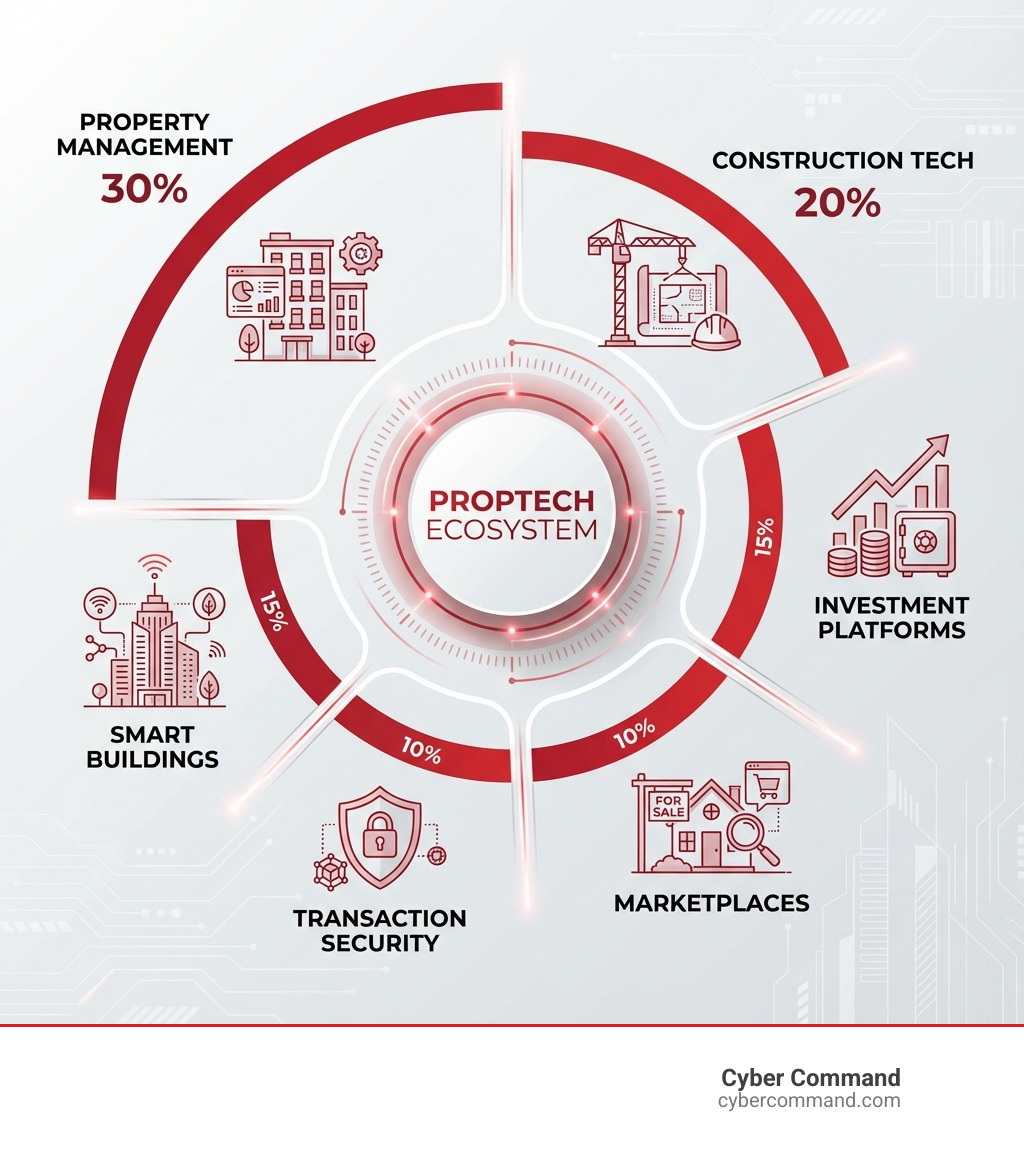
Key Categories of Tech Real Estate Companies:
- Property Management Platforms – Software for managing rentals, leases, and building operations (e.g., DoorLoop, VTS)
- AI & Automation Solutions – Tools that automate leasing, maintenance, and tenant communication (e.g., EliseAI)
- Construction Technology – Digital twins and project management tools (e.g., OpenSpace)
- Investment Management – Platforms for real estate investors and fund managers (e.g., Agora)
- Smart Building Solutions – IoT and ESG compliance tools (e.g., Infogrid)
- Transaction Security – Fraud prevention and closing platforms (e.g., CertifID)
- Marketplaces & iBuyers – Consumer-facing platforms (e.g., Zillow, Opendoor)
The PropTech market hit $36.55 billion in 2024, with AI-powered startups alone attracting $3.2 billion in venture capital. These companies aren’t just digitizing paperwork—they’re using artificial intelligence to reduce agent workloads by 80%, IoT sensors to cut building energy costs, and blockchain to prevent wire fraud.
The real question isn’t whether to adopt PropTech, but which solutions align with your specific business needs.
While household names like Zillow dominate consumer awareness, hundreds of specialized tech companies are solving critical problems for property managers, commercial real estate firms, construction companies, and investment funds. Some offer ready-made products. Others build custom solutions custom to unique workflows.
Understanding this landscape matters because 81% of real estate professionals now identify data and technology as their primary spending focus. The industry that was once slow to adopt technology is now racing to digitize—and the gap between early adopters and laggards is widening fast.
I’m Reade Taylor, founder of Cyber Command, and I’ve spent years helping real estate businesses steer complex technology decisions—from securing property management platforms to implementing custom software solutions. Throughout my work with tech real estate companies and their clients, I’ve seen how the right technology partner can transform operations while the wrong choice leads to costly complications.
The PropTech Revolution: Key Trends for 2026 and Beyond
The real estate industry, from the busy markets of Orlando and Tampa Bay to the burgeoning developments in Plano, Texas, is undergoing a profound digital change. This isn’t just about minor tweaks; it’s a fundamental reshaping driven by a few powerful trends that will define the market in 2026 and beyond.
One of the most impactful trends is the relentless march of AI and automation. Remember when ChatGPT burst onto the scene in 2022? That moment completely shifted perceptions, showcasing AI not just as a tool for efficiency but as a strategic imperative. In 2024 alone, $3.2 billion was invested in AI-powered PropTech. Companies are now looking to AI to automate processes, with 51% of Deloitte’s respondents aiming to use AI for this exact purpose. This means everything from property valuations and market analysis to customer service and leasing is getting smarter, faster, and more predictive.
Another critical trend shaping the future is the intense focus on ESG (Environmental, Social, and Governance) and sustainability. It’s a sobering fact that the global real estate sector accounts for nearly 40% of carbon emissions. This isn’t just an ethical concern; it’s a financial one, with investors increasingly favoring PropTech solutions that offer sustainable operations. We’re seeing a rise in smart building technologies that monitor energy consumption, optimize resource use, and help properties meet stringent ESG requirements. This is particularly relevant in areas like Florida, where climate resilience and energy efficiency are paramount.
The market is also moving towards hyper-specialization and vertical SaaS (Software as a Service). Instead of one-size-fits-all solutions, tech real estate companies are developing highly specialized platforms that address very specific pain points within niche segments of the industry. This could be anything from software custom for homeowners associations (like FRONTSTEPS) to platforms designed exclusively for commercial real estate brokers (like Buildout). This specialization allows for deeper functionality and a more precise fit for unique business processes.
Finally, the importance of data security and digital change cannot be overstated. As more operations move online, protecting sensitive data and ensuring secure transactions becomes paramount. For businesses in Florida and Texas, where real estate transactions are frequent and substantial, robust cybersecurity isn’t just a best practice—it’s a necessity. We see this reflected in Deloitte’s 2025 Commercial Real Estate Outlook, where 81% of respondents identified data and technology as their primary spending focus for the coming year. More than 88% plan to use digital technologies to improve business performance over the next 12 to 18 months, indicating a massive digital shift that demands strong security foundations. We believe that securing these digital frontiers is crucial for sustained growth and trust. You can learn more about how these trends impact your operations on our Real Estate Technology Trends page.

A Deep Dive into the Top Tech Real Estate Companies
The PropTech market is not just growing; it’s exploding with innovation. This sector hit a staggering $36.55 billion in 2024, fueled by significant venture capital investments, with a total of $4.3 billion flowing into the sector. This investment surge has led to numerous companies achieving unicorn ($1B+) or near-unicorn status, showcasing the immense impact of digital change on the industry. These aren’t just minor improvements; they’re foundational shifts that redefine how we interact with properties.
Property Management: The Core of Tech Real Estate Companies’ Offerings
Effective property management is the backbone of the real estate industry, and technology is changing it from a manual, paper-heavy process into a streamlined, data-driven operation.

One leader in this space is VTS, a commercial real estate platform that helps landlords and brokers manage their assets and leasing strategies. VTS goes beyond basic management, integrating AI-powered tools that accelerate proposal creation by 93% and provide instant answers to market questions, all powered by over 57 billion square feet of deal data. This level of insight is invaluable for property owners and managers in markets like Orlando, Jacksonville, and Plano, where commercial real estate decisions can have significant impacts.
For long-term rental owners and managers, DoorLoop provides an all-in-one property management software platform. This solution helps manage retail, office, industrial, and other commercial spaces, proving that comprehensive software can significantly boost efficiency. DoorLoop achieved a $500 million valuation and secured over $100 million in Series B funding, highlighting its rapid adoption among small to mid-sized rental property owners.
In the multifamily sector, EliseAI is making waves with its AI-powered leasing automation. This innovative technology is designed to handle prospective renter engagement and provide support to current residents, effectively reducing the agent workload by an impressive 80%. Imagine the efficiency gains for apartment complexes across Central Florida or the Dallas-Fort Worth metroplex!
These platforms are game-changers, replacing traditional, often cumbersome, management methods with intuitive digital solutions. For any real estate business, from a small portfolio owner to a large property management firm, leveraging these tools is crucial for staying competitive. To ensure these powerful platforms run smoothly, robust IT support is essential. We’ve seen how crucial reliable IT services are for these operations, which is why we offer specialized Property Management IT Services to keep everything humming.
Niche Solutions: How Specialized Tech Real Estate Companies are Winning
Beyond general property management, a fascinating trend among tech real estate companies is the rise of highly specialized solutions. These innovators are tackling specific challenges with pinpoint accuracy, delivering immense value to their target users.
In construction, for instance, OpenSpace is revolutionizing site monitoring with its construction digital twin technology. This allows construction teams to automatically capture and map construction sites using 360-degree cameras, creating a comprehensive digital replica. This technology provides invaluable progress tracking and problem identification, a massive boon for new developments springing up in Florida and Texas.
For smart buildings and sustainability, Infogrid stands out. They combine IoT sensors with AI to provide ESG and smart building solutions for commercial real estate. Their technology offers actionable insights to reduce energy consumption, making buildings more efficient and environmentally friendly—a crucial factor given the real estate sector’s significant carbon footprint.
Bilt Rewards has carved out an entirely new category by offering a rewards program for renters. Imagine earning points on your rent payments that can be redeemed for travel, shopping, fitness, or even a down payment on a home! This innovative approach has earned Bilt Rewards a staggering $10.75 billion valuation, demonstrating the market’s hunger for solutions that make rent work for tenants. With 44 million renter households in the US and a $500 billion annual market, it’s a massive opportunity.
For real estate investment firms, Agora provides specialized investment management software. This platform replaces archaic Excel spreadsheets and manual processes with automation capabilities, streamlining fundraising, investor relations, and reporting. This allows firms to manage their portfolios with greater accuracy and efficiency, a valuable asset for the thriving investment scene in our regions.
Finally, in an era where digital transactions are king, CertifID offers a critical service: wire fraud prevention. Their suite of products includes identity verification and secure sharing of wire instructions, protecting real estate transactions from increasingly sophisticated cyber threats. This kind of protection is indispensable for avoiding costly scams that can plague real estate deals. We also see companies like Closinglock providing similar fraud protection technology, helping law firms and financial service providers avoid issues like wire fraud and seller impersonation. These specialized solutions ensure that the digital change of real estate is not just efficient but also secure. You can explore more about securing your transactions on our Real Estate Transaction Software page.
Custom vs. Product: Choosing Your Digital Change Partner
When navigating tech real estate companies, it’s crucial to understand the fundamental difference between PropTech product companies and custom software development providers. This distinction often dictates the type of solution you’ll get and how well it integrates with your unique business needs.
PropTech product companies are what most people think of when they hear “real estate tech.” These are companies like Zillow and Opendoor. Zillow offers a comprehensive online platform for searching properties, obtaining home loans, and connecting with agents. Opendoor, on the other hand, is an iBuyer that simplifies home buying and selling by purchasing houses in cash, often closing in as little as 10 to 60 days. These companies offer ready-made, off-the-shelf solutions designed for a broad market, typically serving individual consumers or real estate professionals with standardized needs. They focus on providing a polished, user-friendly experience for a large audience.
However, many real estate businesses, especially those with complex operations or unique workflows in competitive markets like Central Florida or Plano, require more than a ready-made solution. This is where custom software development providers come into play. These are the partners who build bespoke solutions custom precisely to your specific business processes. They specialize in business process automation, creating software that acts as a strategic asset rather than just a tool. This could mean developing a unique CRM, an integrated property management system that talks to your accounting software, or a specialized data analytics platform that gives you a competitive edge.
When selecting a digital change partner, whether for a product integration or a custom build, we advise considering several essential criteria:
- Industry experience: Do they understand the nuances of real estate, including regulations, workflows, and market dynamics specific to your area?
- User experience focus: Will the solution be intuitive and easy for your team to use, reducing training time and increasing adoption?
- Transparent development process and project management: Is there clear communication, regular updates, and a predictable timeline?
- Deep understanding of business processes: Do they take the time to truly understand your operations, ensuring the software solves real problems and creates efficiencies?
- Scalability and growth alignment: Can the solution grow with your business, adapting to future needs without requiring a complete overhaul?
- Tech stack adaptability: Are they proficient in the technologies that best suit your long-term goals and existing infrastructure?
- Security focus: Given the sensitive nature of real estate data and transactions, is cybersecurity woven into every layer of their development?
Choosing the right partner means finding one that treats your business goals as their own, ensuring that the technology implemented is a true enabler of growth and efficiency. This strategic approach to technology is crucial for open uping true potential through Automation for Real Estate.
Frequently Asked Questions about Real Estate Technology
The rapid evolution of PropTech often leaves us with questions about how these advancements truly work and what they mean for our businesses. Let’s tackle some common inquiries.
How is AI being integrated into real estate software?
Artificial Intelligence is no longer a futuristic concept; it’s deeply embedded in today’s real estate software, revolutionizing how we operate. We’re seeing AI used extensively for:
- Process automation: AI can automate repetitive and time-consuming tasks. For example, EliseAI uses AI to automate leasing inquiries and responses for multifamily properties, reducing agent workload by 80%. Similarly, tools like Lessen LLC’s Copilot software leverage AI to simplify property maintenance by diagnosing problems and generating work orders through a conversational interface. VTS also uses AI to accelerate proposal creation and automate work order generation from tenant requests.
- Predictive analytics: AI algorithms can analyze vast amounts of market data to forecast property values, identify investment opportunities, and predict market trends. This helps investors and developers make more informed decisions, whether they’re looking at residential properties in Winter Springs or commercial developments in Jacksonville.
- Property valuation: Beyond simple comparables, AI can factor in a multitude of variables—from neighborhood amenities to future development plans—to provide more accurate property valuations.
- Smart building management: Companies like Infogrid integrate AI with IoT sensors to optimize building performance, managing energy consumption, predicting maintenance needs, and enhancing occupant comfort. This directly addresses sustainability goals and operational efficiency.
The impact is clear: AI-powered PropTech attracted $3.2 billion in venture capital in 2024, signifying its critical role in shaping the industry’s future. It’s about making real estate operations smarter, more efficient, and more responsive.
How do companies like Zillow differ from custom software developers?
The distinction between PropTech giants like Zillow and custom software developers lies primarily in their business models, target audience, and the nature of their solutions.
-
Business models and target audience:
- Zillow operates as a consumer-facing platform and marketplace. Its primary goal is to connect buyers, sellers, renters, and agents, offering tools like property search, home loan services, and agent directories. Its revenue comes from advertising, leads, and direct services.
- Opendoor is an iBuyer, directly purchasing homes from sellers and reselling them, aiming to streamline the transaction process for consumers.
- Custom software developers, on the other hand, are B2B partners. Their clients are real estate businesses—property managers, developers, investment firms, brokers—who need bespoke digital solutions to support their internal operations or specialized client services.
-
Nature of solutions:
- Zillow and Opendoor offer ready-made, standardized products. While powerful, these platforms are designed to serve a broad user base and may not perfectly align with every unique business workflow or competitive strategy.
- Custom software developers build custom solutions. This means creating software that is specifically designed to fit a client’s unique business processes, integrate with their existing systems, and address their precise operational challenges. This approach is about building strategic assets that provide a competitive advantage, rather than using off-the-shelf tools.
Zillow and Opendoor provide the cars that many people drive, while custom developers are the engineers who build a specialized vehicle designed specifically for your unique race.
What role does data security play in PropTech?
In an increasingly digital real estate landscape, data security isn’t just important—it’s absolutely critical. The sheer volume and sensitivity of the data handled by tech real estate companies make it a top priority.
- Critical importance: Real estate transactions involve vast amounts of personal and financial information, from buyer and seller identities to bank account details and property records. Compromising this data can lead to severe financial losses, reputational damage, and legal repercussions.
- Transaction security: Wire fraud is a persistent and costly threat in real estate. Companies like CertifID and Closinglock are crucial here, providing technology to verify identities and secure wire instructions, preventing malicious actors from diverting funds.
- Tenant data privacy: Property management platforms collect a wealth of tenant data, including personal identifiers, payment histories, and even access codes. Protecting this information from breaches is essential for maintaining trust and complying with privacy regulations.
- Wire fraud and Business Email Compromise (BEC): BEC schemes, where cybercriminals impersonate trusted parties to trick employees into transferring funds, are a growing concern. In real estate, this often targets closing processes, making robust security measures vital.
- Compliance: The real estate industry is subject to various regulations regarding data handling and privacy. PropTech solutions must be designed to ensure compliance, protecting both the business and its clients.
At Cyber Command, we understand that a strong cybersecurity posture is non-negotiable for real estate businesses. Our proactive, 24/7/365 U.S.-based support ensures that your digital assets are protected, allowing you to focus on your core business. You can explore our comprehensive approach to safeguarding your operations on our Network Security for Real Estate page.
Conclusion
The landscape of tech real estate companies is diverse, dynamic, and rapidly expanding. From specialized property management platforms like VTS and DoorLoop to niche innovators in construction tech (OpenSpace), smart buildings (Infogrid), and financial services (Bilt Rewards, Agora, CertifID), technology is reshaping every facet of the industry. This digital change offers immense strategic advantages for businesses willing to accept it.
Whether you’re integrating a cutting-edge AI leasing tool or developing a custom solution to automate your unique workflows, the ultimate success hinges on a robust IT foundation. This includes leveraging secure cloud infrastructure, implementing comprehensive cybersecurity measures, and having reliable IT support to ensure seamless operations.
For real estate businesses in Winter Springs, Orlando, Jacksonville, Tampa Bay, Central Florida, and Plano, Texas, staying ahead means partnering with experts who understand both technology and the unique demands of your industry. Our team at Cyber Command acts as an extension of your business, providing enterprise-grade IT, cybersecurity, and platform engineering services with proactive, 24/7/365 U.S.-based support and transparent, all-inclusive pricing. We’re here to help you steer this exciting era of PropTech with confidence.
Ready to leverage the power of technology to drive your real estate business forward? Get comprehensive IT solutions for your real estate business with Cyber Command.