
Mastering the Cloud: A Deep Dive into DevOps Coaching Programs


Why Coaching on DevOps and Cloud Computing Transforms Your Business
Coaching on devops and cloud computing provides personalized, hands-on guidance that accelerates your team’s ability to implement modern infrastructure, automate workflows, and adopt cloud technologies effectively. Unlike traditional classroom training or self-paced courses, coaching delivers just-in-time learning custom to your specific projects and challenges.
What DevOps and Cloud Coaching Delivers:
- Personalized learning paths aligned with your business goals and current infrastructure
- Real-world problem solving on your actual projects, not theoretical exercises
- 75% knowledge retention vs. only 20% from passive classroom learning
- On-the-job training that eliminates the gap between learning and implementation
- Expert mentorship from practitioners with proven enterprise experience
- Accelerated cloud adoption without lengthy trial-and-error periods
The modern tech landscape moves fast. Every company is becoming a tech company through digital change, and the pace only accelerates. Your team needs to master CI/CD pipelines, Infrastructure as Code, containerization with Docker and Kubernetes, and multi-cloud strategies—but traditional training methods leave massive gaps between theory and practice.
When your business faces a critical cloud migration or needs to implement DevOps practices now, classroom training won’t deliver results quickly enough. That’s when coaching makes the difference. A coach provides the “how” of change, not just the “what”—mentoring your team through real implementations while building their confidence and capabilities.
As Reade Taylor, founder of Cyber Command, I’ve spent years helping businesses steer modern IT infrastructure, from my time as an engineer with IBM Internet Security Systems to building secure, highly available cloud environments. Through coaching on devops and cloud computing, I’ve seen personalized guidance transform teams into confident practitioners who turn technology into a competitive advantage. This guide will show you how to leverage coaching to master DevOps and cloud for your business.
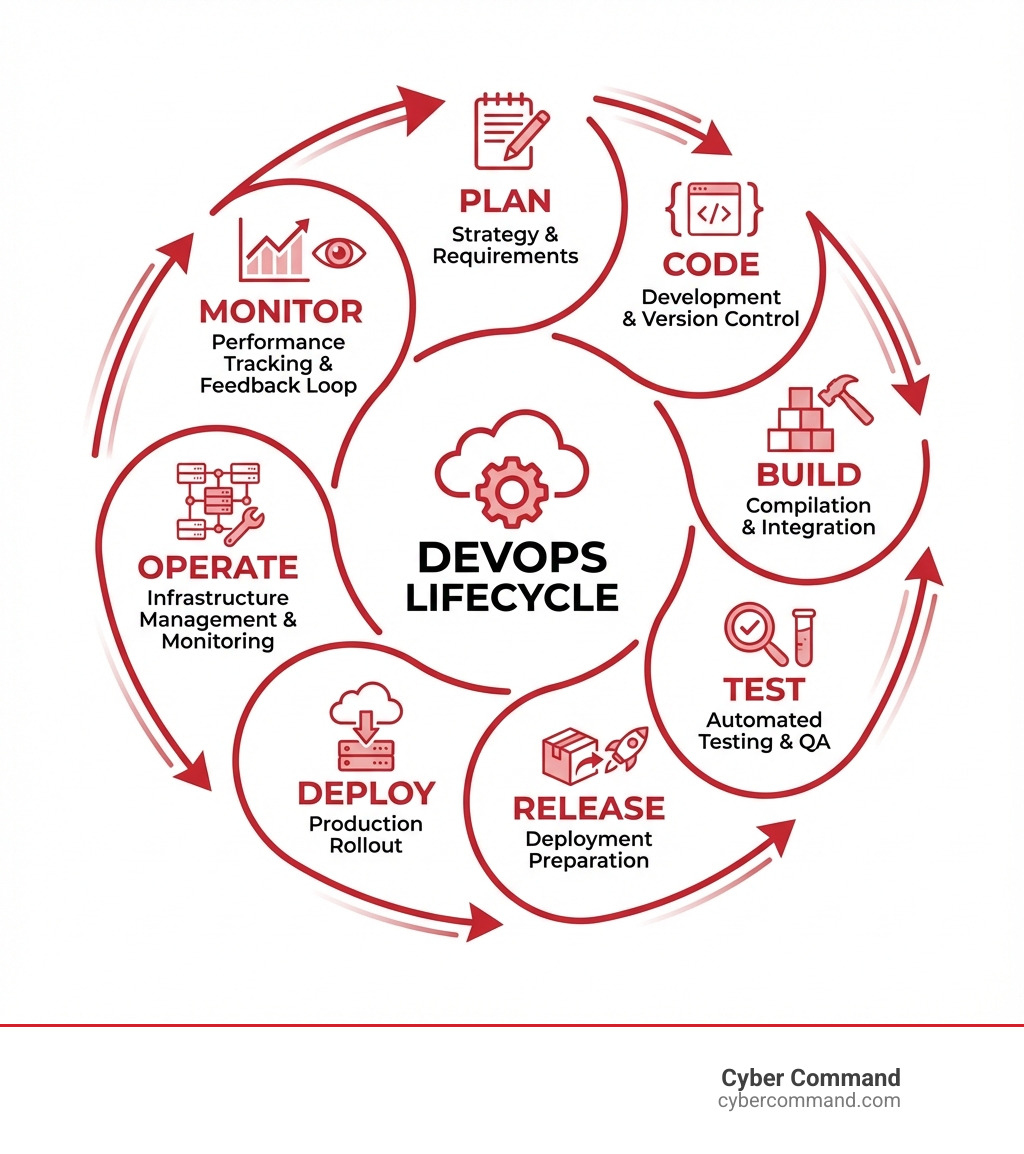
Why Coaching Beats Traditional Learning for DevOps and Cloud
In the fast-evolving world of technology, not all learning methods are created equal, especially for complex fields like DevOps and cloud computing. We’ve found coaching offers a distinct advantage over traditional training and self-learning.
Traditional classroom training, while providing a foundational understanding, often struggles with practical application. It’s a “one-to-many” approach, where content is standardized, and the pace is set for the average learner. This often leads to a significant gap between theoretical knowledge and real-world implementation. Our research shows that relying solely on classroom training means only about 20% of the content is retained. This can be a costly waste of time and resources when your team needs to achieve outcomes quickly.
Self-learning, while flexible and often cost-effective, presents its own set of challenges. Without structured guidance, learners can get lost in the vast sea of information, struggle with debugging complex issues, or simply not know what they don’t know. The “build, break, fix, learn” methodology is crucial in DevOps, but doing it effectively requires a safe environment and expert feedback.
This is where coaching shines. It provides personalized, just-in-time training relevant to your specific projects. It’s an on-the-job learning experience where skills are practiced in real-time, directly addressing business needs. This focused approach dramatically increases knowledge retention to 75%. We believe this hands-on approach helps clients reach their highest potential, build successful DevOps careers, and transform their operations.
| Dimension | Coaching | Traditional Training | Self-Learning |
|---|---|---|---|
| Personalization | Highly custom to individual/team needs and project goals | Standardized curriculum, generalized for a broad audience | Dependent on individual’s ability to curate content, often unstructured |
| Pace | Flexible, adaptive to learning speed and project timelines | Fixed schedule, can be too fast or too slow | Completely self-paced, but lacks external motivation/accountability |
| Real-World Application | Direct application to current projects, on-the-job problem-solving | Primarily theoretical, requires separate effort for application | Requires self-initiation for practical projects, no immediate feedback |
| Knowledge Retention | High (up to 75%) due to discussion, practice, and immediate feedback | Low (around 20%) due to passive learning | Variable, depends on individual’s discipline and learning style |
The Individual Advantage: Career Acceleration and Growth
For individuals in the tech industry, mastering DevOps and cloud computing is no longer optional—it’s a gateway to significant career advancement. Coaching on devops and cloud computing directly contributes to this by equipping you with job-ready skills and real-world project experience that employers are actively seeking.
Consider the financial incentives: a DevOps Engineer commands a median salary of $140,032, while an Automation Engineer averages $125,696. These figures highlight the high demand and value placed on these specialized skills. Coaching helps you tap into this demand by providing practical experience in areas like CI/CD, Infrastructure as Code, containerization, and mastering major cloud platforms.
Our coaches, often industry leaders and mentors, don’t just teach theory; they inspire and guide you through “real-world projects” with “100% hands-on training.” This means you’ll gain practical experience with tools like Kubernetes, Docker, Jenkins, Terraform, and various AWS and Azure services. This hands-on portfolio is invaluable for demonstrating practical skills to potential employers and can be a significant differentiator in the job market.
Beyond technical skills, coaching builds confidence. By working through challenges with an expert, you develop a deeper understanding and the ability to troubleshoot independently. Many coaching programs also offer career support, including resume building and interview preparation, further smoothing your path to job placement and faster career advancement in roles such as DevOps Engineer, Cloud Automation Engineer, AWS Cloud Engineer, Solutions Architect, or Site Reliability Engineer (SRE).
The Organizational Advantage: Boosting Team Performance and ROI
Organizations, including those we serve in Florida and Texas, face immense pressure to accelerate digital change and cloud adoption. However, a common hurdle is the “difficulty and high cost of hiring specialized DevOps engineers.” This is where coaching on devops and cloud computing becomes a strategic investment, offering a scalable solution to build internal capabilities and drive significant ROI.
We’ve seen organizations struggling with technical debt, siloed teams, and slow feature delivery. Our coaching programs are designed to address these issues head-on. By providing custom DevOps strategies, we help businesses “scale and thrive.” This isn’t just about training; it’s about enablement. As one co-founder stated about their platform engineering solution, the provider “didn’t just build—they enabled.” This means your team gains the knowledge and confidence to manage and evolve your infrastructure independently.
Coaching can “keep digital change on track” by providing hyper-relevant, on-the-job training that aligns with your specific project goals. It “accelerates adoption of new technology and processes” by focusing on practical implementation rather than generic concepts. For instance, if your team needs to migrate to a new AWS environment in Orlando or optimize Azure costs in Plano, a coach can guide them through the precise steps, best practices, and troubleshooting unique to your environment.
Furthermore, coaching helps “establish the leadership DNA to successfully transform” by mentoring leaders and junior teams. It fosters collaboration, breaks down silos, and ensures that everyone is aligned with the customer’s needs and project objectives. This leads to improved team performance, faster delivery cycles, and a significant reduction in technical debt. By investing in coaching on devops and cloud computing, organizations maximize their ROI on technology investments, turning their IT infrastructure into a competitive advantage. We act as an extension of your business, providing the proactive, 24/7/365 U.S.-based support and transparent, all-inclusive pricing that ensures your team’s success.
The Core Curriculum: What a DevOps and Cloud Coach Covers
When we talk about coaching on devops and cloud computing, we’re referring to a comprehensive curriculum that covers the essential tools, practices, and philosophies necessary for modern software delivery and infrastructure management. Our coaches guide individuals and teams through a practical, hands-on understanding of these critical areas.
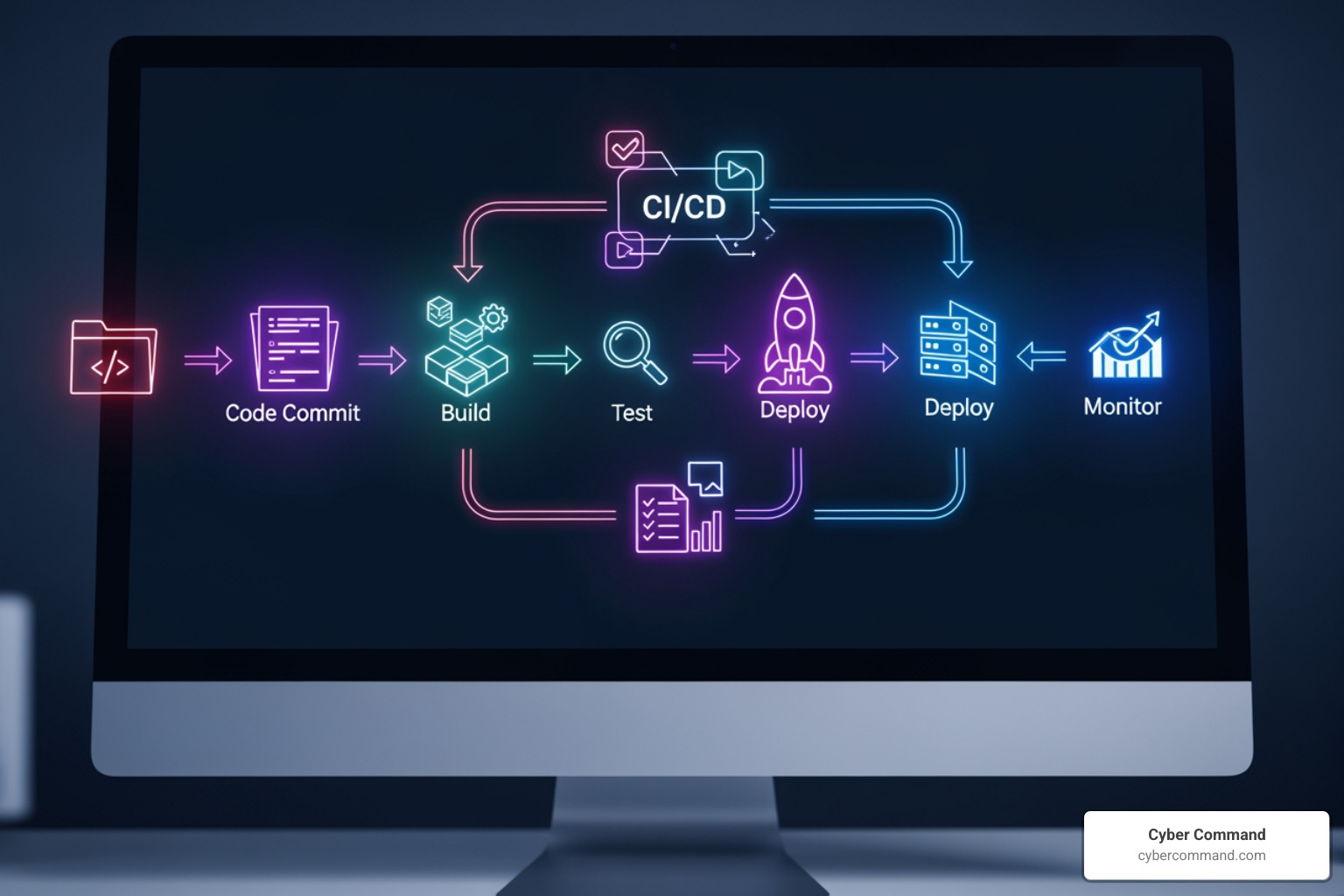
At the heart of DevOps lies Continuous Integration and Continuous Delivery (CI/CD). A coach will walk you through implementing robust CI/CD pipelines using industry-standard tools like Jenkins or GitHub Actions. This involves automating the entire software development lifecycle, from code commit to deployment, ensuring faster, more reliable releases. We focus on integrating version control (Git, GitHub, Bitbucket), automated builds, testing, and deployment strategies.
Next up is Infrastructure as Code (IaC), a cornerstone of modern cloud operations. You’ll learn how to manage and provision your infrastructure through code, using powerful tools like Terraform and Ansible. This ensures consistency, repeatability, and version control for your cloud resources, whether you’re deploying in Jacksonville, Tampa Bay, or Plano. We’ll cover how to define and manage everything from virtual machines to networks and security groups using declarative configurations.
Finally, we dig into containerization and orchestration. Docker is the de facto standard for packaging applications and their dependencies into lightweight, portable containers. For managing and scaling these containers, Kubernetes is king. Our coaches provide deep dives into deploying, managing, and troubleshooting applications on Kubernetes clusters, including advanced topics like Helm for package management and Istio for service mesh. You’ll gain practical experience setting up and managing these complex systems, crucial for scalable and resilient applications.
Mastering the Major Cloud Platforms
In today’s multi-cloud world, proficiency across leading cloud providers is paramount. Our coaching on devops and cloud computing programs provide in-depth guidance on mastering the “big three”: Amazon Web Services (AWS), Microsoft Azure, and Google Cloud Platform (GCP). We focus on enterprise-grade strategies and best practices custom to your specific needs, whether you’re operating in Central Florida or Texas.
For AWS, we cover core services like EC2, S3, RDS, Lambda, and how to build CI/CD pipelines using AWS CodeCommit, CodeBuild, CodeDeploy, and CodePipeline. We also explore Infrastructure as Code with AWS CloudFormation and monitoring with Amazon CloudWatch. The AWS Certified DevOps Engineer certification is a common goal, and our coaching aligns with these standards, providing the practical experience needed to succeed.
On Microsoft Azure, we guide you through creating and managing virtual machines, understanding Azure DevOps for CI/CD, and leveraging Azure’s extensive services for compute, storage, and networking. You can even get started with a free Azure account to begin your hands-on journey. We cover topics like Azure Resource Manager (ARM) templates, AKS for Kubernetes, and Azure security best practices.
For Google Cloud Platform (GCP), our coaching includes GKE for Kubernetes, Cloud Functions for serverless compute, BigQuery for data analytics, and Terraform for IaC. We emphasize designing architectures that span multiple regions and continents for optimal performance and compliance, and help you understand how to leverage competitive pricing and service-specific strengths across different cloud providers.
Beyond individual platforms, we teach you how to design resilient, vendor-independent architectures, manage multi-cloud environments effectively, and implement robust cloud security fundamentals. This includes understanding shared responsibility models, IAM best practices, and securing your applications and infrastructure, crucial for any business operating in the cloud.
Advanced Topics in Coaching on DevOps and Cloud Computing
As your team matures in its DevOps and cloud journey, we dig into advanced topics that further improve security, efficiency, and operational excellence. Our coaching on devops and cloud computing covers these critical areas to ensure your systems are not just functional, but also secure, observable, and cost-optimized.
DevSecOps Integration: Security is no longer an afterthought; it’s integrated into every stage of the DevOps pipeline. We guide you through embedding security practices from code development to deployment. This includes automated security scanning of Infrastructure as Code (IaC) files using tools like Checkov, which can identify security and compliance misconfigurations before they become vulnerabilities. We also cover integrating security tools into CI/CD pipelines (e.g., Jenkins) and implementing best practices for protecting automated pipelines and infrastructure using IAM.
Monitoring and Observability: Understanding the health and performance of your cloud-native applications and infrastructure is vital. Our coaching includes setting up comprehensive monitoring and observability solutions. You’ll learn to use powerful tools like Prometheus for collecting metrics and Grafana for visualizing them, providing real-time insights into your systems. We also cover leveraging cloud-native monitoring services like Amazon CloudWatch for application and infrastructure monitoring, setting up alarms, and troubleshooting problems.
Cloud Cost Optimization Strategies: The promise of cloud computing often comes with the challenge of managing costs effectively. We provide guidance on strategies to optimize your cloud spend, ensuring you get the most value from your investment. This includes rightsizing resources, identifying idle or underused services, leveraging reserved instances or spot instances, and implementing tagging strategies for better cost allocation and visibility. We help you make informed decisions to ensure your cloud environment is both powerful and economical.
Finding Your Mentor: How to Choose the Right DevOps Coaching Program
Choosing the right coaching on devops and cloud computing program is a crucial decision that can significantly impact your team’s success and your business’s digital change. It’s not just about finding someone with technical knowledge; it’s about finding a mentor who can effectively transfer that knowledge and empower your team.

First, we recommend assessing individual or team goals. What specific problems are you trying to solve? Are you looking to accelerate cloud adoption, improve CI/CD pipelines, or upskill a junior team? Clearly defining your objectives will help narrow down your options. For example, if your team in Orlando needs to ramp up quickly on AWS DevOps, your coaching needs will differ from a team in Plano focusing on multi-cloud security.
Next, it’s essential to vet a coach’s experience. Look for individuals or programs that emphasize “real-world projects” and “100% hands-on training.” Verify their technical expertise across the specific areas you need guidance on—be it Kubernetes, Terraform, or a particular cloud platform like Azure or AWS. A coach should have a deep understanding of the technologies and the practical challenges of implementing them in an enterprise environment. As our founder, Reade Taylor, often emphasizes, having experienced engineers who have steerd complex IT infrastructures is paramount.
Finally, evaluating communication and teaching style is critical. An effective coach isn’t just an expert; they’re a great teacher. They should possess strong mentorship skills, patience, and adaptability. They should be able to simplify complex topics, provide clear explanations, and offer constructive feedback. Look for a coach who focuses on enabling your team, empowering them to learn and grow, rather than just doing the work for them. A productive coaching relationship thrives on open communication and mutual respect.
Essential Qualities of an Effective DevOps Coach
An effective coach in the field of DevOps and cloud computing is more than just a technical guru; they are a catalyst for change and growth. When we look for coaches to partner with, we prioritize several key qualities that ensure they can truly empower our clients.
Firstly, real-world implementation experience is non-negotiable. Our coaches must have walked the walk, having successfully implemented DevOps practices and cloud solutions in diverse, complex environments. This hands-on background allows them to provide practical, actionable advice and help teams steer the inevitable challenges of real-world projects. They understand that “knowing how to transform is more important than knowing what is being transformed.”
Secondly, strong mentorship skills are paramount. A coach needs to be able to guide, encourage, and challenge their mentees effectively. This involves patience, active listening, and the ability to tailor their approach to different learning styles and experience levels, whether working with an absolute beginner or a seasoned specialist. They should be able to create an “empowering community” within your team.
Thirdly, patience and adaptability are crucial. The path to mastering DevOps and cloud can be complex, with many roadblocks and learning curves. A good coach remains patient, helps teams overcome obstacles, and adapts their methods as needs evolve. They understand that every organization is unique and requires custom strategies.
Finally, an effective coach has a focus on enabling others and possesses excellent problem-solving abilities. They don’t just provide answers; they teach your team how to find solutions themselves. They help identify root causes, strategize solutions, and guide the team through implementation, building their confidence and self-sufficiency. This aligns perfectly with Cyber Command’s mission to act as an extension of your business, providing expertise that empowers your internal capabilities.
Understanding Costs and Commitment in Coaching on DevOps and Cloud Computing
Investing in coaching on devops and cloud computing is a strategic decision for individuals and organizations alike, and understanding the associated costs and commitment levels is key to maximizing its value. While exact figures can vary widely based on the coach’s experience, the program’s scope, and the duration, we can outline typical expectations.
Typical coaching costs can range from hourly rates for individual sessions to package deals for longer-term engagements. For instance, some intensive 90-minute sessions might be around $225, while more comprehensive programs can involve retainers or project-based fees. When evaluating cost, it’s important to consider the long-term ROI. The cost of technical debt or the expense of hiring a full-time Senior DevOps Engineer (who can command $150K-$250K annually, plus recruiter fees of 20-30%) often dwarfs the investment in coaching that empowers your existing team. Coaching can be “up to 80% less than comparable full-time coaches” when considering the value delivered versus the cost of a full-time hire.
Program duration and structure are typically flexible. Some programs offer a minimum commitment, such as 40 hours of coaching over 3 months, designed to ramp up teams quickly. Other programs offer varying levels of engagement, from self-paced guidance and expert-led deployment in weeks to highly customized long-term collaboration. This allows organizations to “right-size their investment” based on their growth stage, budget, and specific goals.
Session frequency can also vary, from weekly check-ins to more intensive daily sessions during critical project phases. We often work with clients on an ongoing basis, providing continuous guidance and support as their needs evolve.
Before committing, we encourage you to ask these key questions to ensure alignment and value:
- What are your specific qualifications and certifications in DevOps and cloud platforms?
- Can you provide references or case studies from past clients?
- How do you tailor coaching programs to specific organizational needs and project goals?
- What is your methodology for tracking progress and measuring success?
- What kind of ongoing support or resources do you provide outside of direct coaching sessions?
- What are the full costs involved, including any hidden fees or additional charges?
- What is the typical duration and commitment required for your programs?
- How do you ensure the knowledge transfer empowers our team to be self-sufficient?
Frequently Asked Questions about DevOps Coaching
How does coaching contribute to career advancement and job placement?
Coaching on devops and cloud computing is a powerful accelerator for career advancement and job placement because it focuses on practical, verifiable skills. Instead of just theoretical knowledge, our coaching programs emphasize building “job-ready skills on live projects” using technologies like AWS, Azure, GCP, Kubernetes, Docker, and CI/CD pipelines. This direct experience translates into a robust portfolio that showcases your capabilities to employers.
Coaches often guide you through creating hands-on portfolio projects, which are far more impactful than just listing technologies on a resume. They also provide invaluable assistance with resume and interview preparation, helping you articulate your newly acquired skills and experiences effectively. With a median salary of $140,032 for DevOps Engineers and $125,696 for Automation Engineers, demonstrating these skills through coaching can significantly boost your earning potential and open doors to highly sought-after positions in Florida, Texas, and beyond. Furthermore, coaches can help you build a professional network, connecting you with other practitioners and opportunities in the field.
Can a total beginner benefit from DevOps and cloud coaching?
Absolutely, a total beginner can significantly benefit from coaching on devops and cloud computing. In fact, it can be one of the most effective ways to enter these complex fields. While self-learning can be overwhelming for newcomers, a coach provides a structured learning path, breaking down intricate concepts into manageable steps.
Our coaches are adept at foundational skill building, guiding beginners through the basics of Linux, networking, scripting, and core cloud concepts before diving into more advanced DevOps practices. They help avoid common pitfalls that often frustrate self-learners, offering personalized troubleshooting and clarification. For instance, if you’re just starting with creating an Ubuntu VM in Azure or setting up your first Git repository, a coach can provide direct, step-by-step guidance. This personalized roadmap from basics to advanced topics ensures a solid understanding and builds confidence, making the journey into DevOps and cloud computing much smoother and more successful.
What are the future trends in DevOps and cloud computing coaching?
The landscape of DevOps and cloud computing is constantly evolving, and so too is the nature of coaching in these fields. We anticipate several key trends shaping the future of coaching on devops and cloud computing:
- Focus on Platform Engineering: As organizations mature, there’s a growing shift towards building internal developer platforms. Coaching will increasingly focus on guiding teams to design, build, and maintain these “scalable platform engineering solutions” that empower developers and accelerate delivery. This involves integrating various DevOps tools and practices into a cohesive, self-service offering.
- Integration of AI and MLOps: Artificial Intelligence and Machine Learning are becoming integral to many applications. Coaching will expand to cover MLOps—the practices for bringing ML models into production reliably and efficiently—and how AI can be leveraged within DevOps for tasks like autonomous testing, predictive analytics, and improved monitoring.
- Increased Specialization: While broad expertise remains valuable, we’ll see more specialized coaching in areas like FinOps (cloud financial management), GreenOps (sustainable cloud practices), and advanced DevSecOps (integrating sophisticated security tools and practices throughout the pipeline).
- Hybrid Coaching Models: Blending virtual coaching with occasional in-person workshops, leveraging AI-powered learning platforms for personalized learning, and incorporating gamified labs will create more engaging and effective learning experiences. This hybrid approach caters to diverse learning styles and distributed teams, ensuring that knowledge transfer is both flexible and impactful.
Conclusion: Build Your Future in the Cloud
In today’s rapidly evolving technological landscape, mastering DevOps and cloud computing is no longer a luxury—it’s a necessity for both individual career growth and organizational success. We’ve explored how coaching on devops and cloud computing stands apart from traditional training and self-learning, offering personalized, hands-on, and highly effective guidance. From accelerating individual career paths with six-figure salaries to boosting organizational ROI by eradicating technical debt and fostering digital change, the benefits are clear.
We understand that navigating the complexities of CI/CD, Infrastructure as Code, containerization, and multi-cloud environments can be daunting. That’s why our coaching programs are carefully designed to cover the core curriculum and advanced topics, ensuring your team gains practical, job-ready skills. By choosing the right coach—one with real-world experience, strong mentorship skills, and a commitment to enabling your team—you make a strategic investment in your future.
At Cyber Command, we are passionate about empowering businesses across Winter Springs, Orlando, Jacksonville, Tampa Bay, Central Florida, and Plano, Texas, to build secure, highly available, and efficient cloud environments. Our proactive, 24/7/365 U.S.-based support and transparent, all-inclusive pricing mean we act as an extension of your business, providing the expert guidance you need.
Don’t let the pace of technological change leave your team behind. Accept continuous learning and empower your workforce with the future-ready skills demanded by the cloud era.
Accelerate your DevOps transformation with expert platform engineering services.