
February 12, 2026 #Co-Managed IT
DevOps Services: Best Strategic Guide 2026
Discover top devops services for 2026. Optimize your CI/CD, embrace DevSecOps, and drive innovation with expert solutions.
Why DevOps Services Matter for Your Business in 2026
DevOps services are integrated solutions that automate and streamline software development and IT operations. By combining practices like CI/CD pipelines, Infrastructure as Code (IaC), agile planning, automated testing, and security integration, businesses can deliver better products faster while reducing costs and risks.
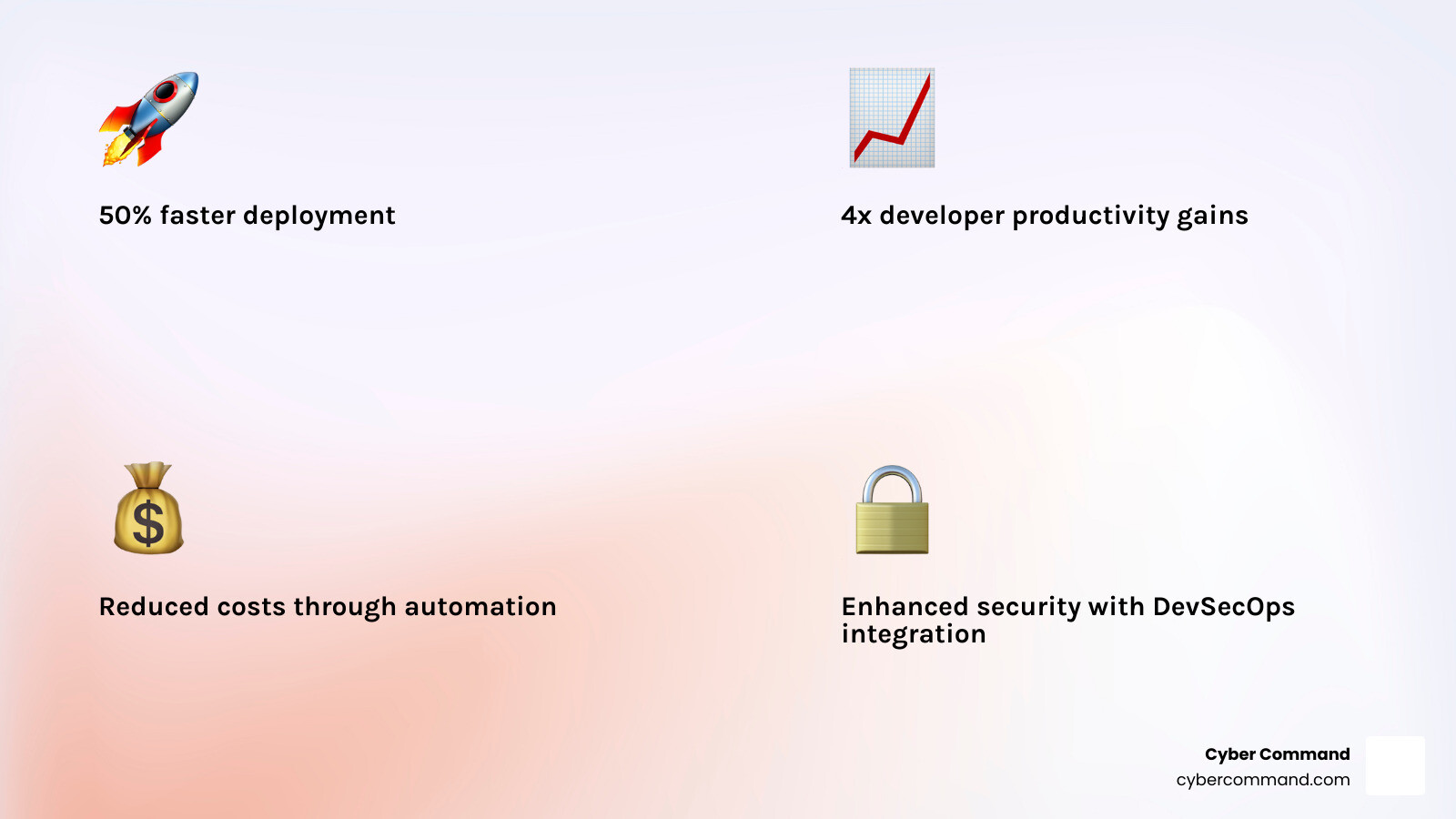
In today’s digital-first world, software agility is paramount. Teams adopting modern DevOps practices deploy more frequently, with greater confidence, and resolve production issues much faster. For example, companies using these services report dramatic improvements, such as Vodafone’s 4x increase in developer productivity and 100x increase in software releases per month.
The benefits are clear: increased speed, improved collaboration, reduced costs through automation, and improved security. DevOps addresses common pain points like outdated systems, cybersecurity threats, and unpredictable IT costs by bringing structure and transparency to your technology operations.
I’m Reade Taylor, Founder and CEO of Cyber Command. I’ve spent my career implementing secure, high-availability DevOps services that turn technology into a competitive advantage. My work, from IBM Internet Security Systems to leading Cyber Command, focuses on helping businesses transform IT from a liability into a growth driver.
Core Components of Modern DevOps Services
Modern DevOps services are built on interconnected components that streamline the software delivery lifecycle. These building blocks—including CI/CD pipelines, Infrastructure as Code (IaC), version control, agile planning, automated testing, and monitoring—work in harmony to help teams collaborate effectively, automate tasks, and deliver high-quality software with speed and reliability.
CI/CD: The Engine of Automation
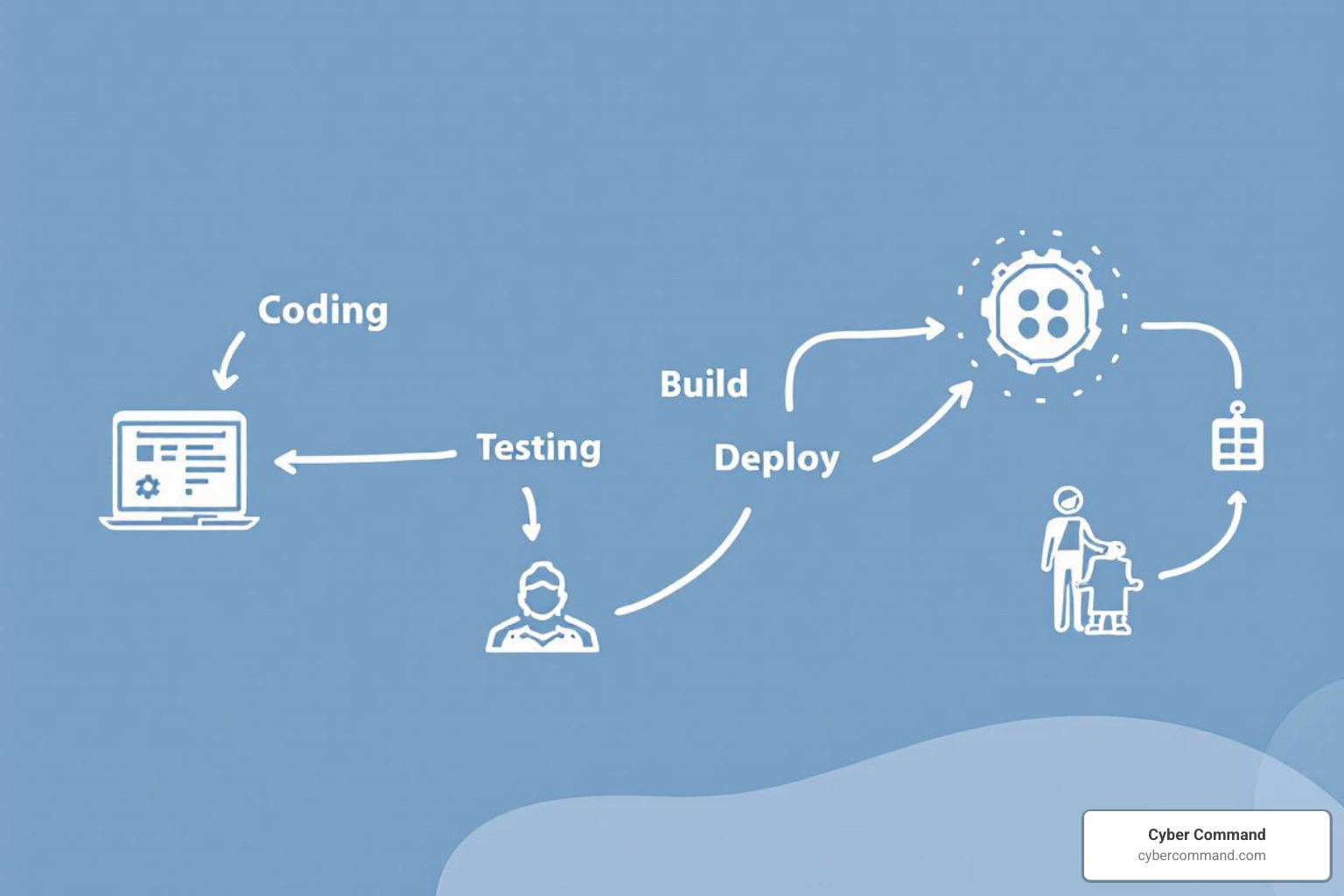
At the heart of DevOps is the CI/CD pipeline, which automates the software delivery process. Continuous Integration (CI) involves developers frequently merging code changes into a central repository, where each merge triggers an automated build and test. This catches integration issues early. Continuous Delivery (CD) extends CI by ensuring that validated code is always ready for release. Continuous Deployment takes this a step further by automatically deploying every passed change to production.
These pipelines automate builds, tests, and deployments across a wide array of languages (like Java, .NET, Python) and platforms (Linux, Windows, Kubernetes, cloud, on-premises). Choosing the right CI/CD architecture is crucial and depends on your technology stack, quality requirements, and team skills. For more insights, see our guide on How to select an appropriate CI/CD architecture.
Agile Planning and Code Collaboration
Effective planning and collaboration are cornerstones of DevOps services. Agile planning tools like Kanban boards and Scrum backlogs help teams manage projects dynamically, track work visually, and adapt to changing requirements. They foster transparency, accountability, and a continuous flow of value.
Code collaboration is powered by version control systems, with Git being the industry standard. It allows developers to track changes, revert to previous versions, and work in parallel. Key collaborative features like pull requests and code reviews ensure that all changes are peer-reviewed for quality before being merged into the main codebase. This process improves code quality and facilitates knowledge sharing across the team. Find more about how this integrates with broader strategies in our guide on More info about platform engineering consulting services.
Quality, Testing, and Package Management
High code quality is achieved through comprehensive testing integrated into the CI/CD pipeline. Automated tests—including unit, integration, and performance tests—run with every code change, catching bugs early when they are easiest to fix. While automation is key, manual and exploratory testing remain valuable for assessing user experience and finding unexpected behaviors.
Package management is essential for efficiently sharing and reusing software components. Artifact repositories provide a central, secure location to store and manage dependencies (like npm, NuGet, or Maven packages), preventing conflicts and ensuring consistency. Integrating these repositories into CI/CD pipelines simplifies the process of consuming and publishing packages, further accelerating development. For a deeper dive into securing these components, explore our guide on Best practices for secure DevOps in your CI/CD pipeline.
Evaluating DevOps Platforms and Solutions
Choosing the right DevOps services and platforms is a pivotal decision that depends on your organization’s specific needs, existing infrastructure, team skills, and strategic goals. The evaluation should consider technology diversity, the learning curve for your team, cost-benefit analysis, and support for your long-term product strategy, including hybrid cloud environments. The goal is to select a solution that meets current demands and scales with your business.
All-in-One Cloud-Native Platforms
All-in-one cloud-native platforms provide a comprehensive, integrated toolset covering the entire software lifecycle, from planning and coding to deployment and monitoring. These platforms are ideal for enterprise teams seeking to standardize practices and reduce tool sprawl. Key advantages include pre-integrated components, end-to-end lifecycle management, deep integration with the provider’s cloud ecosystem, and scalability. They support concurrent builds and are often recognized by industry analysts for their strong offerings, providing a cohesive and powerful solution for complex operations. For more information on how cloud computing and DevOps go hand-in-hand, refer to our insights on More info about cloud computing and DevOps.
Simplified Application Deployment Services
For businesses needing to rapidly deploy and scale web applications without managing underlying infrastructure, simplified deployment services are invaluable. These platforms abstract away complexity, allowing developers to focus on code. They typically automate deployment, scaling, load balancing, and health monitoring. By managing the servers, operating systems, and capacity provisioning, these services reduce the operational burden on your team. They support popular languages like Java, .NET, and Python, making them an easy-to-use solution for getting web applications and services to market quickly. For strategies on moving your applications to these modern environments, check out our guide on Details on application migration strategy.
Choosing the Right Deployment Strategy
Selecting the right deployment strategy is crucial for minimizing risk and reducing downtime. The choice depends on a trade-off between risk, user impact, and implementation effort.
- Canary Deployments: The new version is rolled out to a small subset of users first. If it performs well, the rollout gradually expands. This acts as an early warning system for potential problems.
- Blue-Green Deployments: Two identical production environments, “blue” (current) and “green” (new), are maintained. Traffic is switched from blue to green once the new version is verified, allowing for near-zero downtime and instant rollback.
- Rolling Deployments: The new version gradually replaces instances of the old version one by one or in small batches, minimizing the impact of any potential issues.
Each strategy has its place, and the best choice depends on the application’s criticality and your team’s risk tolerance. For a more detailed look, our resource on Canary and blue-green deployment strategies can provide further guidance.
The Case for Managed DevOps Services
For many businesses in Florida and Texas, building and maintaining a robust DevOps environment is a significant challenge. Managed DevOps services offer a strategic solution, empowering organizations to focus on their core competencies instead of complex infrastructure.
Managed services address common IT problems by:
- Providing specialized expertise to overcome skills shortages at a lower cost than hiring internally.
- Optimizing processes with industry-standard frameworks and best practices.
- Reducing and predicting costs, eliminating the expense of an in-house team and providing clear budget forecasts.
- Freeing up your team to focus on innovation and business growth.
This approach provides a flexible, scalable solution for businesses looking to accelerate their digital change without the overhead of a dedicated internal department.
What to Expect from a Managed Provider
When partnering with us for managed DevOps services in Winter Springs, Orlando, or our other service areas, you get a proactive partner dedicated to your success. Our services are custom-designed for your business and managed by certified experts in AWS, Azure, GCP, Kubernetes, and more.
We provide comprehensive support, including:
- Cloud Management: Proactive monitoring, backup management, incident response, cost optimization, and security for your cloud environment.
- Automation as Code: We automate your application pipelines (Pipeline as Code) and infrastructure configuration (Infrastructure as Code with Terraform and Kubernetes) for consistency and speed.
- Proactive Support: Our 24/7/365 U.S.-based support constantly monitors your systems to identify and address issues before they impact your operations.
Our structured process ensures a smooth transition and long-term success. For those considering a move to the cloud, our expertise in Information on cloud migration services is a valuable resource.
The Strategic Value of Managed DevOps Services
The value of managed DevOps services extends beyond operational efficiency; it’s about positioning your business for growth and innovation. By entrusting your DevOps management to us, your internal teams are free to develop products that add direct value to your customers. You gain predictable IT costs, improved system reliability, and access to a multidisciplinary team of experts without the overhead of recruitment and training.
We also provide DevOps maturity assessments and a commitment to continuous improvement, ensuring you always benefit from the latest best practices. Choosing a managed service provider is about collaborating with a trusted partner committed to turning your IT operations into a strategic asset. Learn more about the broader impact of managed services by reading Ways managed IT services can help your architectural firm.
The Future of DevOps: DevSecOps, AI, and Automation
The landscape of DevOps services is continuously evolving, driven by the pursuit of speed, quality, and security. The integration of security (DevSecOps), artificial intelligence (AI), and advanced automation is the new standard for modern software delivery, making processes smarter, faster, and more resilient.
Integrating Security: The Rise of DevSecOps
DevSecOps integrates security into every stage of the DevOps pipeline, changing it from an afterthought into a shared responsibility. This “shift-left” approach embeds security from inception to deployment.
Key practices include:
- Shared Security Responsibility: Developers, operations, and security personnel are all accountable for security.
- Automated Security Scanning: Tools are integrated into CI/CD pipelines to automatically scan for vulnerabilities and compliance issues.
- Compliance as Code: Security and compliance policies are defined as code, ensuring they are automatically enforced.
By embedding advanced security features directly into the developer workflow, teams can innovate without sacrificing security. This commitment is crucial for protecting assets and maintaining trust in today’s threat landscape. For a deeper understanding of securing your cloud infrastructure, explore our insights on Learn about cloud migration security.
AI-Powered DevOps: The Next Frontier
Artificial intelligence (AI) is revolutionizing DevOps services by introducing unprecedented levels of automation and optimization. AI-powered tools are becoming integral to the developer workflow, assisting with writing, testing, and modernizing code to boost productivity.
AI is reshaping DevOps by:
- Enhancing Automation: Making CI/CD pipelines smarter by predicting build failures or optimizing resource allocation.
- Optimizing Performance: Analyzing operational data to identify bottlenecks, reduce costs, and provide deeper insights into system health.
- Managing Bottlenecks: As AI coding assistants accelerate code generation, AI-powered DevOps automates subsequent pipeline stages to keep pace.
The integration of AI is no longer a futuristic concept; it’s a present reality that helps automate, safeguard, and accelerate software delivery at scale. Explore this evolving landscape further in our article, Bridging the gap: my take on DevOps vs. platform engineering.
Advanced Automation: Containment-as-Code
Within cybersecurity, an innovative approach called Containment-as-Code (CaC) is emerging. It applies the principles of Infrastructure-as-Code to threat containment, automating incident response for our clients in Florida and Texas.
CaC defines containment measures—like firewall rules or disabling accounts—as code. When a threat is detected, these codified responses are automatically triggered. This approach drastically reduces the Mean Time to Contain (MTTC) by automating actions that would otherwise be manual. By integrating with Security Orchestration, Automation, and Response (SOAR) platforms, CaC helps create self-healing environments that are more resilient to attack. It brings the benefits of version control, peer review, and automation to cybersecurity operations, offering agility and consistency in incident response.
Best Practices for Implementation and Management
Implementing and managing DevOps services effectively requires more than just tools; it demands a cultural shift and a commitment to continuous improvement. We guide our clients in Florida and Texas through a set of best practices that lay a solid foundation for success.
- Start with Version Control: Mandate version control (like Git) for all code, configurations, and infrastructure definitions to ensure traceability and collaboration.
- Foster a Collaborative Culture: Break down silos between development, operations, and security teams. Encourage open communication and shared goals.
- Automate Everything: Design modular, reusable workflows in your CI/CD pipelines to automate builds, testing, and deployments. This promotes consistency and reduces errors.
- Integrate Security Early and Often: Involve cross-functional teams in developing security playbooks. Implement granular access controls and continuously test your security posture.
- Define Clear Rhythms: Establish consistent sprint cadences for agile teams to maintain predictability and a steady flow of work.
- Measure for Success: Track key metrics like deployment frequency, lead time for changes, mean time to recovery (MTTR), and change failure rate. Use this data to drive continuous improvement.
By aligning technology, processes, and people around these principles, organizations can build robust and secure software delivery pipelines. Read more about scaling your team’s expertise in our article: Discover when I needed to hire a platform engineering team.
Conclusion
The journey into modern DevOps services is transformative, offering businesses a clear path to accelerate innovation, improve security, and achieve operational excellence. From foundational CI/CD pipelines to the future of AI-driven automation and DevSecOps, the benefits are profound: faster deployments, higher productivity, and significant cost savings.
Navigating this landscape requires an experienced partner. At Cyber Command, we provide enterprise-grade IT, cybersecurity, and platform engineering services for businesses in Florida, Texas, and beyond. With proactive, 24/7/365 U.S.-based support and transparent pricing, we act as an extension of your team, helping you build the robust, secure, and agile pipelines that drive business forward.
Ready to transform your software delivery and operational efficiency? Accelerate your transformation with our Platform Engineering services today.