
10 Business Continuity Plan Examples for 2026


Your Business Stops. What's the Next Move?
A hurricane warning hits Orlando. Staff start texting about school closures, road conditions, and whether the office will open tomorrow. Or a ransomware alert lands on a screen in the middle of a normal workday, and suddenly nobody can open files, process invoices, or access patient records. In that moment, most businesses learn whether they have a real continuity plan or just a folder with good intentions.
That gap is bigger than most owners think. Only 61% of businesses globally have a business continuity plan, and just 26% have an actual disaster recovery plan in place, according to business continuity statistics compiled by Invenio IT. Confidence is high, but preparation often isn't. For small and mid-sized businesses in Central Florida, that disconnect is dangerous. Hurricanes, power loss, vendor outages, and cyber incidents don't wait for a convenient week.
Good business continuity plan examples don't read like policy manuals. They tell your team exactly who makes decisions, which systems come back first, how clients get updated, and what work continues manually when technology fails. They also reflect local reality. An Orlando law firm doesn't face the same disruption profile as a Winter Springs dental office, and neither should use a generic template copied from a large enterprise.
The strongest plans also assume that internal teams will need help. During a real incident, someone has to investigate alerts, isolate devices, restore backups, coordinate vendors, and document what happened. That's where a managed IT and cybersecurity partner matters. A partner like Cyber Command gives businesses in Central Florida and North Texas the missing operational layer between a written plan and an executed recovery.
Below are 10 practical business continuity plan examples built around the kinds of risks local businesses face.
1. Ransomware Attack Recovery Plan for Professional Services Firms
Law firms, CPA firms, architects, and engineering offices all share the same weakness. They hold high-value data, rely heavily on file access, and usually can't afford much downtime.
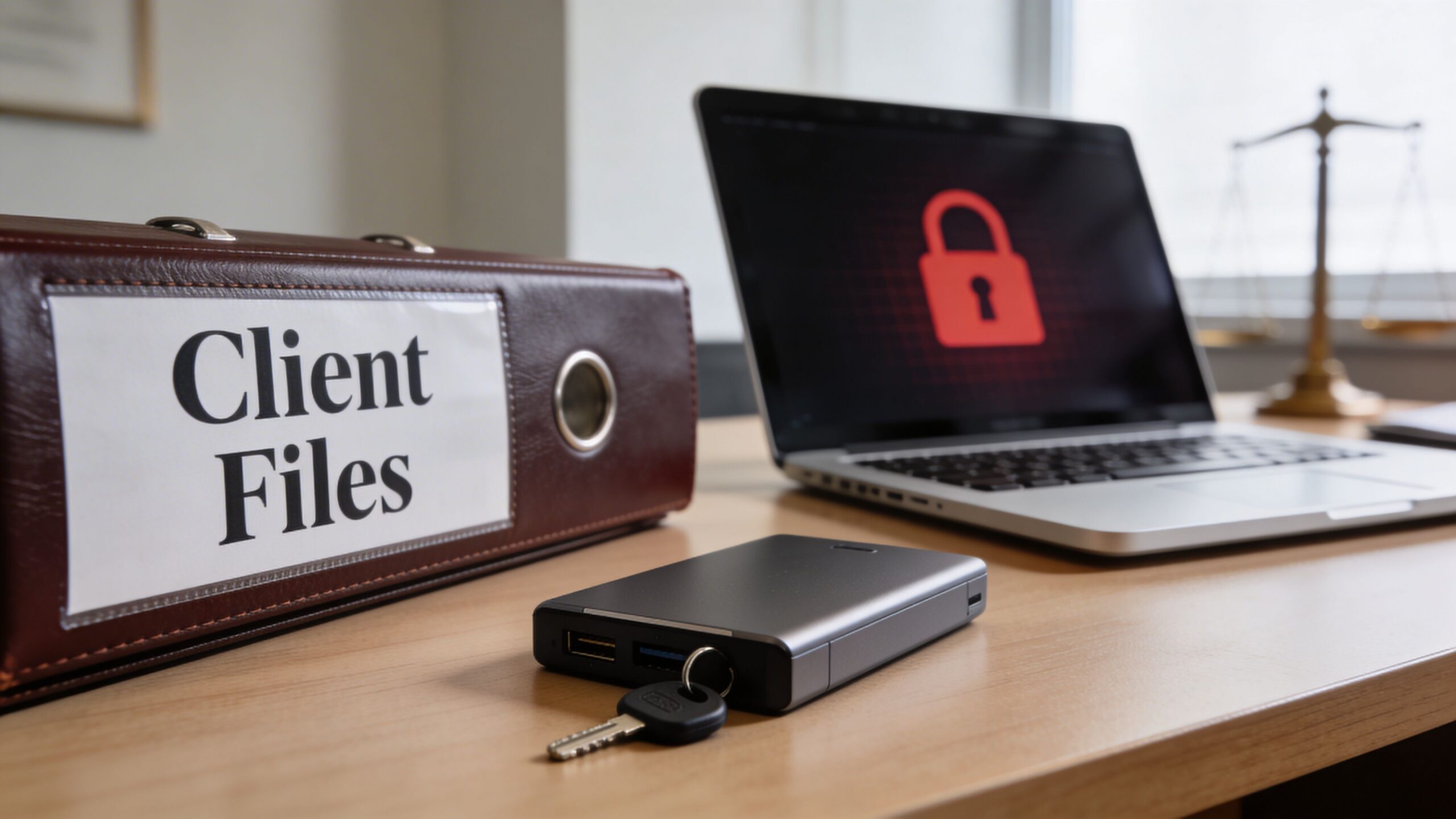
A ransomware continuity plan for professional services starts with a blunt assumption. If one workstation is encrypted, the issue may already be broader than one workstation. The first actions should be isolation, evidence preservation, backup validation, and client communication control. Not everyone should speak for the firm.
What works in practice
The firms that recover best usually define roles ahead of time:
- IT lead: Isolates endpoints, disables compromised accounts, and coordinates forensic review.
- Managing partner or owner: Makes business decisions on client service and authority to activate the plan.
- Compliance or legal contact: Reviews reporting obligations and documentation.
- Client communications owner: Sends controlled updates so staff don't improvise.
Many generic business continuity plan examples fall short here. They talk about "restore from backup" as if that's one click. In reality, you need to know which file sets matter first, where the clean backups live, how you verify integrity, and which systems can't be trusted until the investigation is complete.
Practical rule: If your backup restore procedure hasn't been tested by restoring actual client matter files, financial workpapers, or project drawings, you don't know if recovery will work.
A strong ransomware plan also documents where regulated or sensitive data lives. Shared drives, Microsoft 365, local desktops, line-of-business apps, and cloud document systems all need to be mapped before an incident.
Cyber Command's guidance on ransomware incident response paths to effective recovery fits directly into this type of plan because the main challenge isn't only stopping the attack. It's restoring trustworthy operations without making the damage worse.
Common trade-off
Shutting down broad access quickly can interrupt billable work for more people than necessary. Waiting too long can spread the damage. For professional services firms, the better choice is usually fast containment with a short-term manual workflow, especially when client confidentiality is at stake.
2. Managed IT Provider Failover Plan for Medical Practices
A medical practice has a different threshold for disruption. If the phones are down and the EHR is unavailable, the issue isn't just inconvenience. Patient care, scheduling, billing, and documentation all start to break at once.
The most useful healthcare continuity plans build a bridge between digital failure and safe manual operation. The Santa Cruz long-term care continuity template is a strong example because it requires immediate assessment of medical records, purchasing contracts, major equipment, pharmaceuticals, and staffing before deciding whether care can continue onsite or needs to shift elsewhere. You can see that structure in the Santa Cruz Health continuity plan template.
What the plan should contain
For a dental office, veterinary clinic, med spa, or orthodontic practice, the failover plan should answer five operational questions fast:
- Patient access: How do staff confirm today's appointments if the scheduling system is unavailable?
- Clinical records: How do providers access essential patient information in a HIPAA-conscious way?
- Treatment flow: Which procedures continue, and which get postponed?
- Payments: How are charges documented if the normal billing platform is down?
- Escalation: Who calls the EHR vendor, managed IT provider, and telecom support?
Printed downtime procedures still matter here. So do local copies of critical contacts. A surprising number of small practices store emergency information only inside the same systems that fail during an outage.
Buckland Medical Practice offers another practical signal. Its continuity planning assumed operations might need to continue at 25% staff capacity during a pandemic response, with annual review by the practice manager and offsite hard and electronic copies of the plan. That kind of staffing assumption, shown in the Buckland Medical Practice business continuity plan, is useful even outside healthcare because it forces leaders to define minimum viable operations.
Keep printed downtime instructions in treatment areas, not just at the front desk. Clinical teams need them where care happens.
What doesn't work
A medical office can't rely on "call IT and wait." The plan has to spell out manual charting, paper timekeeping, patient notification, and EHR vendor escalation. In Central Florida, where storms can combine power, internet, and staffing issues in the same day, a managed IT failover plan needs both cyber and operational thinking.
3. Multi-Location Network Synchronization Plan for Distributed Teams
When a business has offices in Orlando, Winter Springs, and Plano, continuity stops being a single-site question. It becomes a coordination problem.
A multi-location synchronization plan needs to document which office can absorb which work, which systems are cloud-based, which are site-dependent, and what breaks if one location loses internet or local infrastructure. Many distributed teams assume Microsoft 365 or a cloud file platform solves the problem by itself. It doesn't. Shared access helps, but only if identity, endpoint access, permissions, and communication paths all still function.
The mistake most teams make
They map systems, but not dependencies.
If the Orlando office loses connectivity during a storm, can the Plano team answer phones, access current files, and continue work without relying on a line-of-business app that still routes through the affected site? If staff can log in remotely, do they also have the right VPN or identity controls? If one office becomes the temporary hub, who approves the change?
A useful plan should name:
- Primary and backup operating site: Which office takes over first.
- Critical applications by dependency: Which apps rely on local servers, cloud services, telecom, or a specific ISP.
- Cross-site role transfers: Which tasks move to another office and who owns them.
- Communication path: How location leads coordinate if email or Teams is unstable.
This is one of the most practical business continuity plan examples for firms with growth plans, because expansion often creates hidden complexity. One office may still host legacy file shares. Another may hold the better internet connection. A third may have the only employee who understands a niche process.
What mature teams measure
Databarracks reporting, cited by Revenue Memo, found that businesses with tested BCPs are 2.5x more likely to recover quickly from disasters. The same summary notes that 90% maintain established communication plans and 74% experience fewer disruptions in tested environments, as shown in these business continuity statistics from Revenue Memo.
That lines up with what works on the ground. Multi-location resilience depends less on having a binder and more on rehearsing cross-site takeover, access control, and communication handoffs.
4. Cloud Service Provider Dependency Recovery Plan
At 8:15 a.m. on a Monday in Orlando, staff sign into Microsoft 365 and get nowhere. Email is down. Shared files do not load. The accounting team cannot reach QuickBooks Online. For a business that runs almost everything in the cloud, a vendor outage now looks like a company-wide interruption.
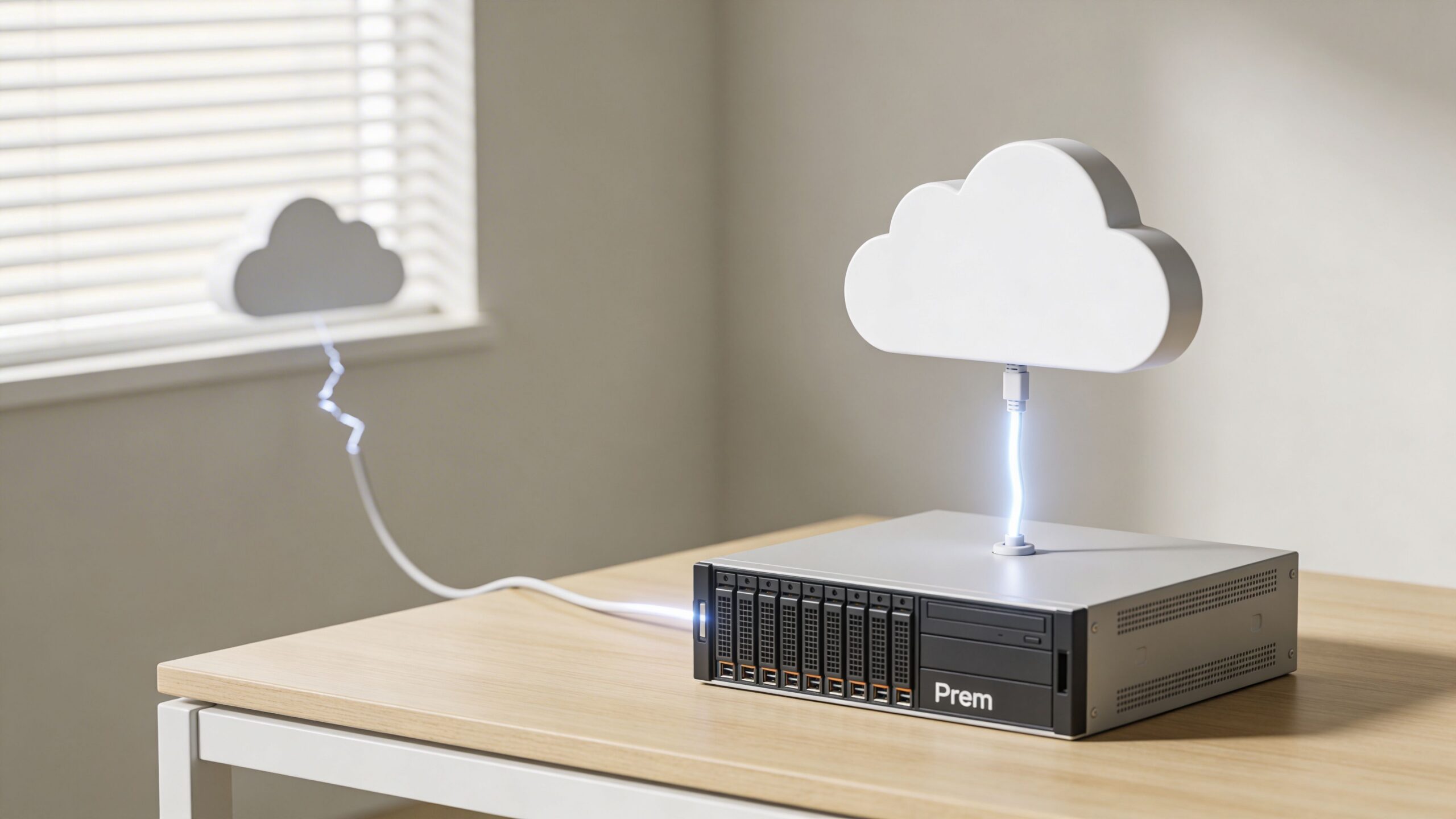
That is why a cloud service provider dependency recovery plan has to do more than name your SaaS tools. It should identify which provider failure stops revenue, which team leader makes the call to switch to offline procedures, how long the business can operate without each platform, and what Cyber Command does during the outage. In Central Florida, that planning matters even more during hurricane season, when a regional power or internet issue can hit your office at the same time a cloud platform is unstable.
What belongs in the plan
A useful cloud dependency plan should cover five practical areas:
- Application tiering: Separate systems that stop payroll, scheduling, dispatch, patient communication, or billing from tools that can wait a day.
- Offline operating method: Define how staff handle appointments, approvals, service tickets, and customer communication if the platform is unavailable.
- Data export schedule: Record which reports, contact lists, financial records, and job data are copied out of the platform, how often, and where they are stored securely.
- Vendor escalation path: Include support portals, account reps, status pages, and the internal decision-maker who pushes the escalation.
- Recovery and reconciliation: State how offline work gets entered back into the cloud system after service returns, and who checks for missed records or duplicate entries.
The trade-off is straightforward. Standardizing on one cloud ecosystem keeps administration simpler and usually lowers support costs. It also creates concentration risk. If identity, email, file storage, and workflow tools all sit with one provider, a single outage can freeze large parts of the business.
For many small and midsize companies, the answer is not multi-cloud everywhere. That often adds cost, training overhead, and more failure points. A better fit is usually one primary cloud stack, independent backups, documented exports, and a tested manual fallback. Cyber Command can help businesses build that model through its approach to cloud business continuity and disaster recovery, with clear recovery roles for both the client and the MSP during provider-side incidents.
Monitoring also matters. If your team relies on a provider's public status page alone, response starts late. Cyber Command should be tied into alerting, login failure patterns, backup verification, and log review through tools such as Security Incident and Event Management (SIEM) systems. That gives leadership a faster way to tell the difference between a provider outage, an identity problem, and a local connectivity issue.
The best plans are tested against a real scenario. For example, if a Winter Springs medical office loses access to its cloud scheduling and messaging platform for six hours, the plan should show how front-desk staff confirm appointments, how clinicians document visits, how managers communicate with patients, and how Cyber Command validates data integrity before normal operations resume. That level of detail turns a generic template into a working recovery plan.
5. Cybersecurity Incident Response and Data Breach Recovery Plan
At 8:10 a.m. on a Monday, an Orlando accounting firm can still answer phones, send a few emails, and log into parts of its system, while an attacker is already pulling mailbox data and client files in the background. That is what makes breach response different from a straight outage. Operations may continue just long enough to create bigger legal, financial, and reputational damage.
A usable breach recovery plan sits inside the business continuity plan because the company has to do two jobs at once. It has to contain the incident and keep critical services running. For Central Florida businesses, that usually means deciding which client-facing functions stay online, which systems get isolated, who approves outside counsel or cyber insurance notice, and when Cyber Command takes control of technical containment and evidence preservation.
The practical model
The best plans do not treat every alert the same. They define severity levels, decision authority, evidence rules, and communications steps before an incident starts. A minor malware event should not trigger the same response as suspected data exfiltration from Microsoft 365, a compromised admin account, or a ransomware detonation on a file server.
That structure prevents two expensive mistakes. Teams either dismiss a breach as "an IT issue" and lose valuable time, or they escalate every noisy alert and exhaust staff.
Detection matters just as much as documentation. If the first sign of a breach is a user complaint or a locked account, response is already behind. Continuous log review and escalation workflows supported by Security Incident and Event Management (SIEM) systems give Cyber Command and leadership a faster way to separate suspicious behavior from confirmed business risk.
For a Winter Springs law office or healthcare-adjacent practice, the plan should spell out four tracks that run in parallel. One track contains the threat. Another preserves evidence for forensics, insurance, and possible regulatory review. A third keeps priority business functions running through known-clean devices, alternate credentials, or temporary manual workarounds. The fourth manages communication with employees, customers, legal counsel, and carriers so nobody sends premature or inaccurate statements.
A breach plan fails when it focuses on notification deadlines and ignores the harder operational question: how will the business serve clients while investigators are still determining scope?
What doesn't work
Many SMBs assign one internal manager to coordinate IT, legal review, vendor outreach, staff instructions, and customer communication. In practice, that breaks down fast. During a real incident, leadership needs an outside partner to handle containment, forensic coordination, log preservation, recovery sequencing, and documentation while ownership stays focused on business decisions.
Generic breach templates also miss local operating realities. In Central Florida, a company may already be dealing with storm disruptions, remote staff, or office closures when a cyber event hits. The plan should account for that overlap. If internet access is unstable, if key staff are working from home, or if a hurricane watch is already affecting office operations, Cyber Command needs predefined authority to isolate systems, approve fallback workflows, and coordinate recovery without waiting on a full in-person response team.
6. Network Outage Contingency Plan for Industrial and Field-Service Operations
Industrial and field-service businesses don't just lose convenience when the network drops. They lose dispatch visibility, inventory flow, job updates, equipment telemetry, and often the ability to coordinate crews in the field.
This plan has to be built around degraded operations. Not ideal operations.
What the field needs first
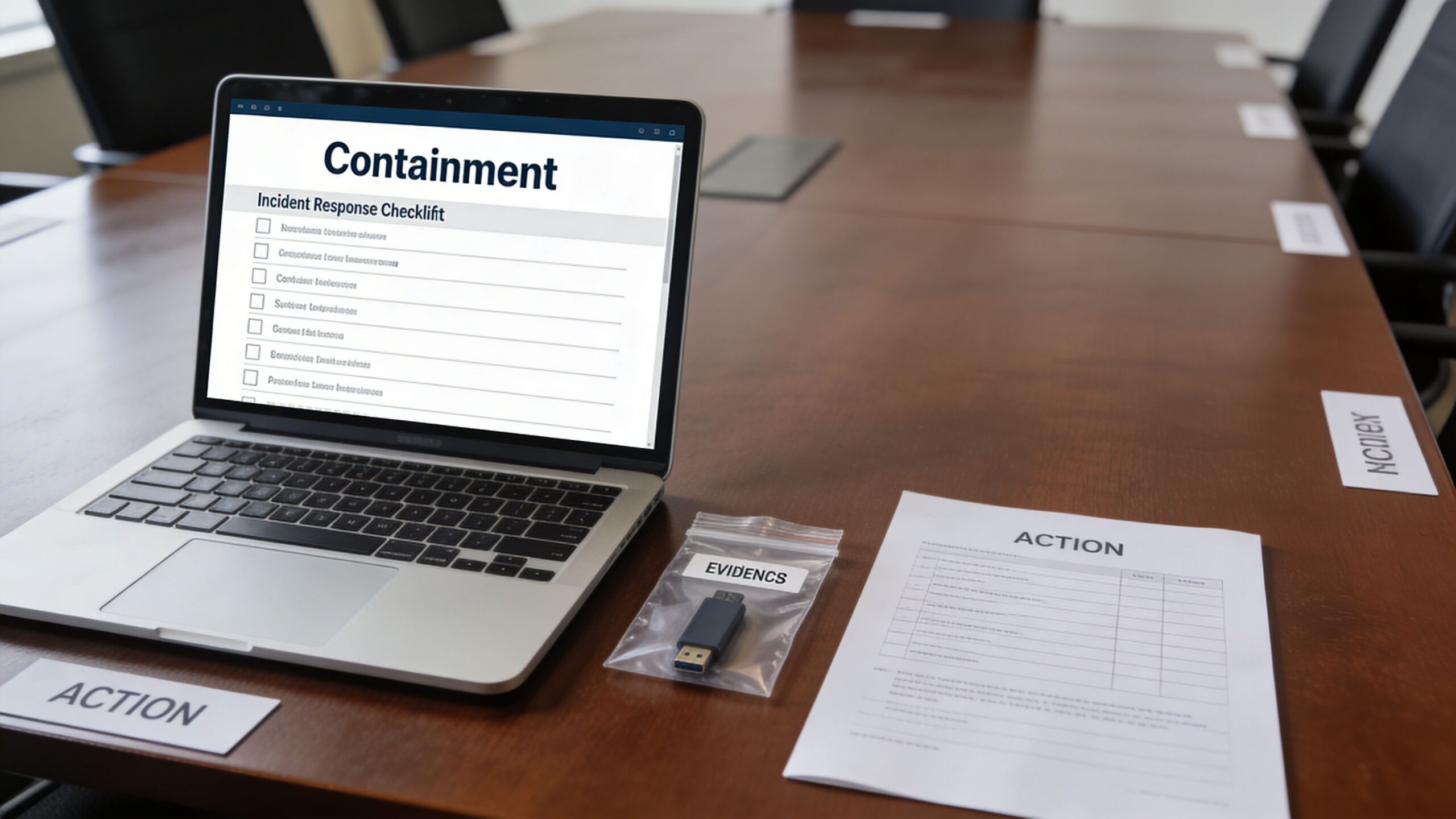
If a dispatch system or WAN circuit fails, the team should already know which information lives locally on devices and which procedures switch to voice and paper. That means preloading route details, customer contacts, equipment notes, and service instructions onto laptops or tablets before crews leave the office.
For industrial firms with multiple facilities, vendor dependency also enters the picture fast. CloudOrbis highlights a poorly served area in many continuity examples: third-party vendor dependency management for multi-location industrial operations, including contingency SLAs, network diagram mapping, and quarterly review discipline in these business continuity plan examples focused on vendor risk.
That gap is real in practice. Field-service organizations often know their primary ISP and software vendors, but they haven't documented fallback process owners, alternate routing, or how long each site can function without central systems.
What a realistic outage plan includes
- Offline dispatch packet: Daily schedule, addresses, contact names, and job priorities.
- Communication fallback: Group SMS, radio, cellular voice trees, and site-level call scripts.
- Bandwidth triage: Which systems stay up if connectivity is degraded.
- Local operations mode: How each facility receives, completes, and records work when the central platform is unavailable.
The trade-off is speed versus consistency. Manual workarounds keep crews moving, but they create reconciliation work later. That's acceptable. Total stoppage is usually worse.
For North Texas manufacturers and Central Florida service businesses, the best continuity plans assume at least one future outage will involve both connectivity and cybersecurity concerns at the same time.
7. Email and Communication System Failover Plan
Most businesses don't notice how much operational logic lives inside email until Exchange, Microsoft 365, Teams, Slack, or the phone system goes unavailable.
Approvals stall. Customer updates stop. Internal confusion spreads faster than the original outage.
The plan that actually helps
An email and communication failover plan should be short, obvious, and rehearsed. Staff shouldn't need a 30-page document to know what to do when inboxes won't load.
At minimum, define:
- Primary alert method: Who sends the first outage notice and through what non-email channel.
- Alternate channels: SMS groups, personal email, a backup messaging app, or voice bridge.
- Client communication trigger: Which outages require customer-facing status updates.
- Archived access process: How leaders retrieve critical prior communications if the system is unavailable.
- Phone fallback: Cellular routing, alternate answering procedures, or emergency voicemail updates.
This is one area where tested communication discipline matters as much as technology. Databarracks data summarized by Revenue Memo notes that 90% of organizations with tested continuity plans maintain established communication plans. That's one reason communication planning deserves its own entry among business continuity plan examples, even though many companies bury it inside a larger IT document.
What I see go wrong
Teams overbuild technical failover and underbuild communication ownership. Nobody knows who drafts the first customer message. Sales sends one thing, operations sends another, and support waits for direction.
If your team can't tell employees and customers what's happening within the first phase of an outage, the technical recovery will feel slower than it is.
For local businesses around Orlando and Winter Springs, communication outages often overlap with weather disruption. That makes mobile-first communication planning more important than desktop-first assumptions.
8. Compliance and Regulatory Reporting Recovery Plan
A continuity plan for regulated work has a different purpose. It isn't only about restoring systems. It's about preserving evidence, deadlines, and defensible records while systems are impaired.
Law firms, CPA firms, healthcare groups, and financial organizations need a compliance recovery layer that says who documents what, where records are stored during an outage, and how filing obligations are tracked if the normal workflow platform is unavailable.
The discipline regulated firms need
This plan should identify every compliance-dependent process that can't "wait until systems come back."" Think audit trails, patient access logs, legal hold records, document retention, and required submissions tied to a calendar.
Good planning here usually includes:
- Manual documentation templates: Incident logs, access logs, filing records, and exception approvals.
- Regulatory calendar backup: An offline or independently accessible version of critical deadlines.
- Escalation sequence: Compliance officer, outside counsel, managed IT/security lead, and business owner.
- System-of-record fallback: Where the temporary authoritative record lives while primary systems are unavailable.
Many businesses assume compliance resumes after IT recovers. That's backwards. The organization has to maintain a defensible process during the disruption itself.
One practical way to improve this is to align continuity tasks with control mapping. Cyber Command's approach to compliance mapping for businesses a guide on GDPR and HIPAA is useful because it turns abstract obligations into operational steps tied to systems, data, and owners.
What works better than generic templates
The best compliance continuity plans don't just cite frameworks. They connect actual business systems to actual obligations. In a healthcare office, that means documenting downtime charting and audit preservation. In an accounting firm, it means preserving client workpaper integrity and approval history even if the normal platform is unavailable.
9. Vendor and Third-Party Dependency Management Plan
A vendor outage can shut down your business even when your own network is healthy. Payment processor issues, telecom disruptions, SaaS failures, and security tool outages all fit here.
This is one of the most neglected business continuity plan examples because many SMBs treat vendors as fixed utilities instead of operational dependencies that need oversight and fallback.
What to document before the outage
Start with a simple truth. Your continuity plan is only as strong as the vendors behind your critical services.
Map each critical vendor by business function, not by invoice category. That means identifying which partner supports payments, internet, cloud identity, endpoint protection, backup, phones, line-of-business software, and physical access. Then assign an internal owner for each relationship.
CloudOrbis points out that many continuity examples still underserve multi-location industrial and field-service organizations that need better vendor contingency planning, including QBR-driven review and failover alignment with network diagrams. That observation matters well beyond industrial firms because the same problem shows up in professional services and healthcare.
A practical vendor continuity plan should include:
- Escalation path: Named contacts, after-hours support route, and contract reference.
- Fallback vendor or workaround: Not every service needs a second vendor, but every critical function needs a backup path.
- Dependency notes: Which internal systems fail if that vendor is unavailable.
- Review schedule: Vendor risk shouldn't be reviewed only during renewal month.
Trade-offs worth making
Dual-vendor strategies sound attractive, but they add cost and administration. For many SMBs, the better move is selective redundancy. Keep true backup options for the few vendors whose outage would stop revenue, care delivery, or security operations.
In practical terms, that's where an MSP/MSSP like Cyber Command becomes part of the continuity plan itself. A good partner doesn't just fix tickets. They maintain vendor relationships, document dependencies, run reviews, and help leaders avoid finding out during a crisis that nobody knows who owns the problem.
10. Physical Facility Disruption and Disaster Recovery Plan
For Central Florida businesses, facility disruption planning can't be generic. Hurricanes, flooding, prolonged utility problems, and building access issues are operational realities. The same goes for severe weather events affecting North Texas locations.
A physical disruption plan should answer a hard question quickly. If the building is unusable tomorrow, what work continues, from where, on which systems, and under whose authority?
The local version of the plan
The best plans separate life safety from business recovery, then reconnect them in sequence. Evacuation and accountability come first. Operational relocation comes next.
That means documenting:
- People protection: Evacuation routes, emergency contacts, and accountability checks.
- Alternate work location: Remote work, temporary office, or another branch.
- Critical facility systems: Power, HVAC, telecom, networking, access control, and any equipment that can't sit idle.
- Records and insurance access: Offsite copies of key documents and claim contacts.
- Public communication: Customer updates, vendor notifications, and reopening messaging.
Databarracks data summarized by Revenue Memo notes that software failures, cybersecurity incidents, networks, and human error all contribute heavily to unplanned downtime. Physical disruption plans need to account for that overlap. A hurricane doesn't just close a building. It can also trigger ISP failure, remote access strain, and security gaps as staff connect from everywhere at once.
If the event damages the property itself, organizations often need outside support such as commercial restoration services while IT and security teams focus on restoring operations.
What doesn't work in Florida
A plan that assumes everyone will work from home is incomplete. Staff may lose power, internet, or safe access at the same time. The better approach is tiered continuity: remote where possible, alternate site for essential roles, manual fallback where necessary, and managed IT/security coordination throughout.
Comparison of 10 Business Continuity Plan Examples
| Plan | Implementation complexity | Resource requirements | Expected outcomes | Ideal use cases | Key advantages |
|---|---|---|---|---|---|
| Ransomware Attack Recovery Plan for Professional Services Firms | High, specialized IR workflows and regulatory steps | Immutable backups, forensic partners, legal/compliance and trained IT staff | Fast, compliant data restoration and regulated breach notification | Law firms, CPA firms, architectural and engineering consultancies | Preserves client trust and compliance; clear decision frameworks |
| Managed IT Provider Failover Plan for Medical Practices | Medium, HIPAA-focused failover and manual workflows | EHR vendor coordination, printed templates, staff training, secondary connectivity | Continued patient care, maintained HIPAA compliance, reduced cancellations | Dental offices, clinics, veterinary and medical spas | Protects patient safety and billing continuity; clear escalation |
| Multi-Location Network Synchronization Plan for Distributed Teams | High, multi-site replication and complex networking | Multi-region cloud or on-prem infra, network engineers, monitoring tools | Geographic redundancy, seamless failover, consistent access across sites | Multi-office professional services, regional operations, distributed teams | Scalable redundancy; supports business growth and flexibility |
| Cloud Service Provider Dependency Recovery Plan | Medium, vendor procedures plus local backup processes | Backup storage, extraction scripts, SLA docs, vendor contacts | Reduced single-provider risk, faster recovery with local failsafes | Any cloud-dependent orgs, especially accounting/finance | Clear vendor escalation paths and local backup protection |
| Cybersecurity Incident Response and Data Breach Recovery Plan | High, 24/7 SOC integration and forensic coordination | SIEM/SOC, forensic partners, legal/comms teams, incident playbooks | Rapid detection, containment, regulatory reporting and remediation | All industries; critical for healthcare, finance, professional services | Limits breach impact and improves long-term resilience |
| Network Outage Contingency Plan for Industrial and Field-Service Operations | Medium, local segmentation and offline app support | Mobile hotspots, MDM, offline-capable apps, field training | Continued field operations, equipment safety, reduced dispatch loss | HVAC/plumbing, manufacturing, utilities, field service orgs | Enables offline work and protects revenue and safety |
| Email and Communication System Failover Plan | Low–Medium, alternate channels and failover rules | Backup mailboxes, SMS/status page, VoIP cellular backup, contact lists | Maintained stakeholder communication; minimal disruption | Distributed teams and client-facing organizations | Quick to implement and low cost; preserves critical communications |
| Compliance and Regulatory Reporting Recovery Plan | Medium, manual reporting and regulatory coordination | Regulatory contacts, filing templates, compliance/legal expertise | Meets filing deadlines, preserves audit trails, avoids penalties | Financial services, accounting firms, law firms, regulated entities | Protects regulatory standing and demonstrates good-faith efforts |
| Vendor and Third-Party Dependency Management Plan | Medium, mapping, SLAs and contract workarounds | Vendor SLAs, alternative vendors/contracts, monitoring and reviews | Reduced vendor single points of failure and faster escalation | Organizations dependent on SaaS, payment processors, telecoms | Improves vendor accountability and continuity options |
| Physical Facility Disruption and Disaster Recovery Plan | Medium–High, logistics, alternate sites and safety procedures | Alternative facilities, remote-work infra, insurance, emergency supplies | Employee safety, business resumption from alternate locations | All facility-based organizations, especially in disaster-prone regions | Protects people and enables operational recovery with insurance support |
From Plan to Resilience Your Next Steps
These business continuity plan examples show a pattern. The plans that hold up in real incidents aren't the longest. They're the clearest, the most tested, and the most connected to how the business runs.
That's especially true for small and mid-sized businesses in Orlando, Winter Springs, and the surrounding Central Florida market. Most don't have a deep internal bench for security operations, infrastructure recovery, compliance interpretation, vendor escalation, and user support all at once. During a disruption, the owner, office manager, or operations lead often becomes the default incident commander whether they're ready or not.
That's why a continuity plan can't stop at documentation. It has to define execution.
A usable plan identifies your critical services, your minimum operating mode, your communication chain, your recovery priorities, and your external support structure. It also reflects the kinds of incidents you're likely to face. For Central Florida organizations, that includes hurricanes and facility access problems. For nearly everyone, it now also includes ransomware, cloud outages, vendor disruptions, and account compromise.
The preparedness gap is still wide. According to continuity data summarized by Invenio IT, only 30% of small firms have a BCP strategy, compared with 54% of mid-sized firms and 73% of large corporations. The same source notes that 44% of businesses have no disaster recovery plan at all, and organizations with tested BCPs are more likely to recover quickly, as outlined in these business continuity statistics for SMBs and larger firms. That gap isn't just a planning issue. It's a capacity issue. Smaller organizations often know they need a plan, but they don't have the time or internal depth to build and test one properly.
Testing is where the full value appears. A tabletop exercise exposes unclear authority. A backup restore test exposes weak assumptions. A communication drill shows whether staff know where to look when email is down. A vendor review often uncovers that nobody has after-hours escalation details. None of that is failure. That's exactly what testing is supposed to reveal.
The other shift business owners need to make is viewing cybersecurity as part of continuity, not a separate project. Security monitoring, endpoint protection, identity controls, backup validation, cloud architecture, and user training all feed directly into uptime and recoverability. If your security stack is weak, your continuity plan is weak. If your continuity plan ignores cyber, it's already outdated.
Cyber Command becomes critical. A managed IT and cybersecurity partner shouldn't be a name buried in your vendor list. The right partner becomes part of the operating model. Cyber Command helps organizations build plans around actual systems and business processes, not generic templates. The team supports 24/7 SOC monitoring, incident response, backup and recovery planning, cloud resilience, compliance alignment, vendor management, and ongoing testing. That gives business owners something more useful than a document. It gives them a response capability.
If you're in Orlando, Winter Springs, or managing a multi-location operation that includes North Texas, now is the time to review your current plan critically. Can your team operate if your office is closed? If Microsoft 365 is unavailable? If a user opens the wrong attachment? If a key vendor goes dark? If the answer depends on improvisation, the plan isn't ready yet.
Resilience isn't built during the crisis. It's built before it, then proven during it.
If your business needs an effective continuity plan, Cyber Command, LLC can help you build it, test it, and support it when con…com) can help you build it, test it, and support it when conditions turn against you. From Orlando and Winter Springs to North Texas, Cyber Command delivers managed IT, 24/7 SOC protection, incident response, cloud resilience, compliance support, and vendor coordination designed for organizations that need uptime without guesswork.