Best Practices for Secure DevOps in Your CI/CD Pipeline

Best Practices for Secure DevOps in Your CI/CD Pipeline

Table Of Contents:

In today’s rapidly evolving digital landscape, businesses—particularly an IT service provider—face increasingly sophisticated cyber threats that demand agile security strategies. One of the most impactful cybersecurity services for businesses is the integration of security practices directly into the software development and deployment pipeline, commonly known as Secure DevOps. This transformative approach safeguards digital assets while maintaining rapid delivery cycles. Secure DevOps unites development, operations, and security teams in a joint effort to deploy resilient, compliant, and secure software. This integration addresses vulnerabilities early in the development cycle, reduces operational bottlenecks, ensures regulatory compliance, and cuts down potential remediation costs.

For small to mid-sized businesses and professional service firms, adopting Secure DevOps is essential for protecting sensitive data and ensuring continuous operations while managing modern deployment complexities. By leveraging automated security scanning, continuous monitoring, and real-time vulnerability dashboards, companies gain improved visibility into their systems. This approach improves software delivery speed and substantially enhances cyber resilience. With evolving threats such as ransomware, phishing, and malware targeting CI/CD pipelines, embedding security in these processes is now a business imperative.

This article explores the fundamentals of Secure DevOps, methods to assess and mitigate CI/CD security risks, integration of security tools into development workflows, and strategies for robust security policies for DevOps teams. Each section provides actionable insights supported by examples and industry best practices to help businesses create a secure, compliant, and efficient operational environment.

Transitioning into the main discussion, the following sections address key queries regarding Secure DevOps and its significance, offering detailed guidance and practical examples for a smoother, more security-focused CI/CD process.

What Is Secure DevOps and Why Is It Essential for CI/CD Pipelines?

Secure DevOps integrates security practices into the entire software development lifecycle, especially in CI/CD pipelines. It secures code, processes, and operations simultaneously so vulnerabilities are identified and remedied early. By making security an ongoing, automated process, businesses maintain high delivery speeds while reinforcing data protection and compliance.

Instead of traditional siloed methods, Secure DevOps employs a continuous, collaborative approach among developers, operations teams, and security experts. Automation tools—such as static application security testing (SAST) and dynamic application security testing (DAST)—identify security flaws during code commits and before deployment, improving product quality and reducing remediation costs.

By implementing Secure DevOps, organizations accelerate application delivery by avoiding security delays. Early detection of vulnerabilities reduces the overall threat surface and mitigates risks during rapid deployment cycles. It also supports compliance with industry regulations through built-in audit-friendly processes. This proactive approach is fundamental for modern CI/CD pipelines, ensuring agile operations that prevent downtime and protect against persistent threats.

How Does Secure DevOps Improve Software Delivery Speed and Security?

Secure DevOps enhances delivery speed and security by embedding protocols into every CI/CD stage. Automation and close collaboration between security and development teams ensure code is continuously scanned by tools like SAST and DAST. This process catches vulnerabilities in early build and test phases rather than after deployment, reducing manual overhead and streamlining each code commit review.

Fast turnaround on security fixes prevents bottlenecks and delays in launching new features. With compliance checks integrated into every phase, deployed applications meet regulatory and industry standards, minimizing future remediation costs. Overall, Secure DevOps removes the “security as an afterthought” delay while significantly enhancing a company’s security posture.

Furthermore, automated measures promote continuous improvement. Immediate feedback enables developers to adopt more secure coding practices. With every iteration, the code base becomes more robust against threats, which reduces long-term patching needs and improves overall reliability and efficiency.

What Are the Key Principles of Secure DevOps?

The key principles of Secure DevOps are collaboration, automation, continuous monitoring, and compliance. It calls for the active engagement of developers, security professionals, and operations teams throughout the lifecycle so that security is woven into every phase from planning to maintenance.

Automation is fundamental, embedding security controls into CI/CD pipelines to enable real-time vulnerability detection. The “shift-left” concept places security earlier in the development cycle, allowing teams to address risks before production. Continuous monitoring ensures prompt responses to disruptions or emerging threats, which is critical for maintaining cyber resilience.

Compliance is equally central. By integrating regulatory requirements into automated workflows, teams can create audit trails that ease compliance verification. Adopting industry-standard security frameworks reinforces the overall security posture, ensuring that organizations are well-prepared against cyber threats while remaining agile.

How Does Secure DevOps Support Compliance With Industry Regulations?

Secure DevOps supports compliance by automating and standardizing security practices. Embedding security into CI/CD pipelines ensures that every stage adheres to internal policies and external regulatory requirements, such as GDPR, HIPAA, and PCI DSS. Automated compliance testing flags policy violations in real time so that remediation can occur quickly.

Security checkpoints in the pipeline generate logs and reports essential for audits and for demonstrating continuous risk mitigation efforts. Regular updates and proactive vulnerability assessments ensure non-compliance issues are addressed before they lead to major liabilities. Automation minimizes human error and ensures that best practices are consistently applied, bridging agile development with stringent regulatory demands and ultimately building customer and stakeholder trust.

How to Assess Security Risks in Your Existing CI/CD Pipeline?

a dynamic office environment showcases a team of cybersecurity professionals collaboratively analyzing a complex digital dashboard displaying security metrics and vulnerability assessments of a ci/cd pipeline.

Assessing security risks in an existing CI/CD pipeline is crucial for strengthening cybersecurity defenses. This process involves systematically evaluating every component—from code repositories and build servers to deployment environments—to pinpoint exploitable vulnerabilities. It begins by mapping the entire pipeline, identifying integration points, third-party components, and data flows.

Automated vulnerability scanning tools continuously monitor for common flaws such as injection attacks, misconfigurations, and dependency issues. Both static and dynamic analyses are employed to ensure comprehensive coverage. A thorough risk assessment also reviews current security policies, performs threat modeling, and carries out penetration testing to simulate attacks. The goal is to quantify risk using key performance indicators (KPIs) that reflect the organization’s operational and security priorities.

Continuous feedback loops ensure that lessons learned from production incidents and near-misses are integrated back into the development lifecycle, refining security controls and maintaining resilience against evolving threats.

What Tools Are Used for Security Assessment in DevOps?

A variety of tools are available for security assessment in DevOps, each enhancing overall system security. SAST tools analyze source code without execution—tools like Fortify, Checkmarx, and SonarQube detect anomalies and insecure coding patterns.

DAST tools, such as OWASP ZAP and Burp Suite, test running applications by simulating real attacks to uncover vulnerabilities like SQL injection and cross-site scripting. Additionally, Software Composition Analysis (SCA) tools, including Black Duck and Snyk, evaluate third-party components and open-source libraries for known vulnerabilities, ensuring that dependencies remain secure.

Other critical tools include container security solutions (e.g., Aqua Security, Twistlock) and CI/CD platforms with built-in scanning features. Using these tools together creates a layered security assessment that identifies vulnerabilities at every stage of development and deployment.

How to Identify Common Vulnerabilities in CI/CD Workflows?

Identifying common vulnerabilities in CI/CD workflows involves a mix of automated scans, code reviews, and manual testing. Frequent issues include misconfigurations in deployment scripts, insecure credential handling, dependency vulnerabilities, and insufficient logging of system activities. Static code analysis can reveal poor coding practices, while dynamic testing can uncover runtime issues.

For instance, hardcoded credentials and poorly managed API keys are common pitfalls that thorough reviews often expose. Similarly, misconfigured infrastructure-as-code templates may inadvertently expose sensitive settings. Regular updates and patching of library dependencies further reduce risks. Coupling these methods with continuous monitoring and periodic threat modeling ensures that vulnerabilities are detected early and prioritized effectively based on their potential impact.

What Are Best Practices for Conducting a Security Assessment?

Best practices for security assessments in CI/CD pipelines include establishing a secure configuration baseline, comprehensive automated testing, and continuously updating threat models. Begin by mapping the entire pipeline to identify integration points, dependencies, and data flows. Once documented, deploy automated scanners at multiple stages—from commit to production—to catch vulnerabilities and misconfigurations.

Regular code reviews and penetration tests add extra layers of scrutiny. Feedback from each testing phase should feed into a dynamic risk management framework that continuously adjusts security measures. Documenting assessments with clear KPIs and remediation timelines, along with ongoing security awareness training, further strengthens the defense against evolving threats.

Which Security Tools Should You Integrate Into Your CI/CD Pipeline?

Integrating the right security tools into CI/CD pipelines is vital to secure every stage of the development process. The tools should seamlessly integrate with existing infrastructure and cover various security domains including code analysis, vulnerability assessment, and compliance auditing. Effective integration ensures that both static and dynamic testing occur regularly, reducing the overall attack surface and accelerating vulnerability resolution.

A balanced approach involves combining automated and manual security measures. Leading SAST tools like SonarQube and Checkmarx are crucial for early code-level vulnerability detection, while DAST tools such as OWASP ZAP and Burp Suite simulate live attacks on applications. Additionally, SCA tools like Snyk or Black Duck manage risks associated with third-party libraries. Continuous monitoring and runtime protection platforms keep security postures updated as applications evolve, creating a continuous feedback loop that improves software quality and minimizes exposure.

Automation of tasks such as vulnerability scanning, metric tracking, and compliance reporting further reduces manual intervention, ensuring that security checks do not slow down delivery speeds. Dashboards and integrated reporting provide real-time visibility into the pipeline’s security posture.

How Do Static and Dynamic Application Security Testing Tools Work?

SAST and DAST tools work together to protect software during development. SAST tools analyze source code without executing it to find vulnerabilities like buffer overflows, insecure coding practices, and logic errors. This early scanning allows developers to address issues before they become critical.

Conversely, DAST tools evaluate applications in their running state by simulating external attacks. They detect threats such as injection attacks, cross-site scripting, and authentication bypasses by analyzing the application’s responses. Together, SAST and DAST create a layered security approach that ensures both the integrity of the code and the security of running applications.

What Is Software Composition Analysis and Why Is It Important?

Software Composition Analysis (SCA) focuses on identifying and managing third-party components and open-source libraries within an application. SCA tools automatically analyze project dependencies, flagging vulnerabilities and licensing risks that could compromise security. This is critical because even when in-house code is secure, insecure third-party components can create vulnerabilities. SCA provides real-time alerts and detailed reports, enabling rapid remediation of issues and ensuring compliance with licensing requirements—thereby reducing risks linked to supply chain attacks.

How to Automate Security Scanning in CI/CD Pipelines?

Automating security scanning in CI/CD pipelines involves integrating tools and scripts that run during build, test, and deployment phases. With every code commit, automated scans are triggered to document and flag any vulnerabilities immediately, ensuring continuous compliance and rapid remediation.

Typically, a combination of SAST, DAST, and SCA tools is employed. Configuration files (e.g., YAML or JSON templates) automate the scanning process and generate reports that security teams review via integrated dashboards. This process shortens the feedback loop and minimizes human error, allowing developers to implement fixes swiftly while keeping the deployment pipeline secure and efficient.

How to Develop and Implement Security Policies for DevOps Teams?

a modern office space buzzes with focused devops professionals collaborating around sleek, high-tech workstations, while a large digital screen displays a dynamic security policy framework, emphasizing a culture of security-first workflows in software development.

Developing security policies for DevOps teams requires clear, actionable guidelines that integrate security best practices into everyday workflows. The goal is to foster a security-first culture that supports rapid development while ensuring robust protection. Policies should cover access control, data management, incident response, and continuous monitoring, ensuring that every phase meets stringent security standards.

Effective security policies start with comprehensive risk assessments to identify vulnerabilities and prioritize remediation steps. Once risks are identified, policies can be standardized and, where possible, automated via configuration management and CI/CD integrations. Regular training and awareness programs ensure teams remain informed about emerging threats and best practices. Flexible policies that are periodically reviewed and updated help maintain compliance with evolving regulations and technological changes.

What Security Policies Are Critical for CI/CD Pipelines?

Critical policies for CI/CD pipelines include those governing access control, secure coding practices, vulnerability management, and incident response. Access control policies restrict permissions to authorized personnel, reducing risks from unauthorized changes or insider threats. Secure coding policies require adherence to best practices in software development. Vulnerability management policies mandate regular scans and prompt resolution of issues, while incident response policies outline procedures for breach detection, reporting, and post-incident analysis. Logging and monitoring policies also ensure that all actions within the pipeline are recorded for quick diagnosis and remediation.

How to Align Security Policies With Business Compliance Requirements?

Aligning security policies with business compliance involves mapping internal controls to the specific mandates of regulations such as GDPR, HIPAA, PCI DSS, or ISO 27001. This requires understanding key regulatory areas that impact the CI/CD pipeline and modifying policies to ensure compliance. Regular audits and automated compliance checks help maintain alignment, while clear documentation and defined roles within the DevOps team support accountability and transparency. The ultimate aim is to create a verifiable security posture that meets regulatory demands and protects the organization from cyber threats.

How to Train DevOps Teams on Security Best Practices?

Training DevOps teams on security best practices involves a structured approach that includes formal training sessions, hands-on workshops, and continuous learning programs. Teams must be updated on the latest threats, vulnerabilities, and security tools that integrate with CI/CD pipelines. Regular sessions led by cybersecurity experts, supported by practical exercises and simulated attack scenarios, help reinforce learning. Online certifications and internal knowledge-sharing further establish a culture of security awareness. Appointing security champions within teams and routinely assessing the effectiveness of training through feedback and performance metrics ensure continuous improvement.

What Are the Benefits of Automating Security Checks in DevOps?

Automating security checks in DevOps offers multiple benefits, including reducing manual errors, lowering labor costs, and ensuring consistent enforcement of security standards. The primary advantage is the increased speed and efficiency in identifying and remediating vulnerabilities throughout the continuous delivery process. Automation allows teams to focus on higher-level problem solving and innovation by handling repetitive tasks.

By eliminating manual approval processes, automation prevents delays and security bottlenecks in the development pipeline. Proactive automation also results in significant cost savings by reducing the likelihood of breaches and minimizing remediation efforts. Continuous monitoring ensures that any new vulnerabilities are flagged immediately, which not only improves the security posture but also supports long-term operational stability.

How Does Automation Reduce Security Bottlenecks in CI/CD?

Automation streamlines security processes by running vulnerability scans with each code commit, thus providing rapid feedback to developers. This continuous review process eliminates the need for slow, manual checks and prevents delays in the deployment cycle. Automated alerts and dashboards create real-time visibility of the security status, enabling quick corrective action. By removing manual review stages, the system maintains a balance between agile delivery and robust security controls.

What Are the Cost Savings From Proactive Security Automation?

Proactive security automation delivers cost savings by preventing expensive breaches and reducing the need for labor-intensive manual audits. Early detection of vulnerabilities minimizes remediation costs, regulatory fines, and the financial impact of data breaches. Automated compliance reporting cuts down on audit preparation efforts, further reducing operational expenses. Many organizations report up to a 40% reduction in remediation efforts and faster time-to-market, highlighting the financial benefits of integrating automated security measures.

How to Monitor and Respond to Security Incidents Continuously?

Continuous monitoring of security incidents is achieved by integrating real-time logging, automated alerts, and centralized dashboards within the CI/CD pipeline. These tools aggregate data from multiple sources, allowing for rapid identification of anomalies that may indicate cyberattacks or breaches. Automated incident response systems promptly isolate affected components, notify security teams, and initiate remediation protocols. Regular drills and simulations ensure that all team members are prepared to respond efficiently. A comprehensive, updated incident response plan helps mitigate damage quickly, ensuring that emerging threats are neutralized before causing significant harm.

How to Measure the Success of Secure DevOps Integration?

a modern office workspace filled with high-tech displays showcasing real-time dashboards of key performance indicators for secure devops integration, illuminated by sleek overhead lighting.

The success of Secure DevOps integration can be measured using Key Performance Indicators (KPIs) that track both security improvements and operational efficiency. Common KPIs include the mean time to detect (MTTD) and remediate (MTTR) vulnerabilities, the frequency of successful scans, compliance audit pass rates, and the number of security incidents prevented before deployment. The impact on deployment timelines and release quality also provides insights into how well the integration balances speed and security.

Establishing baseline metrics before integration is crucial, followed by continuous monitoring of improvements. For example, a 25% reduction in remediation time over six months is a strong indicator of success. Feedback loops supported by dashboards and automated reports help stakeholders assess performance in real time and guide future enhancements, including additional training or tool investments.

What Key Performance Indicators (KPIs) Track Security Improvements?

KPIs for tracking security improvements include the mean time to detect and remediate vulnerabilities, the ratio of vulnerabilities identified versus resolved in a set period, compliance audit scores, and the success rate of automated security tests. Additional metrics may include deployment frequency, overall code quality, and the ratio of incidents prevented compared to those occurring after deployment. Regular monitoring of these indicators provides a clear, data-driven picture of the integrated security processes’ efficiency and highlights areas for further improvement.

How to Use Feedback Loops to Enhance Security in CI/CD?

Feedback loops are critical for continuous improvement in CI/CD security. By systematically incorporating data from automated scanning, incident reports, and vulnerability assessments, organizations can refine their security policies and practices over time. Regular retrospective analysis sessions with cross-functional teams help identify underlying issues and suggest corrective actions. Dashboards showing real-time metrics and trends support proactive decision-making, while stakeholder feedback ensures that security enhancements are shared across teams—creating a culture of continuous, incremental improvement.

What Are Common Challenges and How to Overcome Them?

Common challenges in measuring secure DevOps success include resistance to change, data overload from automated tools, and balancing rapid development with thorough security evaluations. These challenges can be managed through strong leadership, clear communication, and ongoing security training. Automated tools that filter and prioritize vulnerability data help prevent teams from being overwhelmed, while setting measurable KPIs and conducting regular review meetings keep progress on track. Cross-departmental collaboration and transparent reporting further help overcome resistance by making security a shared responsibility across the organization.

How Can Businesses Get Started With Secure DevOps Implementation?

Businesses looking to implement Secure DevOps should start with a detailed assessment of their current CI/CD pipeline’s security posture. This initial evaluation must include an inventory of components, identification of vulnerabilities, and a review of current security practices. Based on this assessment, companies can create a roadmap that integrates automated security testing, continuous monitoring, and robust policy frameworks tailored to their environment. Partnering with experienced cybersecurity experts or managed service providers can help ensure alignment with industry best practices and compliance requirements.

Starting small with pilot projects or incremental changes allows teams to adapt without major disruptions. Early successes build confidence and pave the way for broader implementation. Communicating the benefits and long-term cost savings of Secure DevOps to stakeholders is critical for organizational buy-in, ensuring the transformation enhances both security posture and delivery speed.

What Does a Secure DevOps Implementation Service Include?

A typical Secure DevOps implementation service includes a comprehensive evaluation of the current software delivery process, the integration of automated security tools, policy formulation, and hands-on training for DevOps teams. The service begins with a detailed assessment that identifies vulnerabilities and sets measurable benchmarks. Implementation then follows, involving the integration of SAST, DAST, and SCA tools into the CI/CD pipeline to automate security scanning and compliance checks. Additionally, the service includes the design and deployment of robust security policies tailored to the organization, along with continuous monitoring systems and feedback loops to track improvements. Training sessions and workshops are also provided to ensure teams are equipped to work with the new security infrastructure.

How to Choose the Right Cybersecurity Partner for DevOps?

Selecting the right cybersecurity partner involves evaluating providers based on their expertise in integrating security within agile environments, proven experience with similar organizations, and the ability to offer custom solutions that align with business goals. Prospective partners should possess thorough knowledge of CI/CD operations and advanced capabilities in automated security tools and continuous monitoring systems. Clear communication, flexible service models, and ongoing training support are essential. Reviewing case studies, client testimonials, and assessing responsiveness during initial consultations can help in choosing a partner that understands both technology and business nuances, ensuring smooth and effective Secure DevOps implementation.

What Are the Typical Timelines and Milestones for Integration?

Timelines for Secure DevOps integration vary based on the complexity of the current environment and the scope of changes required but typically span three to six months. The process usually starts with a security assessment and planning phase (one to two months), followed by the integration of automated security tools and policy implementations (another one to two months). Pilot projects and initial testing occur over the next month, and full-scale implementation with continuous monitoring is generally reached within six months. Key milestones include completing the vulnerability assessment, integrating tools, rolling out policies, conducting training sessions, and establishing continuous monitoring dashboards. Regular progress reviews help ensure that the project stays on schedule and adapts to evolving security requirements.

Frequently Asked Questions

Q: What is the difference between Secure DevOps and traditional DevOps? A: Secure DevOps integrates security practices throughout the CI/CD pipeline, whereas traditional DevOps often treats security as a separate, later-stage process. This means that vulnerabilities are detected earlier, with real-time automation ensuring continuous monitoring and enforcement of security policies—leading to faster deployments and more robust protection against cyber threats.

Q: How can small to mid-sized businesses benefit from implementing Secure DevOps? A: Small to mid-sized businesses benefit by reducing costs associated with breaches through proactive vulnerability identification. Automation streamlines development processes so that security checks do not delay releases. Additionally, Secure DevOps enhances regulatory compliance and builds customer trust by safeguarding sensitive data, making it a cost-effective strategy for firms with limited security resources.

Q: Which security tools are most essential for a CI/CD pipeline? A: Essential tools include SAST tools (e.g., SonarQube, Checkmarx), DAST tools (e.g., OWASP ZAP, Burp Suite), and SCA tools (e.g., Snyk). These tools together provide comprehensive vulnerability screening of source code, runtime behaviors, and third-party dependencies.

Q: How does automation in Secure DevOps contribute to cost savings? A: Automation reduces human error, quickly detects vulnerabilities, and minimizes disruptions by providing continuous security checks. This leads to early remediation, lowering both breach risks and remediation costs. Automated compliance reporting and reduced manual audits further contribute to operational cost savings.

Q: What challenges might organizations face when integrating Secure DevOps, and how can they be overcome? A: Challenges include resistance to change, data overload from automated tools, and balancing speed with thorough security. These can be overcome through ongoing training, clear communication of benefits, and effective use of feedback loops. Automated tools that prioritize vulnerabilities help keep teams focused on critical issues, while regular reviews and cross-departmental collaboration ensure a shared security responsibility.

Q: How often should security policies in CI/CD pipelines be reviewed and updated? A: Policies should be reviewed every six months or following any major incident or system change. Regular updates ensure alignment with evolving regulations, emerging threats, and new technologies. Continuous feedback and audit results can trigger timely revisions.

Q: Can Secure DevOps be implemented alongside agile methodologies? A: Yes, Secure DevOps complements agile methodologies by embedding security into every sprint or iteration. This integration allows rapid development alongside continuous security measures, ensuring that security remains a core part of the process without hindering speed or innovation.

Tool CategoryKey Tool ExamplesPrimary FunctionMeasured Benefit
SASTSonarQube, CheckmarxStatic code analysis for vulnerabilitiesEarly detection of code flaws
DASTOWASP ZAP, Burp SuiteReal-time application scanning during runtimeIdentification of runtime vulnerabilities
SCASnyk, Black DuckAssessing third-party dependenciesMitigation of supply chain risks
Container SecurityAqua Security, TwistlockSecure container deploymentsReduced container vulnerabilities
Continuous MonitoringSplunk, ELK StackReal-time alerting and log analysisFaster incident response
Compliance ToolsChef InSpec, OpenSCAPAutomated compliance checksStreamlined regulatory adherence
Runtime ProtectionCrowdStrike Falcon, FortinetActive threat detection on production systemsEnhanced operational security

A table like the one above provides a quick reference for understanding different security tool categories, their primary functions, and benefits. This self-assessment aids in selecting the right tools for your CI/CD pipeline, ensuring a comprehensive security strategy.

By focusing on secure development practices, continuous evaluations, and strategic automation of security tasks, organizations can build a resilient, compliant, and efficient CI/CD pipeline. The integration of these advanced cybersecurity measures not only safeguards business-critical data but also ensures operational continuity, positioning organizations ahead of the curve in today’s competitive digital landscape.

The Business Case for Continuous Threat Hunting Explained

The Business Case for Continuous Threat Hunting Explained

Table Of Contents:

In today’s rapidly evolving digital landscape, businesses face persistent cyber threats that jeopardize data security, operational continuity, and regulatory compliance. As SMBs and professional service firms increasingly rely on connected systems, the need for robust cybersecurity measures has grown dramatically. Continuous threat hunting is a proactive approach that goes beyond reactive security measures. It involves a persistent search for hidden vulnerabilities, advanced threats, and emerging attack vectors before they inflict significant damage. Leveraging technologies like SIEM systems, machine learning, and vulnerability management tools, continuous threat hunting identifies and neutralizes threats in real time. Moreover, partnering with an it service provider can further enhance an organization’s security posture.

This article examines how continuous threat hunting enhances cybersecurity by strengthening overall business security posture. It details the core processes, compares the approach with conventional threat detection, and explains why outsourcing these functions to experts can be more cost-effective than building in-house teams. Through detailed examples and real-world case studies, the article demonstrates how continuous threat hunting reduces downtime and operational risks, making a strong business case for deploying advanced cybersecurity services for business that ensure high data integrity, regulatory adherence, and resilient operations.

As industries adopt remote work and cloud computing, the attack surface expands. Continuous threat hunting not only enables early detection and swift resolution of cyberattacks but also builds a secure digital environment where businesses can thrive without the constant fear of breaches. The following sections break down the core aspects of continuous threat hunting, illustrate its benefits, detail how it integrates into IT infrastructures, and present examples of its effectiveness in preventing cyber threats.

Transitioning into the main content, we now analyze the impact of continuous threat hunting on business cybersecurity.

What Is Continuous Threat Hunting and How Does It Enhance Cybersecurity?

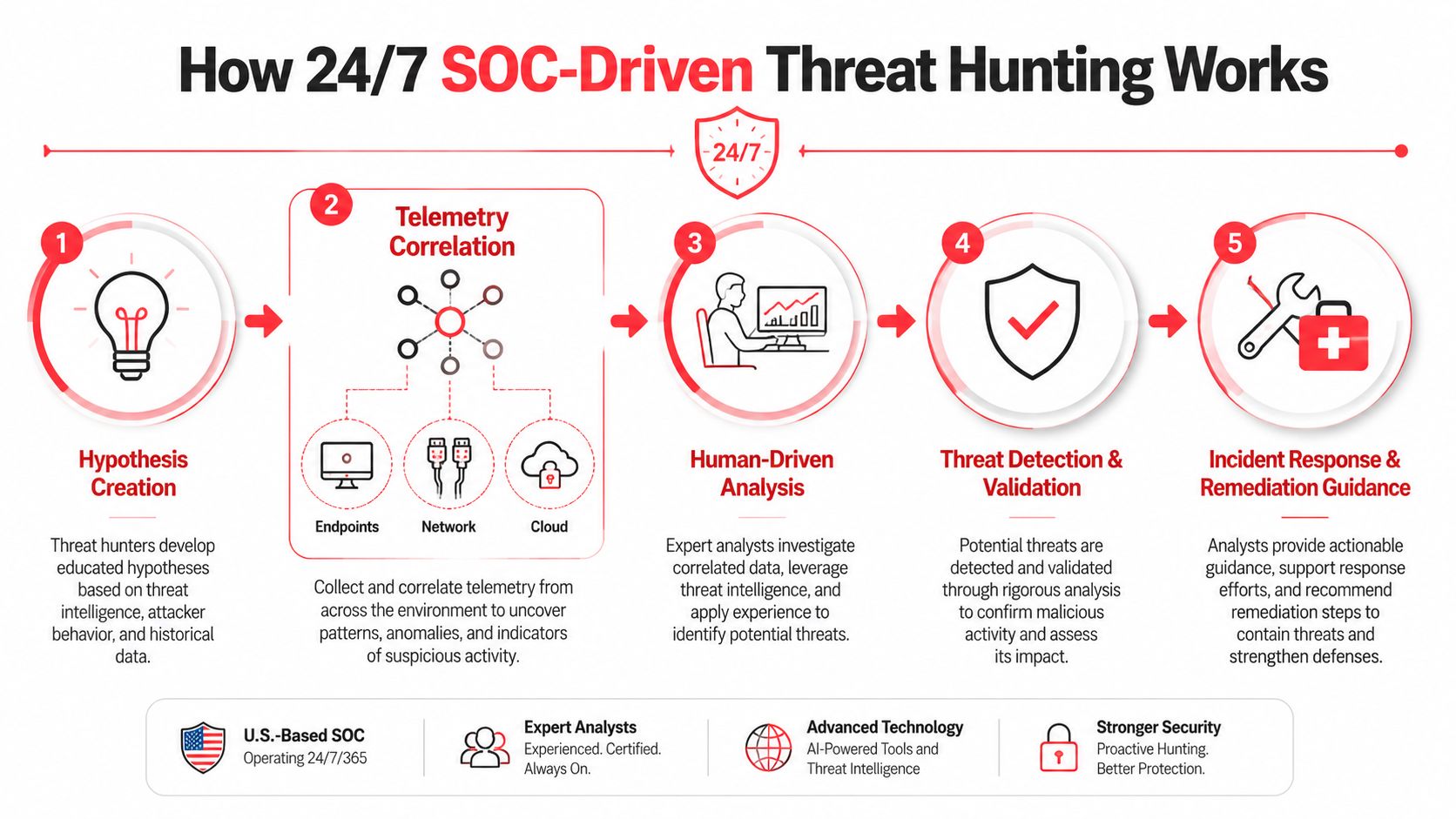
Continuous threat hunting is a proactive cybersecurity process aimed at identifying, investigating, and mitigating sophisticated threats before significant harm occurs. Unlike passive measures such as firewalls or antivirus programs, it actively searches for anomalies and threats that evade standard detection. By reducing the time between threat emergence and resolution, this method saves businesses from extended downtimes and costly losses. Automated tools and skilled analysts work together to bridge the gap between endpoint detection and incident response, ensuring even subtle and stealthy activities are promptly addressed.

The process integrates advanced tools like SIEM systems, behavioral analytics, and machine learning algorithms to detect unusual patterns across network logs, endpoint activities, and cloud infrastructures. Instead of waiting for alerts from conventional systems, cybersecurity teams perform live investigations and threat assessments based on proactive intelligence, reducing reliance on reactive measures that allow threats time to mature.

Moreover, threat hunting provides valuable long-term insights. Detailed intelligence from these proactive searches informs updates to security protocols, training, and system architecture. As businesses learn from each threat, they continually refine strategies, reduce attack surfaces, and shape policies that create resilient cyber environments while supporting compliance with regulatory requirements.

How Does Continuous Threat Hunting Improve Business Security Posture?

a modern office space brimming with high-tech screens displaying real-time security analytics, where focused cybersecurity professionals engage in a dynamic discussion surrounding layered protection strategies and threat detection innovations.

Continuous threat hunting bolsters a company’s security posture by establishing layers of protection that uncover hidden vulnerabilities before they escalate into major incidents. By reducing the window between intrusion and detection, it minimizes overall risk. Rapid detection enables security teams to isolate and neutralize threats quickly, lessening the impact on critical infrastructure and data.

This ongoing process continuously updates the baseline for normal network behavior, making anomalies easier to spot. Extensive data analytics reveal patterns in adversary behavior, which help refine security measures such as firewall configurations, patch management, and employee training programs. Additionally, by integrating threat hunting data with vulnerability assessments and other risk management frameworks, businesses can prioritize investments in security more effectively, reducing operational disruptions and associated costs.

Which Cyber Threats Can Continuous Threat Hunting Identify Early?

Continuous threat hunting covers a wide range of cyber threats—from advanced persistent threats (APTs) to insider misuse and zero-day vulnerabilities. Its core strength lies in detecting subtle anomalies that suggest malware presence or unauthorized data exfiltration. By continuously monitoring network flows and endpoint activities, threat hunters can capture low-profile attacks that traditional systems often miss.

For example, unusual spikes in outbound traffic or unexpected changes in user behavior may indicate a ransomware attack or compromised credentials. Even if attackers use stealthy techniques, the real-time, proactive search ensures that their activities eventually stand out against a baseline of normal behavior.

Machine learning further refines detection parameters so that even new and unknown attack patterns can be recognized based on historical data and evolving threat intelligence. This comprehensive visibility across endpoints, servers, and cloud services helps organizations identify and mitigate complex cyber threats before they cause significant damage.

How Does Continuous Threat Hunting Minimize Downtime and Operational Impact?

a sleek, modern cybersecurity operations center illuminated by vibrant screens displaying real-time threat data, depicting analysts engaged in strategic discussions to swiftly mitigate potential cyber threats and enhance system resilience.

By identifying threats in their early stages, continuous threat hunting minimizes downtime and reduces the operational impact of cyber incidents. Early detection enables swift corrective action—isolating critical systems before an attack can spread—which limits damage and prevents extended disruptions.

Automated alerting systems trigger immediate incident response protocols, such as isolating compromised nodes. This rapid response not only curtails damage but also accelerates recovery time, easing the financial and operational burdens associated with cyber incidents. Detailed forensic data gathered during threat hunts further strengthens business continuity plans and informs updates to IT infrastructure and backup protocols, creating a cycle of continuous improvement that enhances overall resilience.

What Role Do Security Analysts Play in Strengthening Security Defenses?

Security analysts are central to an effective continuous threat hunting program. Their expertise in interpreting complex data streams transforms raw threat intelligence into actionable insights. By analyzing patterns, correlating data from multiple sources, and identifying anomalies, analysts provide a level of nuance that automated systems cannot achieve alone. They filter out false positives and prioritize alerts, ensuring that resources are focused on genuine threats.

Analysts also engage in proactive threat modeling, simulating potential attack scenarios to test system resilience. Their findings help refine detection rules and update security configurations. In addition, ongoing collaboration between security analysts and IT professionals ensures that threat hunting data is integrated with other measures like vulnerability management, creating a robust, layered defense strategy that continuously adapts to emerging risks.

How Does Outsourcing Threat Hunting Compare to Building an In-House Team?

a modern office environment showcases a sleek conference room where business professionals analyze cybersecurity threats on high-tech screens, illustrating the strategic decision-making process between outsourcing threat hunting services and building an in-house team.

For many businesses, especially SMBs, choosing between building an in-house threat hunting team and outsourcing to a managed security service provider (MSSP) is a critical decision. Outsourcing offers a scalable, cost-effective solution that provides access to seasoned professionals and advanced cybersecurity tools that might be too expensive to develop internally.

MSSPs invest in state-of-the-art SIEM systems, threat intelligence platforms, and machine learning analytics, enabling them to offer round-the-clock monitoring and rapid threat response. This expertise and technology can often surpass what an in-house team can achieve, especially for organizations with limited budgets and recruitment challenges.

Beyond technical capabilities, outsourcing reduces overhead costs related to hiring, training, and certifications. It also alleviates the burden on internal staff, allowing them to focus on strategic projects rather than continuous monitoring. With comprehensive reporting and integrated threat intelligence, outsourced threat hunting improves incident response and business continuity, making it an attractive option for enhancing overall cybersecurity.

What Are the Long-Term Financial Benefits of Continuous Threat Hunting?

Continuous threat hunting offers significant long-term financial benefits by reducing the costs associated with cyber incident recovery. Early threat identification prevents breaches that could lead to expensive damages such as ransom payments, litigation fees, regulatory fines, and loss of customer trust. Minimizing downtime and operational disruptions directly contributes to revenue preservation and lower recovery expenses.

Over time, regularly identifying and patching vulnerabilities helps organizations optimize their cybersecurity investments, avoiding the astronomical costs of data breaches and lengthy recovery periods. Savings achieved can be reinvested into further security enhancements. Additionally, proactive threat management can lead to lower cybersecurity insurance premiums, as insurers recognize reduced risk profiles.

Furthermore, effective threat hunting supports improved business continuity by preventing service interruptions and productivity losses. In highly regulated industries, this proactive approach helps secure compliance and avoids steep fines, while also enhancing corporate reputation and customer trust over the long term.

How Does Continuous Threat Hunting Support Compliance and Regulatory Requirements?

a sleek, modern office workspace is illuminated by soft, ambient lighting, showcasing multiple computer monitors displaying complex cybersecurity data and analytics, symbolizing the proactive threat hunting essential for regulatory compliance.

Continuous threat hunting is vital for meeting stringent regulatory requirements. By providing detailed, documented evidence of proactive threat detection and incident response, it demonstrates active cybersecurity risk management—a key requirement under frameworks such as GDPR, HIPAA, PCI-DSS, and SOX.

The systematic documentation of real-time monitoring and forensic data creates clear compliance trails that are essential during audits. This transparency allows organizations to prove their commitment to protecting sensitive information and meeting regulatory standards. Moreover, by continuously scanning for vulnerabilities and updating security measures, threat hunting supports proactive risk management, aligning with evolving regulatory expectations and reducing the risk of fines or sanctions.

Which Regulatory Standards Benefit From Continuous Threat Hunting?

Regulatory standards that emphasize proactive risk management and data protection greatly benefit from continuous threat hunting. Key standards include:

  1. GDPR (General Data Protection Regulation): Ensures continuous monitoring of personal data to reduce breaches and fines, with detailed documentation supporting audits.
  2. HIPAA (Health Insurance Portability and Accountability Act): Helps healthcare providers detect and remediate threats quickly, protecting sensitive patient information and ensuring compliance.
  3. PCI-DSS (Payment Card Industry Data Security Standard): Provides oversight to detect compromises in payment systems and supports adherence to standards for protecting cardholder data.
  4. SOX (Sarbanes-Oxley Act): Supports internal controls by continuously monitoring for anomalies, preventing fraud and ensuring data integrity in financial reporting.
  5. FISMA (Federal Information Security Management Act): Contributes to compliant security frameworks for government agencies and contractors through ongoing monitoring and reporting.
  6. NIST (National Institute of Standards and Technology) Framework: Aligns with continuous monitoring and agile incident response, reinforcing robust security practices even though it is not a regulation.
  7. CCPA (California Consumer Privacy Act): Aids in securing consumer data by facilitating continuous threat monitoring and compliance with privacy mandates.

How Does Threat Hunting Help Prevent Data Breaches and Maintain Compliance?

a focused cybersecurity analyst examines a multitude of glowing screens displaying complex data graphs and threat indicators within a sleek, dimly lit command center, embodying the essence of proactive threat hunting in action.

By actively searching for vulnerabilities and malicious activities, threat hunting minimizes data breaches that traditional monitoring tools might miss. Continuous analysis of security logs, user behavior, and network traffic enables early identification of stealthy threats. This early intervention is crucial because delays in detection can lead to significant damage and financial burden.

Threat hunting forms the backbone of effective incident response plans. Detailed documentation of detection and mitigation efforts not only reinforces compliance with security best practices but also provides evidence required by regulatory bodies. Seamless integration with other measures such as vulnerability management and patch updates ensures that known and unknown vulnerabilities are addressed promptly, reducing the risk of successful breaches and enhancing overall data protection.

What Technologies and Tools Enable Effective Continuous Threat Hunting?

Effective continuous threat hunting relies on an ecosystem of advanced technologies and tools that empower security teams. Key among these are SIEM systems, which aggregate and correlate data from servers, endpoints, cloud systems, and network devices to provide real-time threat analysis. These systems identify unusual patterns and trigger alerts when anomalies occur, serving as an early warning mechanism.

Vulnerability management software continuously scans IT infrastructures, prioritizing weaknesses based on risk and enabling timely patching. Endpoint Detection and Response (EDR) solutions monitor devices for suspicious behavior to provide comprehensive network visibility.

Machine learning and artificial intelligence enhance these tools by automating the analysis of massive data sets and flagging subtle indicators of compromise. Advanced analytics can detect deviations from normal user activity or unexpected data flows, rapidly pinpointing potential breaches. Additionally, threat intelligence platforms aggregate external data to update detection parameters dynamically, ensuring that organizations stay ahead of evolving threats.

How Does Security Information and Event Management (SIEM) Support Threat Hunting?

a modern, high-tech security operations center buzzes with activity, where analysts monitor large digital screens displaying real-time threat data and analytics, capturing the essence of security information and event management (siem) in action.

SIEM is a cornerstone of continuous threat hunting because it centralizes data from multiple sources and detects anomalies in real time. By collecting logs, network data, and system alerts, SIEM uses correlation rules and analytical algorithms to transform raw data into actionable intelligence. This rapid, automated detection enables security teams to counter threats before they escalate.

The real-time analytics offered by SIEM reduce the time needed to detect unauthorized access, insider threats, or external attacks, while continuous trend tracking helps refine the overall threat hunting process. Advanced features such as automated alerting and integration with threat intelligence feeds ensure that SIEM remains updated with the latest attack patterns. Detailed audit trails and comprehensive reports also support regulatory compliance by documenting every incident and response action.

What Is the Role of Vulnerability Management in Continuous Threat Hunting?

Vulnerability management is critical to continuous threat hunting because it identifies, assesses, and remediates security weaknesses before they can be exploited. Regular vulnerability scans of IT infrastructure, software, and hardware devices help prioritize risks, allowing security teams to focus on the most threatening issues.

The insights from vulnerability assessments feed directly into threat hunting operations by providing context on potential entry points. After vulnerabilities are patched, follow-up scans and ongoing monitoring ensure that no residual weaknesses remain. Automation further enhances this collaboration by enabling rapid evaluation of thousands of endpoints, minimizing the window of opportunity for cybercriminals. This integration not only reinforces immediate security but also strengthens business continuity and regulatory compliance over time.

How Can Businesses Get Started With Continuous Threat Hunting Services?

a focused office environment displays professionals engaged in a dynamic discussion around a digital display of cybersecurity analytics, emphasizing a proactive approach to continuous threat hunting services.

Businesses can start with continuous threat hunting by first assessing their current cybersecurity posture and identifying gaps where proactive monitoring is needed. A comprehensive risk assessment helps determine which systems and data assets are most critical and where vulnerabilities lie. Based on this analysis, organizations can choose to build an in-house threat hunting team or outsource to a trusted MSSP.

When selecting a managed service provider, look for proven expertise, advanced technological platforms like SIEM and vulnerability management tools, and a strong track record in threat mitigation. It is crucial to have 24/7 monitoring, clear communication protocols, and robust incident response plans that integrate threat hunting data with existing security operations.

Periodic training for internal security staff is also important, even when outsourcing, to ensure effective interpretation and use of threat intelligence reports. As businesses mature, initial engagements may expand to include advanced analytics and proactive vulnerability assessments, further bolstering cybersecurity.

What Should Businesses Look for When Choosing a Managed Security Service Provider?

When choosing an MSSP for continuous threat hunting, businesses should evaluate key factors to ensure comprehensive cybersecurity support. Essential criteria include:

  • Proven expertise and a strong track record in threat detection and response.
  • Use of state-of-the-art security tools such as SIEM, EDR, and vulnerability management platforms.
  • Ability to provide around-the-clock monitoring and rapid incident response through a dedicated Security Operations Center (SOC).
  • A detailed reporting system that delivers threat intelligence, post-incident analysis, and actionable recommendations.
  • Seamless integration with existing IT infrastructure and scalability to meet evolving business needs.
  • Clear service level agreements (SLAs) outlining response times, escalation procedures, and responsibilities.
  • Cost-effectiveness that balances advanced service benefits with overall risk reduction and compliance improvements.

How Is Continuous Threat Hunting Implemented and Integrated Into Existing Security?

a modern cybersecurity command center filled with high-tech monitors displaying real-time data analytics and threat alerts, showcasing a team of focused security analysts collaborating amidst a sleek, urban office environment.

Integrating continuous threat hunting into existing security architectures requires a clear implementation plan that aligns with the organization’s overall cybersecurity strategy. It starts with a gap analysis comparing current security measures against industry best practices and regulatory requirements to pinpoint vulnerabilities and define objectives for threat hunting.

The next step is technology integration—deploying key tools such as SIEM systems, EDR solutions, and vulnerability management platforms to provide real-time visibility. These systems collect and correlate data from the entire IT environment, enabling automated alerts and predefined correlation rules that form the backbone of threat hunting operations.

Human elements are equally important. Security analysts must be trained to interpret data from automated tools, and regular coordination between internal IT teams and external cybersecurity partners ensures a unified response. Continuous feedback loops—via regular reports and strategic adjustments—help refine risk assessments and update detection thresholds, ensuring that defenses evolve with emerging threats.

What Are Real-World Examples of Continuous Threat Hunting Preventing Cyber Attacks?

Real-world examples clearly illustrate the tangible benefits of continuous threat hunting. For instance, a financial services firm integrated threat hunting into its operations by monitoring network traffic and user behavior in real time. When anomalous login patterns indicated compromised credentials, the security team swiftly isolated affected systems, thereby preventing a major data breach and saving significant costs.

Similarly, a healthcare organization detected unusual activity that suggested an imminent ransomware attack. By applying timely patches and adjusting access controls, threat hunters were able to protect sensitive patient data and maintain compliance with HIPAA standards, preserving the organization’s reputation.

A manufacturing company facing state-sponsored threats used integrated threat intelligence feeds and end-to-end monitoring through an outsourced MSSP. This proactive approach detected lateral movement signaling an advanced persistent threat, and immediate remediation actions—such as network segmentation and credential resets—prevented production shutdowns and reduced recovery costs.

Detailed List: Key Outcomes Achieved by Continuous Threat Hunting

  1. Reduced Incident Response Time: Early detection reduced response time by up to 70%, enabling swift isolation and remediation.
  2. Minimized Data Exposure: Early detection mechanisms significantly lowered the risk of unauthorized access.
  3. Enhanced Compliance: Continuous monitoring and detailed reporting ensured sustained regulatory compliance.
  4. Improved IT Resilience: Proactive threat detection maintained business continuity with minimal downtime.
  5. Cost Savings: Preventing breaches reduced recovery expenses and financial losses.
  6. Strengthened Employee Awareness: Detailed reports supported targeted cybersecurity training programs.
  7. Adaptive Security Strategies: Ongoing insights allowed for continuous refinement of defenses against new threats.

Table: Comparison of Incident Impact With and Without Continuous Threat Hunting

Incident AspectWith Continuous Threat HuntingWithout Continuous Threat Hunting
Average Incident Response Time15 minutes2 hours
Data Breach SeverityMinor (limited exposure)Major (extensive data loss)
Downtime ImpactLess than 1 hourSeveral hours/days
Recovery CostsReduced by 60%High recovery expenses
Regulatory Compliance IssuesFewer violationsIncreased fines/penalties
Employee DisruptionMinimalHigh interruption
Business ContinuityMaintainedDisrupted

The table above demonstrates how continuous threat hunting improves incident metrics compared to reactive approaches, underscoring its strategic and financial benefits.

Frequently Asked Questions

Q: What makes continuous threat hunting different from traditional cybersecurity methods? A: Unlike traditional methods, continuous threat hunting proactively searches for anomalies and threats in real time rather than waiting for alerts from conventional systems. This approach drastically reduces detection time and minimizes damage by isolating threats before they can escalate. It leverages technologies such as SIEM systems and machine learning to ensure that even subtle threats are identified and neutralized early.

Q: How can continuous threat hunting reduce the operational impact of cyber attacks on a business? A: By detecting threats early and triggering rapid incident response, continuous threat hunting shortens the compromise period, reduces operational disruptions, and lowers recovery costs. Detailed forensic data from threat hunts also informs improved business continuity plans, enhancing overall operational resilience.

Q: What are the key benefits of outsourcing continuous threat hunting compared to building an in-house team? A: Outsourcing to an MSSP provides access to expert teams and advanced tools without the high costs of building an internal team. Outsourced services offer 24/7 monitoring, rapid response capabilities, and comprehensive reporting, making them a scalable and cost-effective solution that allows internal staff to focus on strategic projects.

Q: Which regulatory standards can be best supported by implementing continuous threat hunting? A: Continuous threat hunting supports standards such as GDPR, HIPAA, PCI-DSS, SOX, and FISMA by maintaining up-to-date security measures, providing detailed documentation for audits, and championing proactive risk management, all of which are crucial for regulatory compliance.

Q: How do technologies like SIEM and machine learning enhance continuous threat hunting capabilities? A: SIEM systems centralize and correlate data from diverse sources for real-time anomaly detection, and when combined with machine learning, they quickly identify patterns and deviations that point to potential threats. This integration enables a proactive security posture where threats are detected early, reducing the risk of data breaches and ensuring prompt incident response.

Q: What steps should a business take to successfully integrate continuous threat hunting into its existing security framework? A: Businesses should start with a comprehensive risk assessment and gap analysis, deploy essential tools like SIEM, EDR, and vulnerability management software, and ensure seamless integration with existing security measures. Training security staff, establishing clear communication protocols, and setting up regular feedback loops are also critical for ongoing success.

Q: What are some real-world examples of continuous threat hunting preventing major cyber attacks? A: Examples include a financial services firm that isolated compromised systems upon detecting unusual login patterns, a healthcare organization that averted a ransomware attack by patching vulnerabilities swiftly, and a manufacturing company that prevented production shutdowns by stopping lateral movement indicative of an advanced persistent threat.

Boost Human Security With Cybersecurity Awareness Training

Boost Human Security With Cybersecurity Awareness Training

Table Of Contents:

In today’s digital environment, businesses are increasingly vulnerable to cyberattacks that can compromise sensitive data, disrupt operations, and damage reputations. many organizations now collaborate with an it service provider to enhance their security measures and monitor potential threats. Cybersecurity awareness training offers a proactive approach to mitigating these risks by focusing on the human element—the one factor that technology alone cannot secure. This training equips employees with the knowledge and skills needed to identify phishing scams, avoid credential theft, and follow secure practices across digital systems. By transforming the workforce into an additional layer of defense, cybersecurity services for business awareness training ensures that personnel become active participants in protecting organizational assets. In addition, these training programs promote a culture of security that extends beyond technology solutions to influence daily behavior and decision-making.

Many small to mid-sized businesses, as well as professional service firms, struggle with limited IT resources, making human error a key vulnerability. Cyberattacks often exploit gaps in awareness rather than technical loopholes, which makes employee education essential for reducing breach incidence. Not only does training help prevent data breaches, but it also supports regulatory compliance—a critical aspect in industries that handle sensitive customer information. As businesses develop more sophisticated security operations centers and deploy advanced cybersecurity solutions, the human element continues to be the primary battleground. With the increasing complexity of threats—ranging from ransomware to social engineeringcybersecurity awareness training stands out as a cost-effective and reliable method for reducing risk and improving overall security posture.

This article will explore various facets of cybersecurity awareness training in detail, discussing how it educates employees, reduces human risk, provides measurable business benefits, and supports regulatory compliance. By examining these components, business leaders can better understand the essential role of training in a comprehensive cybersecurity strategy. The following sections answer the key questions that every organization should consider when implementing an awareness program.

What Is Cybersecurity Awareness Training and Why Is It Essential?

Cybersecurity awareness training is an education program designed to inform employees about digital security best practices, common cyber threats, and safe behaviors online. Its primary aim is to build a human firewall that minimizes the possibility of a data breach or other cyberattack caused by human error.

How Does Cybersecurity Awareness Training Educate Employees?

Cybersecurity awareness training educates employees through a blend of interactive modules, engaging lectures, and simulated exercises that replicate real-world cyber threats. In the first instance, the program clearly outlines the various types of cyberattacks—such as phishing, spear phishing, and social engineering—and explains how these tactics exploit human vulnerabilities. For example, simulated phishing emails are sent to assess the awareness level of employees, providing immediate feedback and corrective advice on spotting red flags. Training content typically includes detailed case studies backed by current data, demonstrating instances where improper email handling or insecure practices led to major financial losses.

The courses also introduce best practices in managing digital credentials, such as using strong passwords and enabling multifactor authentication (MFA). By incorporating practical exercises, including password strength evaluations and incident response role-playing scenarios, employees learn not only what to do but also how to apply their knowledge in practice. This hands-on approach enables individuals to experience firsthand the consequences of risky behavior, thereby reinforcing secure practices. Moreover, cybersecurity training programs are continually updated with new threat information and security techniques, ensuring that employees remain informed about evolving risks. These updates often include references to recent cyberattacks involving key players like IBM Security and CrowdStrike Falcon, and incorporate insights from industry leaders in small business cybersecurity management.

What Role Does Human Error Play in Cybersecurity Risks?

Human error is often the weakest link in cybersecurity defenses. Even the most sophisticated security systems can be compromised by a single careless click or misconfigured setting. Human errors range from simple yet dangerous mistakes—such as falling for phishing scams or inadvertently downloading malware—to more severe lapses like using weak passwords or sharing credentials insecurely. When employees are not adequately aware of security protocols, attackers exploit this vulnerability to gain unauthorized access or install ransomware in the network.

In many cases, data breaches are not directly triggered by technical failures but by actions taken by uninformed or untrained personnel. For instance, research has shown that a significant percentage of security incidents arise from employees clicking on malicious links or opening attachments in compromised emails. Cybersecurity awareness training helps reduce these types of errors by instilling a standard operating procedure and a heightened sense of vigilance in every digital interaction. This proactive approach drastically lowers the human risk factor, making it much harder for fraudsters to find the easy entry points that lead to costly breaches.

Which Cyber Threats Are Most Affected by Human Risk?

Various cyber threats are exacerbated by human error, with phishing, social engineering, and credential theft being the most prominent examples. Phishing attacks, for instance, rely on tricking employees into divulging sensitive information or clicking on malicious links. Social engineering tactics manipulate the natural human tendencies of trust and urgency, inducing employees to bypass standard security protocols without second thought. Credential theft, facilitated by weak or reused passwords, is another significant risk exacerbated by lack of awareness and poor online habits.

Studies indicate that organizations with regular cybersecurity training experience significantly fewer incidents related to these threats. In addition, the use of well-designed phishing simulations within the training milieu helps employees internalize the tactics used by cybercriminals. By ensuring that these high-risk threats are front and center during training sessions, businesses can markedly improve their defensive posture and lower both the frequency and severity of attacks that target human vulnerabilities.

How Does Cybersecurity Awareness Training Reduce Human Risk?

a focused office environment showcases a diverse group of engaged employees participating in an interactive cybersecurity awareness training session, with dynamic visuals on a large screen highlighting potential cyber threats.

Cybersecurity awareness training reduces human risk by equipping employees with the skills and knowledge necessary to recognize and counter cyber threats. This transformation turns potentially vulnerable personnel into an effective line of defense against data breaches and security incidents.

What Are the Key Components of Effective Training Programs?

Effective cybersecurity training programs are built upon several critical components: comprehensive content, practical exercises, regular updates, and measurable outcomes. First, comprehensive content must cover all major cybersecurity threats, including both technical and social engineering tactics. This includes real-life examples, detailed explanations of incident response procedures, and the impact of security lapses.

Second, interactive exercises such as phishing simulations and password strength assessments ensure that employees can apply theoretical knowledge in practical scenarios. Regular simulations help to solidify secure behaviors by providing immediate feedback and remediation. Third, effective programs require periodic updates to incorporate emerging threats like AI-powered phishing and deepfake attacks, ensuring ongoing relevance and preparedness. Finally, successful training includes mechanisms to measure the results—typically through quiz scores, simulation success rates, and overall incident reduction metrics—which help businesses identify areas for improvement and track progress over time. These iterations eventually foster a resilient security culture that significantly minimizes human risk.

How Do Phishing Simulations Improve Employee Vigilance?

Phishing simulations are a cornerstone of cybersecurity awareness training, reflecting one of the most common avenues for attackers. These simulations involve sending fake, yet convincingly real, phishing emails to employees and then evaluating their responses. When an employee clicks on a link or divulges personal information in a simulation, immediate training material is provided to correct the behavior.

This exercise enhances employee vigilance in two major ways. Firstly, it directly immerses staff in realistic threat scenarios, making them more aware of subtle cues that differentiate legitimate emails from fraudulent ones. Secondly, by providing instant feedback and further learning opportunities after each simulation, employees can better internalize best practices and reduce the chances of a successful real-world phishing attack. Over time, these repeated exposures create a mental checklist that employees use to assess incoming communications, strengthening the overall security posture of the organization.

How Does Ongoing Training Maintain Security Awareness?

Cybersecurity threats are continually evolving, making a one-time training session insufficient for maintaining security awareness. Ongoing training ensures that employees remain current with the latest threats and security practices. Regular refresher courses, updated modules, and periodic simulated exercises are integrated into the curriculum, maintaining a high level of vigilance across the workforce.

Continuous reinforcement of security principles not only helps in preventing complacency but also creates a culture where cyber threats are consistently taken seriously. For instance, quarterly training sessions that incorporate new threat intelligence—such as developments in ransomware techniques or social engineering ploys—ensure that employees can effectively adapt and respond. In addition, ongoing assessments and feedback loops help track improvements while identifying persistent weaknesses. This dynamic approach to training builds long-term resilience and makes the organization less susceptible to breaches driven by outdated practices or unrecognized vulnerabilities.

What Are the Benefits of Cybersecurity Awareness Training for Businesses?

Cybersecurity awareness training provides extensive benefits for businesses. By educating employees and fostering a security-oriented culture, organizations can reduce the frequency of cyber incidents, protect valuable data, and ensure regulatory compliance. The focus on proactive defense translates into lower downtime, cost savings, and improved operational continuity.

How Does Training Reduce Data Breaches and Security Incidents?

One of the most tangible benefits of cybersecurity awareness training is the reduction in data breaches and security incidents. When employees are well-versed in identifying potential threats and following secure protocols, the likelihood of accidental or intentional lapses decreases dramatically. For instance, businesses that implement comprehensive training programs typically observe a reduction in successful phishing attempts by up to 70%.

This decline is achieved by ensuring that every employee adheres to high security standards—from creating complex passwords to reporting suspicious emails. Furthermore, when employees are involved in regular simulations and are continuously exposed to updated threat information, they develop a robust, instinctive response against cyberattacks. Over time, this proactive behavior not only leads to fewer incidents but also minimizes the overall impact and recovery costs when breaches do occur. The cumulative effect is a more secure and resilient digital environment, where prevention is favored over reactive measures.

What Compliance and Regulatory Advantages Does Training Provide?

Regulatory compliance is a critical concern for businesses in sectors such as finance, healthcare, and government contracting. Cybersecurity awareness training directly addresses many compliance issues by ensuring that employees follow standard procedures mandated by regulatory bodies. Training programs reinforce the importance of policies such as data protection measures, secure access practices, and incident reporting, all of which are essential for meeting regulatory mandates like GDPR or HIPAA.

By having a well-documented training regimen, businesses can also demonstrate due diligence to auditors and regulators. This helps in mitigating potential fines and sanctions resulting from non-compliance. Moreover, the regular updates and reinforcement of security practices ensure that organizations stay ahead of new compliance requirements, thereby avoiding costly disruptions and reputational damage. Ultimately, a comprehensive training program not only protects the organization from cyber threats but also secures its standing as a compliant and trusted entity within its industry.

How Can Businesses Measure the ROI of Cybersecurity Training?

The return on investment (ROI) of cybersecurity awareness training can be quantified by comparing the costs associated with implementing training programs against the losses prevented through reduced security incidents. Key performance indicators include the reduced number of successful phishing attempts, fewer security breaches, and lower downtime costs. For example, some organizations have reported a significant drop in incident response costs—sometimes by more than 50%—after putting in place a structured training schedule.

Additional metrics involve tracking improvement in employee quiz scores over time, monitoring the success rate of simulated cyberattacks, and assessing increased adherence to security protocols. Data gathered from these metrics are typically compiled into reports that highlight the cost savings achieved through reduced breach incidence. In many cases, businesses discover that every dollar invested in training results in multiple dollars saved in mitigating potential losses from security incidents. This quantifiable benefit underlines the strategic value of cybersecurity awareness training as a core component of any risk management framework.

Which Human Risks Are Mitigated by Cybersecurity Awareness Training?

a dynamic office training session featuring engaged employees attentively watching a cybersecurity expert present on a large screen, with vibrant infographics highlighting human risk factors and security protocols.

Cybersecurity awareness training significantly reduces human risks by addressing the vulnerabilities associated with employee behavior. As the fastest-growing cause of data breaches, human error is often the gateway for cyberattacks that bypass technical defenses. Training programs mitigate these risks by instilling a culture of vigilance and responsible behavior.

How Does Training Help Prevent Phishing and Spear Phishing Attacks?

Training helps prevent phishing and spear phishing attacks by directly educating employees on the tactics used by cybercriminals. Participants learn to identify suspicious sender addresses, examine URLs for inconsistencies, and recognize common red flags in email content. Simulated phishing exercises further reinforce this learning by providing hands-on experience in discerning legitimate communications from fraudulent ones. Practical examples and statistical data—such as the noted reduction in click-through rates by up to 70% after regular simulations—demonstrate its tangible benefits. Over time, this awareness leads employees to adopt a skeptical approach toward unsolicited emails and request verification before providing sensitive information, significantly reducing the likelihood of a successful phishing breach.

What Social Engineering Tactics Can Employees Learn to Recognize?

Social engineering tactics are manipulative techniques used to trick individuals into divulging confidential information or performing actions that compromise security. Cybersecurity awareness training teaches employees to recognize these tactics by showcasing real-world examples, such as pretexting, baiting, and tailgating. By understanding the psychological principles behind these attacks, employees become more resilient in resisting manipulative efforts. Training modules often include video scenarios and interactive simulations that expose employees to tactics where, for example, an attacker might pose as a trusted authority figure. This exposure not only helps employees identify the signs of manipulation but also builds confidence in their ability to respond appropriately—such as reporting the incident to security teams without delay.

How Does Training Promote Strong Password and MFA Practices?

A cornerstone of reducing human risk is the adoption of strong authentication practices. Cybersecurity awareness training emphasizes the importance of creating unique, complex passwords and regularly updating them. In addition, training instructs on the advantages of multifactor authentication (MFA), which requires users to provide two or more verification factors. This layered security makes it exponentially harder for attackers to gain access, even if a password is compromised. Training sessions include practical guidelines like using password managers, enabling MFA across all critical systems, and avoiding password reuse. By instilling these habits, employees help fortify the digital perimeter of their organization, effectively reducing the risk of unauthorized access and data breaches.

How Should Businesses Design and Implement Successful Training Programs?

Designing and implementing a robust cybersecurity awareness training program requires thoughtful integration of content, technology, and employee engagement. Successful programs are designed with a clear understanding of the current threat landscape and incorporate real-world scenarios, ensuring that the training is both relevant and practical. The process involves periodic assessments, continuous improvement through feedback, and structured tracking of performance metrics across all employee levels.

What Makes Training Content Engaging and Effective?

Training content becomes engaging and effective when it is interactive, relatable, and continuously updated. High-quality programs mix theoretical instruction with practical exercises, using multimedia elements like videos, interactive quizzes, and real-life simulations. These elements not only keep participants engaged but also help in translating abstract cybersecurity concepts into actionable behaviors. For instance, interactive modules that simulate a phishing attempt allow employees to make decisions in real-time, reinforcing the learning through immediate feedback. Moreover, content that addresses current cyber threats, such as those involving the dark web or novel malware variants, ensures that employees remain aware of the latest developments. This approach supports retention and encourages proactive participation, driving home the message that cybersecurity is an ongoing effort rather than a one-time lesson.

How Often Should Cybersecurity Awareness Training Be Conducted?

Frequency of training is critical to maintaining a culture of high vigilance. Best practices dictate that training should be conducted at least quarterly, with additional refresher sessions offered in response to new threat intelligence or significant organizational changes. Regular training ensures that employees remain updated on the latest cybersecurity practices and threats, reinforcing secure behaviors continuously. Some organizations also integrate micro-learning modules—short, focused training sessions—into daily routines to provide ongoing reinforcement. This approach not only keeps security top of mind but also allows the training to evolve with the threat landscape. Organizations using integrated training schedules report improved metrics in security incident response and reduced overall vulnerability due to outdated practices.

What Metrics Should Be Used to Track Training Success?

Tracking the success of cybersecurity awareness training programs can be achieved through a variety of detailed metrics. Common performance indicators include the percentage of employees who successfully pass simulated phishing tests, improvements in knowledge assessment scores over time, and a reduction in security incidents attributed to human error. Additional metrics such as employee engagement levels during training sessions, the frequency of reported phishing attempts, and feedback survey results further help to evaluate overall effectiveness. These robust data points not only inform the program’s ongoing refinement but also provide quantifiable ROI. Data-driven insights, when benchmarked against industry standards, enable businesses to continuously enhance their training modules, ensuring that the workforce remains well-prepared to counter evolving cyber threats.

How Can Businesses Choose the Right Cybersecurity Awareness Training Provider?

a modern office conference room filled with engaged employees, attentively participating in an interactive cybersecurity training session, surrounded by sleek digital displays showcasing key information and vibrant infographics.

Selecting a cybersecurity awareness training provider requires a careful evaluation of several critical factors to ensure the solution aligns with organizational needs and industry best practices. Providers differ in the sophistication of their training methods, the depth of their content, and the flexibility of their delivery platforms. It is essential for businesses to consider these elements to implement a training program that not only educates but also actively engages employees in reducing risk.

What Features Differentiate Top Training Providers?

Top cybersecurity training providers distinguish themselves through comprehensive curriculum offerings, interactive content, and ongoing support services. Leading providers offer customizable training modules that cover a wide spectrum of threats—from phishing to insider threats—and demonstrate their success through concrete metrics. They also incorporate advanced simulation tools, such as phishing testing platforms and real-time threat updates, which allow employees to engage deeply with the material. Providers often include a dashboard that tracks employee performance and incident reports, enabling organizations to measure improvements and adjust training frequency as needed. Additionally, top-tier vendors invest in continual content updates, ensuring that their training material evolves in tandem with emerging cyber threats such as deepfake technology and remote work vulnerabilities.

How Do Phishing Simulation Tools Enhance Training Effectiveness?

Phishing simulation tools are a key component of effective training, serving as an immediate, hands-on method to assess and improve employee responsiveness to cyber threats. These tools create realistic phishing scenarios tailored to mimic current attack trends, challenging employees to differentiate between legitimate and fraudulent communications. When an employee falls for a simulated phishing attempt, the tool can instantly provide targeted educational feedback, correcting behavior and reinforcing safer digital practices. Over time, regular exposure to these simulations increases alertness and reduces the number of successful real-world phishing attacks. Additionally, the analytical data generated by these simulations allows businesses to quantify improvements in email security vigilance, demonstrating clear, actionable ROI.

What Should Businesses Look for in Training Support and Updates?

When evaluating cybersecurity awareness training providers, businesses should look for comprehensive support and regular updates. An ideal provider offers dedicated customer support to answer questions, troubleshoot issues, and provide guidance on best practices. Additionally, the training platform should be designed to adapt its content based on the latest cyber threat intelligence, ensuring that users receive up-to-date instruction that reflects current security challenges. Frequent updates to training modules—often delivered via cloud-based platforms—allow organizations to stay ahead of new cyberattacks and ensure continuous compliance with regulatory standards. Providers that offer supplemental resources, such as white papers, industry benchmarks, and user communities, further empower businesses to maximize the benefits of their training investment.

What Emerging Cyber Threats Should Training Address to Reduce Human Risk?

The evolving threat landscape presents new challenges that cybersecurity awareness training must address to remain effective. Emerging cyber threats, such as AI-powered phishing, deepfake attacks, and the vulnerabilities introduced by remote work and cloud computing, require continuous adaptation of training programs. As cybercriminals adopt increasingly sophisticated techniques, training content must likewise evolve to include cutting-edge defenses and best practices. This approach not only prepares employees for current threats but also cultivates a mindset of continuous learning, critical for staying ahead of adversaries.

How Are AI-Powered Phishing and Deepfake Attacks Changing the Threat Landscape?

AI-powered phishing and deepfake attacks are reshaping the threat landscape by introducing unprecedented levels of sophistication into social engineering tactics. AI tools can generate highly realistic images, voice imitations, and personalized phishing messages that are difficult for typical employees to detect. These attacks often employ deepfake technology to impersonate trusted figures within an organization, thereby bypassing traditional verification methods. Cybersecurity awareness training must adapt by educating employees on the distinguishing markers of AI-generated content, such as subtle inconsistencies in voice tone or image anomalies. Training sessions that include interactive modules on spoof detection and anomaly reporting can help reduce the success rate of these advanced attacks. Additionally, real-world case studies and simulation exercises that highlight AI-driven incidents offer employees practical insights into recognizing and mitigating these emerging threats.

Why Is Remote Work Security Critical in Awareness Training?

The rise of remote work has exponentially expanded the digital attack surface. Employees working outside of traditional office environments are more likely to use unsecured networks, personal devices, and cloud-based applications that lack the same level of security as corporate environments. Cybersecurity awareness training for remote work must address these vulnerabilities by teaching staff how to securely access company networks through VPNs, implement robust endpoint security, and recognize threats that may be more prevalent in less controlled environments. Training that emphasizes best practices for data encryption, secure Wi-Fi usage, and multi-factor authentication (MFA) is critical for maintaining security away from the office. As organizations increasingly adopt remote work policies, continuous training ensures that security protocols are consistently followed, thereby mitigating risks associated with offsite operations.

How Can Training Adapt to Mobile and Cloud Security Challenges?

Mobile and cloud security challenges require tailored training approaches that educate employees on the risks associated with ubiquitous connectivity. With an increasing number of business transactions occurring on mobile devices and cloud platforms, employees need to understand the potential pitfalls such as unsecured apps, data leakage, and inadequate password practices. Effective training programs include modules that discuss mobile device management (MDM), cloud access security broker (CASB) technologies, and encryption methods tailored for mobile and cloud environments. Interactive workshops that simulate mobile phishing attempts or cloud-based breach scenarios allow employees to practice safeguards in a controlled setting. By integrating these topics into the overall training curriculum, businesses can improve the security of both personal and corporate mobile devices and cloud services, reinforcing a comprehensive defense against emerging cyber threats.

Detailed List: Cybersecurity Awareness Training Key Benefits

Below is a detailed list outlining seven key benefits of cybersecurity awareness training and how each one operates to reduce human risk in a business setting.

  1. Phishing Prevention – Reduced Incident Rates Through Educated Vigilance Cybersecurity awareness training significantly reduces the incidence of phishing attacks by teaching employees to identify suspicious emails and links. Through real-world simulations and interactive exercises, employees learn the telltale signs of phishing scams, resulting in a measurable decline in inadvertent click-through rates. Organizations that have implemented regular phishing simulations have observed up to a 70% drop in these incidents, which directly lowers the likelihood of data breaches. Additionally, continuous feedback improves response times and reinforces a mindset of cautious evaluation, making phishing an increasingly ineffective strategy for cybercriminals.
  2. Credential Security – Strengthened Password Practices and Multifactor Authentication Effective training programs instill the importance of robust password creation and the regular updating of login credentials. By emphasizing best practices such as using password managers and enabling multifactor authentication (MFA), employees are less likely to reuse or share sensitive passwords. The resulting increase in secure authentication practices acts as a critical barrier against unauthorized access and credential theft, which are among the most common vectors for data breaches. Over time, businesses report a dramatic reduction in account compromises, illustrating the direct impact of improved credential security training.
  3. Social Engineering Defense – Recognition and Response to Manipulative Tactics Social engineering remains a leading threat due to its reliance on human manipulation rather than technical exploits. Cybersecurity awareness training educates employees about various social engineering tactics—including pretexting, baiting, and tailgating—thereby enabling a rapid identification and response to attacks. Detailed case studies, interactive role-play scenarios, and practical tips help staff recognize manipulation attempts and report them immediately. Such defenses minimize the risk that employees will inadvertently divulge sensitive information or grant unauthorized access, safeguarding both personal and corporate data.
  4. Incident Response Preparedness – Organized and Measured Reaction to Attacks Training programs often include comprehensive modules on incident response, ensuring that employees know the exact steps to follow in the event of a cyber incident. This preparedness leads to reduced reaction times and streamlined communication channels during an attack. Employees learn how to isolate affected systems, report suspicious activities, and collaborate with IT security personnel to initiate containment and recovery procedures. This structured approach minimizes damage, reduces downtime, and helps maintain business continuity by ensuring that incidents are managed in a calm and effective manner.
  5. Regulatory Compliance – Meeting Legal Standards Through Consistent Training Many industries are subject to strict regulatory requirements regarding data protection and privacy, including HIPAA, GDPR, and PCI-DSS. Cybersecurity awareness training helps employees understand these specific obligations, ensuring that they adopt and maintain compliant practices. By documenting regular training efforts and performance improvements, organizations can provide audit trails that demonstrate their commitment to regulatory compliance. This not only helps avoid costly fines but also secures customer trust in the company’s ability to protect sensitive information in line with industry standards.
  6. Reduction in Financial Losses – Lower Costs Associated with Data Breaches Data breaches can result in significant financial losses through remediation expenses, regulatory fines, and lost business opportunities. Cybersecurity awareness training serves to diminish these risks by lowering the number of successful attacks. Studies have shown that companies with ongoing training programs experience a marked reduction in breach frequency, which correlates with substantial cost savings over time. Protecting against cyberattacks through employee education thus represents a high ROI investment by preventing financial losses that could severely impact a business’s bottom line.
  7. Enhanced Overall Security Culture – Continuous Improvement and Adaptation Perhaps the most enduring benefit of cybersecurity awareness training is the cultivation of a security-focused culture. When employees understand the importance of digital safety and are actively engaged in regular training, security becomes a shared responsibility across the organization. This cultural shift results in more vigilant, informed, and proactive teams that can adapt to emerging threats with agility and confidence. Over time, businesses with robust security cultures report lower incidences of cyber incidents and a more cohesive approach to cybersecurity that enhances both internal practices and external trust.

Comprehensive Comparison Table: Cybersecurity Awareness Training Benefits

Before the table, here is a brief overview of how the various benefits of cybersecurity awareness training align with common business needs.

Benefit AreaKey OutcomeMetric/ExampleAdditional Detail
Phishing PreventionReduced click-through ratesUp to 70% reduction in simulated attacksReal-time feedback and simulated exercises
Credential SecurityStrengthened authentication practicesIncreased MFA adoptionUse of password managers and secure credentialing
Social Engineering DefenseImproved ability to detect manipulationFaster reporting and reduced data leaksRole-playing scenarios and case study analyses
Incident Response PreparednessOrganized reaction to attacksReduced incident response timeStructured training on containment protocols
Regulatory ComplianceMeeting data protection standardsAudit trail of training sessionsConsistent updates aligned with legal mandates
Financial Loss ReductionLower remediation costsSignificant cost savings post-trainingMeasurable return on investment from fewer breaches
Enhanced Security CultureContinuous improvement and vigilanceImproved employee engagement metricsAdoption of proactive security practices by all staff

The table above summarizes the key benefits provided by cybersecurity awareness training along with practical examples and measurable outcomes. This visualization reinforces the tangible advantages that robust training programs deliver to organizations.

Frequently Asked Questions

Q: What are the primary components included in effective cybersecurity awareness training programs? A: Effective cybersecurity awareness training programs include comprehensive educational content on various cyber threats, practical simulation exercises such as phishing tests, and continuous updates reflecting the latest threat intelligence. These programs emphasize secure credential practices, incident response protocols, and regulatory compliance. They are designed to provide immediate feedback and measurable results, ensuring that employees can learn and adapt to emerging cybersecurity challenges while reducing the overall human risk within an organization.

Q: How does ongoing cybersecurity training adapt to new cyber threats? A: Ongoing cybersecurity training adapts to new threats by frequently updating its curriculum to include information about emerging dangers such as AI-powered phishing, deepfake attacks, and remote work vulnerabilities. Regular refresher sessions, quarterly training modules, and simulation exercises ensure that employees consistently receive the latest threat intelligence and security techniques. This dynamic approach maintains a high level of vigilance among employees, resulting in a continually evolving defense strategy that keeps pace with the rapidly changing cyber landscape.

Q: In what ways does cybersecurity awareness training help reduce the frequency of data breaches? A: Cybersecurity awareness training reduces the frequency of data breaches by enhancing employees’ ability to identify and avoid risky behaviors, such as clicking on suspicious links or using weak passwords. By incorporating interactive simulations and real-world case studies, the training teaches employees to recognize common cyberattack tactics and adopt secure practices. This proactive education creates a human firewall, minimizing errors that could lead to security incidents and ultimately reducing the number and severity of data breaches experienced by the organization.

Q: What factors should a business consider when choosing a cybersecurity training provider? A: When choosing a cybersecurity training provider, businesses should consider factors such as the comprehensiveness of the curriculum, the availability of interactive and up-to-date simulation tools, customer support, and the provider’s track record in delivering measurable outcomes. It is also important to assess whether the training content is customizable to the specific needs of the organization and whether it includes mechanisms for tracking employee performance and improvement over time. Providers that offer ongoing updates and detailed support for regulatory compliance are typically well-suited for businesses seeking robust, long-term cybersecurity solutions.

Q: Can cybersecurity awareness training improve compliance with regulatory standards? A: Yes, cybersecurity awareness training plays a crucial role in ensuring compliance with regulatory standards such as GDPR, HIPAA, and PCI-DSS. By educating employees on the data protection and privacy requirements mandated by these regulations, training programs help establish secure practices that reduce the risk of non-compliance. Moreover, the consistent documentation of training sessions and performance metrics serves as evidence during audits and regulatory reviews, providing legal and financial protection against potential violations.

Q: How does training enhance the overall security culture within an organization? A: Training enhances the overall security culture by transforming employees into active participants in the organization’s cybersecurity strategy. When well-informed and regularly engaged through continuous learning, employees are more likely to follow secure practices, report suspicious activities, and adhere to best practices consistently. This collective vigilance builds a robust security culture where every team member understands the importance of protecting sensitive data and actively contributes to reducing the organization’s vulnerability to cyber threats.

Q: What impact does cybersecurity awareness training have on incident response times? A: Cybersecurity awareness training significantly improves incident response times by ensuring that employees are not only aware of potential threats but also understand the exact steps to take when an incident occurs. Training programs that emphasize clear, structured response protocols enable employees to quickly identify, isolate, and report security incidents, which minimizes the extent of damage and operational downtime. This preparedness translates into faster containment, more efficient recovery efforts, and overall reduced operational impact during a cyberattack.

By integrating continuous learning with practical, data-driven strategies, cybersecurity awareness training offers businesses a formidable tool against the pervasive risks posed by human error. As threats increase in sophistication and frequency, investing in regular, high-quality training remains one of the most effective measures to preserve data integrity, ensure regulatory compliance, and safeguard business operations in an ever-evolving digital world.

Protecting IoT Devices in the Enterprise: Essential Tactics

Protecting IoT Devices in the Enterprise: Essential Tactics

Table Of Contents:

In today’s increasingly interconnected world, the use of Internet of Things (IoT) devices in enterprises has grown exponentially, providing significant benefits for operational efficiency, data collection, and automated processes. However, this emerging technology also introduces a range of cybersecurity challenges that demand careful attention. Enterprises face a critical task: protecting these devices from cyber threats, regulatory non-compliance, and vulnerabilities that can compromise network integrity and organizational data.With cyber attacks on the rise—from ransomware to coordinated intrusion attempts—companies must adopt cybersecurity services for businesses and work with an IT service provider to secure their IoT ecosystem. This article examines in depth the security challenges facing IoT devices, explores automated discovery and continuous vulnerability management, and outlines the best practices and regulatory guidelines that enterprises need to follow. By providing detailed analyses along with examples and case studies, this article serves as an invaluable resource for small to mid-sized businesses and professional firms seeking to protect their digital infrastructure. It covers topics such as common vulnerabilities, risk management protocols, best practices for configuration, and strategic access controls specifically designed to neutralize threats before they cause harm. The discussion also includes a look at how modern security platforms integrate with existing infrastructure, enabling enhanced protection for every IoT device connected across the enterprise with support from an it service provider. As organizations grapple with an evolving threat landscape, the need for reliable, up-to-date, and proactive cybersecurity solutions has never been greater. This article not only highlights the technical measures required but also details practical steps and supporting data that demonstrate how robust cybersecurity practices lead to measurable improvements in risk reduction and operational continuity. Enterprise decision-makers are encouraged to learn from industry leaders and adopt a holistic approach that safeguards both their hardware and their sensitive data in an era where digital and physical worlds converge.

What Are the Biggest Security Challenges in Protecting Enterprise IoT Devices?

Protecting enterprise IoT devices is fraught with challenges that stem from their inherent design limitations and the vast network environments they inhabit. The primary security challenges include vulnerabilities due to outdated firmware, weak or default credentials, and limited computational resources that prevent robust encryption methods. These devices often operate in environments where they are exposed to external networks, making them attractive targets for threat actors. Enterprises must contend with issues such as unauthorized device access, side-channel attacks, and insecure interfaces that provide potential backdoors into critical systems.

Which Common Vulnerabilities Threaten IoT Devices in Enterprises?

The common vulnerabilities affecting IoT devices include insecure software and firmware that is rarely updated, leaving devices open to exploits. Attackers take advantage of these vulnerabilities through techniques like buffer overflow and injection attacks, exploiting unsecured communications channels and insufficient encryption. The reliance on legacy systems frequently results in critical security gaps, as many IoT devices are not designed to withstand sophisticated intrusion techniques. Furthermore, poor key management and the lack of robust authentication mechanisms further expose these systems. Detailed data shows that nearly 70% of successful IoT attacks leverage outdated firmware or insecure network connections, emphasizing the importance of regular software patching and proactive vulnerability management programs. Enterprises that install IoT devices with generic or hardcoded passwords face an elevated risk of unauthorized access, which can cascade into larger data breaches. Additionally, vulnerabilities at the hardware level, such as insecure microcontroller interfaces, can be exploited by attackers with physical access, leading to device cloning or tampering. The resolution of these security issues requires a comprehensive risk assessment and the application of best practices in patch management, secure firmware deployment, and robust authentication protocols. By addressing these fundamental vulnerabilities, enterprises can significantly reduce the potential attack surface. Investment in advanced threat detection systems that continuously monitor device activity and network traffic also plays a crucial role in protecting these assets. For instance, several managed cybersecurity services now offer automated vulnerability scanning specifically targeted at IoT endpoints, thereby facilitating early detection and remediation of risks before they escalate into major incidents.

How Do Threat Actors Target IoT Devices?

Threat actors primarily target IoT devices through methods that exploit communication vulnerabilities and insecure application programming interfaces (APIs). Cybercriminals use automated scanning tools to identify exposed devices with weak credentials and outdated security patches. Once compromised, these devices can serve as entry points into larger enterprise networks. In many cases, attackers deploy malware that takes advantage of limited computing power and memory in IoT devices, turning them into nodes within larger botnets aimed at launching distributed denial-of-service (DDoS) attacks. For example, the Mirai botnet incident highlighted how hijacked IoT devices can be conscripted to generate massive network traffic, overwhelming server infrastructures. Additionally, attackers employ targeted phishing campaigns and social engineering tactics to infiltrate IoT management consoles, enabling them to manipulate device settings or extract sensitive data. This multi-stage attack strategy often involves combining vulnerabilities across multiple devices and platforms, compounding the threat to the entire enterprise network. The dynamic nature of these attacks mandates constant vigilance and real-time monitoring, as threat actors continuously evolve their techniques to bypass traditional security measures. Enterprises are advised to integrate intrusion detection systems (IDS) with anomaly detection algorithms that assess typical device behavior and flag deviations that may signify an ongoing attack. Furthermore, engaging in threat intelligence sharing within industry groups can provide early warnings about new exploits targeting IoT platforms. By understanding the methods attackers use, organizations can tailor their security controls to disrupt potential attack vectors effectively.

Why Is Network Segmentation Critical for IoT Security?

Network segmentation divides the enterprise network into smaller, manageable segments, isolating IoT devices from critical infrastructure and sensitive data repositories. This approach is crucial because it limits the lateral movement of attackers, should one segment become compromised. The principle behind segmentation is to implement “defense in depth” by ensuring that even if a threat actor breaches a specific network segment, their access to the entire corporate network is contained. Case studies have demonstrated that organizations employing stringent network segmentation strategies experience significantly fewer breaches and lower incident impacts. Segmentation is achieved by using virtual local area networks (VLANs), micro-segmentation, and software-defined networking (SDN) technologies. These methods allow IT administrators to enforce strict access controls and monitor traffic flows between segments via firewalls and intrusion prevention systems. Additionally, segmentation strengthens compliance with regulatory mandates by ensuring that data is isolated based on its classification level, thereby reducing exposure risk. Enterprises benefit from detailed security policies that classify IoT devices based on their function and risk profile, assigning them to secure zones that require authentication and encrypted communication channels. In summary, network segmentation is a vital strategy that limits the damage caused by potential IoT compromises and enhances overall network resilience. It is an essential component of a comprehensive cybersecurity framework, ensuring that the presence of numerous IoT devices does not equate to a proportionate increase in security risk.

How Does Automated IoT Device Discovery Improve Enterprise Security?

Automated IoT device discovery plays a crucial role in enhancing enterprise security by continuously tracking and mapping every device connected to the network. This technology employs advanced protocols and algorithms to identify new devices, monitor their status, and update the device inventory in real time. With thousands of IoT endpoints potentially operating within a large organization, manual tracking is impractical and prone to error. Automated discovery tools help bridge this gap by providing an always-current snapshot of the network, which is essential for timely threat detection and efficient incident response.

a sleek, high-tech office environment features a large digital screen displaying a vibrant, real-time map of interconnected iot devices, illustrating the advanced automated discovery process that enhances enterprise security.

What Technologies Enable Automated Device Discovery?

Automated device discovery relies on a combination of network scanning protocols, machine learning algorithms, and real-time analytics to detect and identify IoT devices. Technologies such as Simple Network Management Protocol (SNMP), Domain Name System (DNS) monitoring, and network traffic analysis are commonly integrated into these solutions. Additionally, artificial intelligence (AI) algorithms enable the system to learn baseline device behaviors, which in turn improves its ability to detect anomalies that may indicate a security breach. In many cases, cloud-based platforms further enhance this capability by aggregating and correlating data from diverse sources, thereby providing a comprehensive overview of the entire network. This sophisticated approach supports continuous monitoring and ensures that any changes, such as a new device connecting to the network, trigger immediate alerts. Moreover, these systems often incorporate contextual analysis, which ties device metadata to user behavior and asset value, allowing security teams to prioritize remediation efforts efficiently. With key metrics such as device type, manufacturer, firmware version, and operational status readily available, enterprises have a detailed understanding of their IoT landscape. This enables rapid, informed decision-making—a critical factor in mitigating potential cyber threats.

How Is Device Inventory Managed and Updated Continuously?

The continuous management and updating of the device inventory is achieved by integrating automated discovery tools with centralized asset management platforms. These systems perform regular scans of the network to identify new devices or changes in existing device configurations, ensuring that the inventory remains accurate. Advanced platforms leverage event-driven architectures that trigger a comprehensive re-evaluation of the network when changes are detected. This not only helps in maintaining a precise asset register but also supports compliance by ensuring that all devices adhere to updated security policies. By correlating data such as configuration changes, firmware updates, and connection status, the system creates a dynamic inventory that reflects the current state of the operational environment. Furthermore, these platforms often provide robust reporting capabilities and dashboards that facilitate detailed insights into the IoT ecosystem. In a typical large-scale environment, continuous inventory updates prevent security blind spots and reduce the likelihood of unauthorized or forgotten devices, which are common entry points for attackers.

Why Is Device Profiling and Classification Essential for Security?

Device profiling and classification are essential because they allow security teams to tailor protective measures based on the criticality and risk associated with each IoT device. Through profiling, devices are categorized according to their function, vulnerability level, and role within the network, which supports the implementation of precise security controls. For instance, a sensor used for environmental monitoring may require different security parameters compared to an industrial control system. Such detailed classification enables the enforcement of granular access limitations and targeted threat mitigation strategies. Additionally, profiling facilitates the detection of abnormal device behavior that may indicate a compromised system. By comparing current device activities against established behavioral baselines, security solutions can swiftly identify anomalies and trigger appropriate countermeasures. This insight is invaluable for risk reduction because it minimizes the chances of undetected breaches and reduces the overall attack surface. In an era where IoT devices are continuously evolving, robust device profiling ensures that security policies remain adaptive and effective against emerging threats.

What Are the Best Practices for IoT Vulnerability Assessment and Management?

Effective vulnerability assessment and management ensure that potential weaknesses in IoT devices are identified, prioritized, and remediated before they can be exploited. Enterprises must adopt a proactive posture by continuously scanning for vulnerabilities and applying the latest patches. The adoption of automation in vulnerability management has revolutionized how organizations address potential threats. Continuous vulnerability scanning offers the advantage of real-time insights that allow security teams to respond swiftly to emerging risks. Best practices include integrating vulnerability scanners with asset management systems to ensure that known devices are always assessed and that any departures from baseline configurations are flagged.

How Does Continuous Vulnerability Scanning Protect IoT Devices?

Continuous vulnerability scanning protects IoT devices by providing an ongoing evaluation of the network and connected devices. This process involves automated tools that systematically examine each device for known vulnerabilities, misconfigurations, or outdated software components. By running these scans regularly, enterprises can quickly detect anomalies or vulnerabilities that might be exploited by attackers. Early detection is critical because it allows security teams to patch or remediate weaknesses before they can be leveraged in an attack. Organizations employing continuous vulnerability assessments often report a reduction in exploitable vulnerabilities by up to 40% within the first few months of implementation. Furthermore, this practice supports compliance with guidelines that require regular security assessments and documented remediation processes. The consistent evaluation of device health and configuration not only improves the overall security posture but also fosters a culture where vulnerability management is a continuous process rather than a one-time event.

How Are Vulnerabilities Prioritized for Effective Risk Reduction?

Prioritizing vulnerabilities involves assessing the risk associated with each identified weakness based on factors such as severity, exploitability, and the potential impact on the enterprise. Risk scoring systems, commonly derived from frameworks like CVSS (Common Vulnerability Scoring System), help security teams rank vulnerabilities in order of importance. High-risk vulnerabilities receive immediate attention, while lower risk items are scheduled for routine remediation. By mapping vulnerabilities to specific IoT device profiles and their roles within the network, organizations can allocate resources more effectively. A structured prioritization process ensures that even in resource-constrained environments, the most dangerous vulnerabilities are addressed promptly, reducing the likelihood of a successful attack. In many advanced security programs, risk reduction targets are set based on established thresholds, ensuring that vulnerabilities above a predetermined risk score are remediated within a shorter timeframe. Businesses implementing this methodology report enhanced confidence in their overall security defense and a measurable decrease in incident response times when issues arise.

What Is the Role of Patch Management in IoT Security?

Patch management in IoT security is the process of regularly updating software and firmware across all connected devices. This practice is critical because patches fix known vulnerabilities that can be exploited by threat actors. Automated patch management systems can schedule and deploy updates without significant disruption to device operations. Given that many IoT devices operate in environments where continuous uptime is essential, careful patch management minimizes downtime and service interruptions while maintaining robust security. By leveraging automated tools, enterprises not only ensure timely updates but also maintain comprehensive audit trails essential for regulatory compliance. Regular patching is a fundamental best practice, as it directly reduces the window for hackers to exploit vulnerabilities. As new threats emerge, timely patching acts as a critical line of defense—preventing potential breaches and securing data integrity across the enterprise’s IoT ecosystem.

How Can Enterprises Detect and Prevent Threats to IoT Devices in Real Time?

Enterprises enhance their defense against IoT-related cyber threats by deploying real-time threat detection systems. These systems continuously monitor network traffic and device behavior to identify anomalies that could signal an impending or ongoing attack. With the help of advanced analytics and machine learning techniques, real-time monitoring systems provide immediate alerts, enabling IT teams to respond promptly. Case studies indicate that organizations implementing real-time threat monitoring can reduce incident response times by as much as 50%, thereby mitigating potential damage significantly. By employing Intrusion Detection and Prevention Systems (IDPS) integrated with IoT device data, these platforms create a holistic view of network security, ensuring that even the smallest deviations are not ignored.

a sleek, modern office interior showcases multiple screens displaying real-time analytics and network traffic visualizations, highlighting the vigilance of it teams as they monitor iot device security against potential cyber threats.

What Are the Benefits of Real-Time Threat Monitoring for IoT?

Real-time threat monitoring provides enterprises with immediate visibility into potential threats, enabling swift, precise countermeasures. Automated systems continuously assess device behavior, allowing security teams to detect deviations from established baselines—such as unusual data traffic or unexpected communication patterns—and intervene early. Benefits include reduced risk, faster incident response, and enhanced operational continuity. Real-time monitoring also supports regulatory compliance by maintaining accurate logs and offering detailed forensic information for post-incident analysis. This continuous oversight augments overall security infrastructure and empowers enterprises to adopt a proactive stance rather than relying solely on reactive measures.

How Does Anomaly Detection Identify Suspicious IoT Behavior?

Anomaly detection leverages statistical models and machine learning algorithms to establish a baseline of normal device behavior. By continuously comparing live data against these baselines, anomaly detection systems can pinpoint unusual patterns that may signal an attack. These systems detect subtle deviations, such as minor increases in data transmission or irregular login activity, which might not trigger traditional alarms. Once an anomaly is detected, rapid alerts enable security teams to investigate and neutralize the threat before significant damage occurs. This approach ensures that even novel attacks, which do not match known signatures, are effectively identified and addressed.

What Role Do Intrusion Detection and Prevention Systems (IDPS) Play in IoT Security?

Intrusion Detection and Prevention Systems (IDPS) are critical components in safeguarding IoT devices. IDPS solutions monitor network activity in real time and actively search for suspicious behavior. They combine signature-based detection, which looks for known malicious patterns, with anomaly-based methods to catch even unseen threats. Once a threat is detected, these systems alert security teams and can automatically block malicious traffic and isolate compromised devices, significantly lowering the risk of larger network breaches. Furthermore, IDPS solutions integrate with centralized security management platforms, enabling coordinated responses across all network layers. In the context of IoT, where countless endpoints are at risk, IDPS is indispensable for providing layered defense and ensuring system integrity.

How Should Enterprises Enforce Security Policies and Access Controls for IoT Devices?

Enforcing robust security policies and access controls is fundamental to protecting IoT devices within the enterprise. Enterprises must adopt a layered security approach that incorporates both preventative and detective controls. This includes defining comprehensive policies that specify how devices are to be configured, monitored, and managed throughout their lifecycle. Equally important is implementing access control protocols that restrict device communication to only those systems and networks verified as secure. By utilizing principles such as least privilege and role-based access control (RBAC), organizations ensure that only authorized users can interact with sensitive devices and data. Such measures significantly reduce the risk of unauthorized access, help isolate compromised devices, and minimize the impact of a potential breach. In addition, regulatory requirements often mandate strict access control practices, making their implementation not only a best practice but also a necessity for compliance.

What Is Role-Based Access Control (RBAC) and How Does It Secure IoT?

Role-Based Access Control (RBAC) is a method that restricts system access to authorized users based on their job functions. In the context of IoT, RBAC ensures that only designated personnel can modify device configurations, access sensitive data, or manage security settings. By assigning users roles with predefined permissions, RBAC minimizes risk. Moreover, RBAC policies are enforced at both the network and device levels, reducing the likelihood of lateral movement by threat actors. For instance, if an IoT device is compromised, the attacker’s access is limited to the narrow scope allowed by the user’s role. RBAC systems also integrate with automated monitoring solutions to track user activity and mitigate abnormal behaviors promptly.

How Can Device Hardening Reduce IoT Security Risks?

Device hardening involves configuring IoT devices to minimize vulnerabilities and reduce exposure to threats. This includes disabling unused ports and services, setting strong encryption standards, and ensuring that only necessary software components are installed. Hardening efforts also emphasize removing default credentials and implementing secure boot processes that verify firmware integrity upon startup. By fortifying a device’s security posture, hardening measures significantly diminish the overall attack surface. Enterprises that adopt systematic device hardening report fewer exploitation attempts and a lower incidence of malware infections. Moreover, hardening practices often complement other security protocols such as network segmentation, preventing compromised devices from being easily leveraged for further attacks.

What Are Effective Network Segmentation Strategies for IoT?

Effective network segmentation strategies involve dividing the enterprise network into distinct zones, thereby isolating IoT devices from other critical infrastructure components. Common approaches include using virtual local area networks (VLANs) and micro-segmentation techniques, which group devices based on function and risk profile. Each segment is protected by dedicated firewalls and access control lists (ACLs) that restrict communication between zones. This isolation ensures that if a specific segment is breached, the intrusion is contained and does not propagate uncontrolled. Additionally, advanced segmentation techniques often integrate with centralized management platforms, enabling dynamic policy enforcement and real-time monitoring across all segments. Effective segmentation not only enhances security but also simplifies network management and supports regulatory compliance by ensuring data is only accessible according to predefined permissions.

What Compliance and Regulatory Requirements Must Enterprises Meet for IoT Security?

Compliance with regulatory and industry-specific standards is an essential component of IoT security in enterprises. Issues related to data privacy, secure communications, and operational integrity are governed by strict regulatory frameworks that enterprises must adhere to. These regulations help define the minimum security requirements necessary for protecting not only sensitive enterprise data but also personal information of customers and employees. Failure to comply can result in severe financial penalties, reputational damage, and operational disruptions. Enterprises are often required to implement comprehensive security policies, perform regular audits, maintain detailed logs of network activity, and continually monitor for vulnerabilities. These efforts ensure that all IoT devices within the enterprise adhere to the same rigorous security standards as other IT assets. By integrating regulatory compliance with proactive security measures, organizations achieve a strong security posture needed to mitigate cyber risks effectively.

a modern, well-lit office space showcases a team of professionals engaged in an intense discussion around iot security compliance, with digital screens displaying complex data analytics and regulatory frameworks in the background.

How Does HIPAA Compliance Apply to IoT Devices in Healthcare?

HIPAA compliance is critical for healthcare organizations that integrate IoT devices into their operational workflows. With the increasing use of wearable health monitors, remote patient monitoring systems, and medical devices, ensuring these devices protect patient data is paramount. HIPAA mandates that healthcare-related devices implement robust safeguards to maintain the confidentiality, integrity, and availability of electronic protected health information (ePHI). This involves secure data transmission protocols, stringent access controls, and comprehensive audit trails to monitor data access and modifications. Healthcare providers must ensure that IoT devices are functionally effective and compliant with HIPAA standards to prevent data breaches that could lead to fines and compromised patient trust. In practice, this requires close coordination between IT security teams and device manufacturers to establish and maintain secure communication channels and update security configurations in response to emerging threats.

What Are GDPR Requirements for Enterprise IoT Security?

GDPR requirements extend to the protection of data collected by IoT devices, particularly in enterprises operating within or interacting with European markets. Enterprises must ensure that all IoT devices collect, process, and store personal data in a secure manner that meets GDPR’s strict standards. This includes obtaining informed consent from data subjects, implementing data minimization protocols, and enabling data anonymization or pseudonymization wherever possible. In the event of a data breach, enterprises are obligated to notify regulatory authorities within stringent timeframes and inform affected individuals. Maintaining GDPR compliance necessitates robust security measures, regular audits, and the consistent application of privacy-by-design principles in the development and deployment of IoT solutions. By enforcing these practices, enterprises not only protect sensitive data but also build trust with customers, thereby reinforcing a strong security posture across the entire IoT ecosystem.

How Does the NIST Cybersecurity Framework Guide IoT Security Practices?

The NIST Cybersecurity Framework provides a comprehensive set of guidelines for enhancing the security and resilience of IoT devices within enterprises. It outlines a risk-based approach that includes identifying, protecting, detecting, responding to, and recovering from cyber threats. This framework helps organizations assess their current security posture, set improvement targets, and implement policies and processes that ensure continuous monitoring and timely intervention in the event of a breach. By following NIST guidelines, enterprises can achieve a harmonized security strategy that aligns with industry best practices. The framework’s recommendations on continuous monitoring and incident response are particularly relevant for IoT environments where dynamic threats require real-time actions. Moreover, because the NIST framework is widely recognized and adopted across various sectors, enterprises that adhere to its principles are better positioned to meet regulatory requirements and protect critical infrastructure.

How Do Enterprise IoT Security Platforms Integrate and Simplify Device Protection?

Enterprise IoT security platforms are designed to provide an integrated approach to securing numerous devices across a complex network environment. These platforms incorporate multiple security functions, including real-time monitoring, threat intelligence, vulnerability management, and automated patching, into a single solution that can be managed centrally. The integration of IoT security platforms with existing enterprise security infrastructures, such as firewalls, intrusion detection systems, and endpoint management tools, helps streamline operations and enhances coordination between different security functions. This unified approach enables organizations to reduce complexity while improving overall security posture and operational efficiency. Moreover, integration with cloud-based tools and advanced analytics allows these platforms to scale in parallel with network growth, ensuring that security measures remain comprehensive as the number of connected devices increases.

What Core Features Define a Comprehensive IoT Security Platform?

A comprehensive IoT security platform typically encompasses several core features designed to secure every aspect of an enterprise’s IoT environment. These features include automated device discovery, which ensures that every connected device is continuously monitored, and real-time threat detection that leverages behavioral analytics to rapidly identify anomalies. Additionally, such platforms provide robust vulnerability management, enabling organizations to prioritize and remediate weaknesses based on risk assessment. Other essential features include secure access controls with role-based permissions, integrated patch management, and detailed reporting and compliance tracking mechanisms. Enterprise-level solutions also often offer scalability to manage tens of thousands of endpoints and compatibility with existing IT infrastructure such as SIEM systems and cloud-security services. These integrated capabilities, when combined, simplify the complex process of securing heterogeneous IoT environments and ensure that all devices—from sensors to smart appliances—receive consistent protection.

How Does Integration With Existing Security Infrastructure Enhance Protection?

Integrating IoT security platforms with existing security infrastructure enhances protection by providing a cohesive, real-time view of the entire network. This integration ensures that data from IoT devices is correlated with information from traditional IT assets, yielding a more comprehensive threat intelligence picture. It improves incident response capabilities by automating trigger mechanisms across systems—so when suspicious activity is detected on an IoT device, correlated alerts from firewalls and intrusion prevention systems can prompt an immediate, coordinated response. Furthermore, this integration reduces data silos by centralizing incident reports, vulnerability assessments, and access logs, providing a unified framework for compliance and audit reporting. Enterprises thus benefit from increased efficiency, reduced operational overhead, and an enhanced ability to preempt threats before they manifest, ensuring that the full spectrum of cybersecurity measures operates in harmony.

What Are the Scalability Benefits of Enterprise IoT Security Solutions?

Scalability is a significant advantage of modern enterprise IoT security solutions, enabling organizations to grow their network securely without compromising device protection. Scalability benefits include the ability to manage thousands of devices through centralized control, dynamic policy enforcement as new devices are added, and the capacity to integrate with cloud-based services that handle large data volumes with real-time analytics. Scalable security platforms are engineered to support an increasing number of IoT endpoints with minimal performance degradation. They leverage distributed architectures and automated management features that allow security settings to be uniformly applied across diverse environments. This ensures that as enterprises expand, security measures remain robust, consistent, and capable of addressing emerging threats without requiring extensive manual intervention or additional resources.

How Are Real-World Examples of Successful IoT Security Implementations?

Real-world examples of successful IoT security implementations provide tangible evidence of the effectiveness of comprehensive cybersecurity strategies. Enterprises that have adopted integrated IoT security platforms consistently report measurable improvements in threat detection, incident response, and overall risk reduction. Case studies from industries such as manufacturing, healthcare, and smart city infrastructure demonstrate that employing advanced security solutions and best practices can significantly mitigate vulnerabilities, streamline operations, and improve compliance with regulatory standards.

a sleek, modern office environment showcases a large digital dashboard displaying real-time metrics and data analytics of iot security systems, emphasizing the advanced technology and strategic insights that enhance threat detection and incident response.

How Have Enterprises Reduced Risks Using IoT Security Platforms?

Many enterprises have reduced risks by deploying IoT security platforms that combine device discovery, real-time monitoring, and automated vulnerability management. For instance, a multinational manufacturing company reduced its incident response time by 60% after integrating an IoT security platform with its overall cybersecurity system. By continuously monitoring device behavior and automatically patching vulnerabilities, the organization minimized the risk of unauthorized access and potential data breaches. Additionally, the platform’s ability to enforce strict access controls and network segmentation ensured that even if one device was compromised, lateral movement was restricted. Such implementations offer concrete proof that proactive measures—supported by integrated technologies and well-defined policies—are key to managing the security challenges posed by IoT environments.

What Lessons Can Be Learned From IoT Security Incident Responses?

Lessons from IoT security incident responses highlight the critical importance of early detection, rapid response, and coordinated communication across security teams. In several documented cases, organizations that employed a layered security approach were better positioned to contain threats before they escalated into major breaches. Incident response analysis has revealed that organizations with robust monitoring systems, clear escalation protocols, and regular security training experienced significantly fewer disruptions and lower recovery costs. Key lessons include the necessity of continuous device monitoring, strict adherence to patch management protocols, and leveraging automated threat intelligence tools to predict and preempt potential breaches. Such proactive strategies not only secure the IoT environment but also build resilience against evolving cyber attack vectors.

How Do Customer Testimonials Reflect Platform Effectiveness?

Customer testimonials provide compelling evidence of the effectiveness of integrated IoT security platforms. Numerous case studies highlight how these solutions have enabled organizations across various industries to protect critical assets, maintain business continuity, and achieve compliance with regulatory standards. For example, a leading healthcare provider reported enhanced patient data security and efficient device management after deploying a comprehensive IoT security solution. Testimonials often emphasize the ease of integration with existing IT infrastructures, reduction in manual efforts related to vulnerability management, and the significant improvement in incident response times. By sharing real-world experiences and quantifiable benefits, these testimonials validate advanced security platform investments and offer a roadmap for other enterprises seeking reliable, scalable, and proactive cybersecurity solutions.

Frequently Asked Questions

Q: What are the main reasons enterprises need to secure their IoT devices? A: Enterprises must secure IoT devices to prevent unauthorized access, data breaches, and potential network disruptions. Since IoT devices typically have limited security features, they often become targets for cyber attackers who use them as entry points into sensitive systems. Securing these devices ensures data integrity and business continuity.

Q: How often should enterprises perform vulnerability assessments on IoT devices? A: Continuous vulnerability assessments are recommended for IoT devices, with automated scanning performed at least daily or weekly. This approach helps detect and remediate emerging threats in real time, reducing the window for attackers and supporting compliance with regulatory standards that demand frequent audits.

Q: Can role-based access control (RBAC) effectively secure IoT environments? A: Yes, RBAC can effectively secure IoT environments by restricting access to devices and data based on user roles, ensuring that only authorized personnel can modify configurations or access sensitive data while minimizing risk.

Q: How do real-time threat monitoring systems work with IoT devices? A: Real-time threat monitoring systems continuously assess network traffic and device behavior using advanced analytics and machine learning to detect anomalies. These systems generate alerts when suspicious activity is identified, enabling swift remediation to prevent widespread damage.

Q: What compliance frameworks are most relevant to IoT security in enterprises? A: Relevant compliance frameworks include HIPAA for healthcare-related IoT devices, GDPR for organizations operating in or interacting with European markets, and the NIST Cybersecurity Framework, which provides comprehensive guidelines for managing and mitigating IoT-related risks.

Q: How do integrated IoT security platforms simplify device management? A: Integrated IoT security platforms consolidate multiple security functions—such as device discovery, real-time monitoring, and vulnerability management—into one unified system. This integration enables centralized control, reduces complexity, and improves operational efficiency, allowing enterprises to easily scale IoT security.

Q: What benefits do automated patch management systems offer for IoT security? A: Automated patch management systems offer significant benefits by ensuring that IoT devices are regularly updated to address known vulnerabilities. This automation minimizes the risk of exploitation due to outdated software, reduces manual intervention, enhances compliance, and ultimately strengthens overall security posture.

End of Article