Understanding EDR/XDR for Enhanced SMB Cyber Defense

Understanding EDR/XDR for Enhanced SMB Cyber Defense

Table Of Contents:

In today’s rapidly evolving cybersecurity landscape, small and medium businesses (SMBs) face an increasing array of sophisticated cyber threats that can jeopardize their operational continuity, data integrity, and customer trust. Cyberattacks and security breaches not only lead to financial losses but can also have long-term implications on a company’s reputation. With the rise of advanced persistent threats, insider breaches, and zero-day vulnerabilities, SMBs can no longer rely solely on traditional antivirus and firewall technologies. To strengthen their defenses, many are turning to trusted cybersecurity services for businesses, which often include working with experienced IT service providers. These services offer more comprehensive protection through solutions like Endpoint Detection and Response (EDR) and Extended Detection and Response (XDR), helping SMBs detect, respond to, and recover from modern cyber threats more effectively.

EDR and XDR solutions are designed to continuously monitor endpoints, detect abnormal activities, and respond quickly to mitigate threats. These technologies employ advanced behavioral analytics, machine learning algorithms, and automated incident response to fortify network defenses. In essence, while EDR focuses on endpoint-specific security by collecting and analyzing endpoint data in real-time, XDR extends this protection across multiple layers of the IT infrastructure, including networks, servers, and cloud environments, thereby enabling a more unified and holistic view of security incidents. This comprehensive guide explores the core functionalities of EDR and XDR, their benefits, and practical tips for SMBs to select and deploy these solutions to safeguard their business operations.

This article explains what EDR and XDR are, details their key differences, illuminates how they work to protect SMBs from modern cybersecurity challenges, and provides actionable advice to choose the best solution. It also discusses best practices for deployment and ongoing management to ensure maximum protection and cost-effective cybersecurity operations. Ultimately, this guide serves as a strategic partner for SMBs looking to enhance their cybersecurity posture in an increasingly digital and threat-prone world.

What Is Endpoint Detection and Response (EDR) and Extended Detection and Response (XDR)?

Endpoint Detection and Response (EDR) is a technology that focuses on monitoring endpoint activity to detect advanced threats and automate incident response. EDR solutions continuously analyze endpoint behaviors and provide real-time data to security professionals. Extended Detection and Response (XDR) broadens this capability by integrating data from endpoints, networks, cloud systems, and other security layers, delivering a comprehensive view of an organization’s threat landscape. The primary benefit of these systems is to provide rapid threat detection through behavioral analytics and automated responses, thereby reducing the time between detection and remediation.

What Are the Key Differences Between EDR and XDR?

The key differences between EDR and XDR involve their scope and data integration capabilities. EDR is predominantly focused on endpoint activities and uses detailed telemetry from individual devices to identify malicious behavior. In contrast, XDR aggregates data from various sources including network traffic, email interactions, cloud services, and even user activities, providing a consolidated view of threats. This integration enables XDR solutions to correlate seemingly disparate security events—improving the accuracy of threat detection and facilitating a coordinated response across the IT ecosystem. For example, while EDR might alert on unusual process behavior on a workstation, XDR can connect that alert to anomalous patterns on a network segment, leading to more contextualized insights and a better response strategy.

How Do EDR and XDR Work to Protect SMBs?

EDR and XDR protect SMBs by employing a continuous monitoring approach that collects and analyzes data from multiple endpoints and systems. They leverage advanced algorithms, such as machine learning and behavioral analytics, to differentiate normal activities from malicious ones. The early warning signals offered by these solutions allow SMBs to respond to threats before they escalate into full-scale breaches. This proactive defense strategy is critical because SMBs often operate with fewer resources than larger enterprises and cannot afford prolonged downtime or extensive data loss. Additionally, these solutions integrate automated response protocols that isolate infected systems, block suspicious processes, and provide detailed forensic data to remediate vulnerabilities effectively. Moreover, the centralized dashboard provided by XDR solutions gives SMB operators a user-friendly interface to monitor incidents, track response progress, and ensure compliance with industry regulations—all of which further mitigate risks and support continuous business operations.

What Are the Main Benefits of EDR/XDR for Small and Medium Businesses?

For SMBs, the primary benefits of EDR/XDR solutions include enhanced threat detection, rapid automated response, and improved compliance management. These solutions minimize the threat landscape by detecting sophisticated cyberattacks that traditional security tools may miss. With real-time detection and coordinated incident responses, SMBs can achieve a faster mean time to detect (MTTD) and mean time to respond (MTTR). The enhanced visibility and actionable insights provided by EDR/XDR also allow SMBs to optimize their security operations, reduce response costs, and ultimately prevent significant financial and reputational losses. Furthermore, the layered protection mechanism offered by XDR ensures that potential vulnerabilities across various system components are addressed in a complementary and integrated manner. This robust approach not only safeguards valuable digital assets but also supports regulatory compliance and builds customer confidence.

Why Do SMBs Need EDR/XDR Solutions Today?

The rapidly changing cybersecurity threat landscape underscores the urgent need for SMBs to adopt advanced security measures. SMBs often operate with limited budgets and in-house IT staff, which makes them attractive targets for hackers seeking low-hanging fruit. With increasing incidents of ransomware, phishing attacks, and insider threats, the cost impact of security breaches can be catastrophic. Integrated EDR/XDR solutions enable SMBs to preemptively detect threats and reduce vulnerabilities before they result in significant losses.

a sleek, modern office environment bathed in cool blue light showcases a cybersecurity analyst intently monitoring vibrant high-tech screens displaying security threats and data analytics, emphasizing the critical need for smbs to adopt advanced edr/xdr solutions in today's landscape.

What Are the Top Cybersecurity Threats Facing SMBs?

SMBs face a broad spectrum of cybersecurity threats. These include ransomware attacks that encrypt business-critical data until a ransom is paid, phishing campaigns that exploit human vulnerabilities, and insider threats where compromised user credentials are used to infiltrate systems. In addition to these, advanced persistent threats (APTs) and zero-day vulnerabilities represent sophisticated challenges that require constant vigilance. The growing prevalence of Internet of Things (IoT) devices further expands the attack surface, making data exfiltration and unauthorized access more likely. For instance, studies indicate that 43% of SMBs have experienced a cyberattack in the past year, highlighting the critical need for continuous monitoring and proactive response mechanisms as provided by EDR/XDR solutions.

How Can EDR/XDR Help SMBs Meet Compliance Requirements?

EDR/XDR solutions aid SMBs in meeting stringent compliance requirements by documenting security events and maintaining detailed response records. These systems record comprehensive logs of all endpoint activities and suspicious anomalies, providing an audit trail that is essential for proving regulatory compliance. Standards such as GDPR, HIPAA, and PCI DSS demand robust incident response and data protection measures; EDR/XDR solutions streamline these requirements by automating compliance reporting and integrating seamlessly with an organization’s broader security framework. This not only minimizes legal risks but also reduces operational overhead associated with manual compliance processes.

What Is the Cost Impact of Security Breaches on SMBs?

The cost impact of a security breach on SMBs can be monumental, affecting both financial performance and brand reputation. Direct costs can include ransom payments, legal fees, and system downtime, while indirect costs might involve loss of customer trust and diminished revenue. Research shows that even a small breach can result in damages ranging from tens of thousands to millions of dollars. EDR/XDR solutions significantly lower these risks by ensuring early detection and swift incident response, ultimately reducing both recovery time and associated costs. For SMBs operating with limited margins, preventing even a single breach is crucial for long-term sustainability.

What Are the Essential Features to Look for in EDR/XDR Solutions for SMBs?

When selecting an EDR/XDR solution, SMBs must evaluate features that provide real value in terms of threat detection, response automation, and usability. Crucial features include real-time monitoring, behavioral analysis, automated incident response, and comprehensive reporting dashboards. These features enable businesses to quickly identify malicious activities, contextualize threats, and implement effective countermeasures. Additionally, scalability and integration capabilities are vital so that the security system can grow in tandem with the business and integrate with existing security protocols.

How Does Real-Time Endpoint Monitoring and Threat Detection Work?

Real-time endpoint monitoring is a foundational aspect of EDR solutions that continuously collects data regarding device activities, system behavior, and network traffic. This data is then analyzed using sophisticated algorithms and machine learning models to identify anomalies that deviate from baseline activity profiles. When indicators of compromise are detected—such as unusual file modifications, unauthorized process executions, or anomalous network connections—the system triggers alerts, allowing IT personnel to investigate and remediate in real time. Timely detection through continuous monitoring drastically reduces the window of exposure to potential breaches and minimizes the damage caused by threats.

What Role Does Behavioral Analysis and Anomaly Detection Play?

Behavioral analysis and anomaly detection are key methodologies utilized by both EDR and XDR systems. These techniques monitor baseline behaviors and identify deviations that may signify an attack. By analyzing user activities, network patterns, and system logs, the solutions can flag suspicious behavior indicative of malware, insider threats, or external attacks. This proactive approach not only improves detection accuracy but also reduces false positives by contextualizing anomalies with historical data. For SMBs, such capabilities translate into more efficient threat management and a higher return on security investments, ensuring that only genuine threats trigger costly incident responses.

How Does Automated Incident Response Improve Security?

Automated incident response is a critical component of modern cybersecurity frameworks. Leveraging pre-defined response protocols and machine learning, EDR/XDR solutions can automatically isolate affected devices, terminate malicious processes, and block harmful network traffic without human intervention. This rapid response capability minimizes the potential spread of malware and limits the damage caused by a breach, effectively reducing the mean time to respond (MTTR). For SMBs, automation not only economizes valuable IT resources but also ensures that responses adhere to best practices, significantly improving the overall security posture. In many cases, automated remediation processes are capable of restoring pre-incident configurations swiftly, ensuring business continuity even in the face of sophisticated attacks.

Why Are User-Friendly Dashboards Important for SMBs?

User-friendly dashboards in EDR/XDR platforms are essential because they provide centralized visibility into the entire security landscape. These dashboards consolidate complex data into intuitive visualizations, enabling security teams to quickly understand threat metrics and analyze incidents. For SMBs, which may lack dedicated security operations centers (SOCs), the ability to quickly interpret security data is crucial. Clear visualizations of real-time alerts, incident trends, and system performance metrics empower decision-makers to act decisively. Furthermore, customizable dashboards allow SMBs to tailor the display of critical information—ensuring alignment with internal compliance and operational requirements while facilitating a faster and more informed response to emerging threats.

How to Choose the Right EDR/XDR Solution for Your SMB?

Choosing the right EDR/XDR solution requires a thoughtful evaluation of the SMB’s unique risk profile, technical infrastructure, and budget constraints. It involves assessing various products based on their performance, ease-of-use, scalability, and integration capabilities with existing systems. In addition, trial periods, customer support quality, and vendor reputations should be key factors in the decision-making process. A successful evaluation will result in a solution that not only meets the immediate cybersecurity needs but is also flexible enough to adapt to the evolving digital landscape.

a modern office setting showcasing a diverse team of professionals engaged in a focused discussion around a sleek conference table, surrounded by digital screens displaying cybersecurity analytics and data visualizations that highlight the importance of selecting the right edr/xdr solution for smbs.

What Evaluation Criteria Should SMBs Use When Selecting EDR/XDR?

When evaluating EDR/XDR solutions, SMBs should consider several key criteria. First and foremost is the system’s accuracy in threat detection, measured through metrics such as low false-positive rates and high detection speed. Integration compatibility with existing IT infrastructure and ease of deployment are also critical, as SMBs often operate with limited technical resources. Other factors include scalability, customization options, the quality of threat intelligence feeds, and the comprehensiveness of automated response features. Evaluating these criteria through vendor demos, free trials, and customer reviews can provide SMBs with a clear picture of which solution aligns best with their needs and risk tolerance.

How Do SMB-Focused EDR Solutions Compare to Enterprise Options?

SMB-focused EDR/XDR solutions are typically designed with simplified interfaces and streamlined feature sets to meet the resource constraints and specific security challenges of smaller organizations. Compared to enterprise solutions, these products usually offer lower overall cost, easier deployment, and more focused support services tailored to SMB environments. While enterprise options often include advanced customization and broader integration capabilities, SMB solutions emphasize rapid, effective protection with minimal complexity. This focus ensures that smaller organizations can benefit from robust cybersecurity measures without the overhead and technical complexity often associated with high-end enterprise platforms.

What Are the Benefits of Free Trials and Demos for SMB Buyers?

Free trials and demos are invaluable for SMB buyers as they allow decision-makers to assess the usability, functionality, and overall fit of an EDR/XDR solution before committing to a purchase. During a trial period, SMBs can simulate real-world scenarios and gauge how well the solution integrates with their existing systems and workflows. This experiential insight helps highlight potential challenges, ensures that all critical features are accessible, and builds confidence in the vendor’s support mechanisms. Ultimately, free trials and demos reduce the risk of purchasing a solution that does not adequately meet the organization’s cybersecurity requirements while promoting a more informed investment decision.

What Are the Best Practices for Deploying EDR/XDR in SMBs?

Effective deployment of EDR/XDR solutions in SMBs requires meticulous planning, thorough testing, and continuous system monitoring. Best practices in deployment not only ensure that the technology is implemented correctly but also maximize the overall return on cybersecurity investments. SMBs should develop a comprehensive deployment strategy that encompasses pre-installation planning, agent configuration, and post-deployment testing. Ensuring that the solution is actively monitored and updated is critical to its sustained success.

What Are the Key Steps in Planning and Preparing for EDR/XDR Deployment?

The first step in planning an EDR/XDR deployment is conducting a thorough risk assessment to understand the organization’s current security posture, network topology, and critical assets. This assessment should include identifying vulnerable endpoints, analyzing data flows, and determining areas where automation would be most beneficial. Following the risk assessment, SMBs must develop a detailed remediation plan that outlines the necessary configurations, integration points, and testing procedures. Training for IT staff and clear communication protocols are also essential to ensure that everyone knows their roles during the deployment. A well-documented plan minimizes disruptions and helps align the deployment with broader cybersecurity and business objectives.

How Should SMBs Install and Configure EDR/XDR Agents?

Installing and configuring EDR/XDR agents correctly is imperative for optimal system performance. SMBs should begin with a phased rollout—installing agents on a select group of devices to test functionality and responsiveness before broader deployment. Configuration should be guided by best practices provided by the vendor, which typically include setting baseline behaviors, establishing alert thresholds, and enabling automated response features. IT teams must ensure that agents receive regular updates and are integrated with existing SIEM (Security Information and Event Management) systems for centralized monitoring. Regularly scheduled testing and validation help ensure that configurations remain effective over time, with adjustments made as the threat landscape evolves.

What Policies and Customizations Are Needed for Effective Protection?

Effective EDR/XDR protection requires establishing clear security policies that dictate how threats are detected, logged, and responded to. SMBs should define incident response policies that include protocols for isolation of infected systems, escalation procedures, and data recovery practices. Customizations such as configuring alerts based on specific risk indicators and tailoring automated responses can help reduce noise and focus on critical threats. Additionally, ongoing employee training on security best practices and the role of the new system are integral to a holistic defense strategy. Custom security policies should be reviewed regularly, ensuring alignment with evolving regulatory requirements and industry standards.

How Can SMBs Test, Validate, and Maintain Their EDR/XDR Systems?

Once deployed, continuous testing and validation are essential. Regular vulnerability assessments, simulated attacks (pen tests), and system audits should be conducted to verify that EDR/XDR systems remain responsive and effective. Maintenance activities involve applying software patches, adjusting configurations based on new threat intelligence, and routine health checks on all monitored endpoints. Detailed reporting and analytics from user-friendly dashboards assist in tracking trends over time and identifying areas for improvement. By maintaining a rigorous schedule of testing and updating, SMBs can ensure that their cybersecurity defenses remain robust against emerging threats.

How Can SMBs Affordably Implement EDR/XDR Solutions?

Affordability is a primary concern for SMBs when investing in cybersecurity. Many modern EDR/XDR solutions are designed with flexible pricing models that cater to organizations of all sizes. These solutions often include subscription-based models, pay-as-you-go options, or tiered pricing that accommodates the varying needs of SMBs. In many cases, the cost of prevention is significantly lower than the potential expenses resulting from a data breach. Additionally, managed services can further reduce the internal resource burden by outsourcing critical security operations to specialized providers.

a modern office setting featuring a diverse group of professionals engaged in a strategic discussion about cybersecurity solutions, with digital screens displaying graphs and pricing models in the background, conveying a sense of collaboration and innovation in affordable cybersecurity for smbs.

What Are Common Pricing Models for SMB EDR/XDR Solutions?

Pricing models for EDR/XDR solutions typically include per-endpoint subscriptions, tiered service packages, and managed service options. Per-endpoint subscriptions provide predictable, scalable costs based on the number of devices. Tiered packages offer different levels of functionality and support, allowing SMBs to choose a configuration that meets their specific needs. Managed services often bundle installation, configuration, ongoing monitoring, and support for a fixed monthly fee. This level of pricing transparency helps SMBs budget accurately and manage their cybersecurity investments effectively, ensuring that robust protection does not come at an unsustainable cost.

How Should SMBs Budget for EDR/XDR Investments?

When budgeting for EDR/XDR investments, SMBs should consider both the direct costs (such as software licenses and hardware requirements) and the indirect costs (including personnel training, system integration, and ongoing maintenance). Cost-benefit analyses that compare the expenditure on preventative measures versus the potential losses from security breaches are essential. Many vendors offer bundled packages and discounted rates for long-term contracts, which can significantly lower the overall expense. It is also advisable for SMBs to allocate a portion of their IT budget specifically for continuous improvements in cybersecurity, recognizing that the threat landscape is dynamic and requires ongoing investment.

What Are the Advantages of Managed EDR/XDR Services for SMBs?

Managed EDR/XDR services offer several advantages for resource-constrained SMBs. Using a managed service provider (MSP) enables businesses to outsource complex security operations, benefiting from specialized expertise without having to hire a full-time dedicated security team. Managed services often include 24/7 monitoring, incident response assistance, and regular updates driven by the latest threat intelligence. This comprehensive approach not only ensures robust protection but also provides predictable, consumable costs that can be more easily managed within an SMB’s budgetary constraints. By leveraging a managed service, SMBs can concentrate on their core business activities while trusting that their cybersecurity posture is optimized by industry experts.

How Does Managed EDR Compare to in-House Security Teams?

Managed EDR/XDR services generally offer a cost-effective alternative to building an in-house security team, especially for SMBs that lack the scale or expertise to maintain a full-fledged security operations center. In-house teams require significant investment in specialized personnel, training, and infrastructure, whereas managed services distribute these costs across multiple clients and benefit from economies of scale. Moreover, managed providers are typically equipped with cutting-edge technologies and up-to-date threat intelligence, ensuring a higher level of security monitoring and response. While large enterprises may opt for in-house teams, SMBs often achieve better cost efficiency and enhanced security outcomes through managed EDR/XDR services.

What Does the Future Hold for EDR/XDR in SMB Cybersecurity?

EDR/XDR technologies are set to become even more critical as cyber threats continue to evolve. Emerging trends include the integration of artificial intelligence (AI) and machine learning algorithms that can detect previously unknown threats with even greater accuracy. As more SMBs digitize their operations and adopt cloud-based infrastructures, the importance of unified, cross-platform security will grow.

How Will AI and Machine Learning Enhance EDR/XDR Capabilities?

AI and machine learning are expected to enhance EDR/XDR capabilities significantly by automating threat detection and response at an unprecedented scale. These technologies enable systems to learn from historical data and identify subtle patterns indicative of emerging threats. By continuously refining detection algorithms and reducing false positives, AI-driven solutions provide more accurate threat intelligence. For SMBs, this means faster incident detection, improved response times, and ultimately, a reduction in potential damage and recovery costs. Furthermore, AI integration helps in proactive threat hunting and predictive analysis, allowing security teams to stay one step ahead of attackers by anticipating potential attack vectors before they are exploited.

What Innovations Are Shaping the Next Generation of SMB Endpoint Security?

The next generation of SMB endpoint security is being shaped by innovations such as advanced behavioral analytics, dynamic remediation strategies, and cloud-native security architectures. These innovations lead to faster and more efficient threat identification, ensuring that even highly sophisticated attacks can be managed with minimal disruption. Integration between different security layers is also evolving, enabling data correlation from endpoints, networks, and cloud environments to deliver a seamless security experience. Innovations like real-time threat intelligence sharing and blockchain for enhanced data integrity promise to further revolutionize the field, making EDR/XDR solutions not only more effective but also more scalable and easier to manage for SMBs.

How Can SMBs Prepare for Future Cybersecurity Challenges?

SMBs can prepare for future cybersecurity challenges by staying informed about emerging threats and integrating adaptive security technologies into their operations. Embracing a security-first culture that emphasizes continuous learning, investing in regular training for IT staff, and maintaining close relationships with security vendors are practical strategies to enhance preparedness. Additionally, SMBs should conduct periodic security assessments and update their incident response plans to capture lessons learned from past events. Future cybersecurity challenges will demand a balance between advanced technological solutions and strong organizational policies; thus, proactive planning and agile investment in emerging security infrastructures will be key to long-term resilience.

List of 7 Essential Best Practices to Deploy EDR/XDR Solutions Successfully

To help SMBs ensure a smooth and effective deployment of EDR/XDR solutions, consider the following best practices that have proven effective across multiple businesses:

  1. Comprehensive Risk Assessment – Establish a Detailed Security Baseline A thorough risk assessment should be conducted to map out all vulnerabilities within the network and endpoints. This involves identifying asset criticality, mapping data flows, and conducting internal audits to determine existing gaps. By establishing a strong security baseline, businesses can prioritize protection measures, guiding the configuration of EDR/XDR solutions to address the most critical risks first.
  2. Phased Deployment – Test on a Subset of Endpoints First Begin the deployment by installing agents on a small group of endpoints rather than across the entire organization simultaneously. This phased approach allows for pilot testing, ensuring that the system operates effectively under your network conditions while minimizing potential operational disruptions. Lessons learned from initial deployments can help refine configurations before a full-scale rollout.
  3. Employee Training and Awareness – Foster a Cybersecurity Culture Deploying EDR/XDR solutions is only as effective as the people who operate and interact with them. Providing regular training sessions and clear documentation enables staff to recognize security alerts and understand their role in incident response. Enhanced employee awareness reduces human error and fosters a stronger internal defense mechanism against phishing and other social engineering attacks.
  4. Continuous Monitoring and Regular Updates – Maintain a Dynamic Defense After deployment, continuous monitoring is essential. Ensure your solution is updated regularly with the latest threat intelligence and patches. Schedule periodic system audits and vulnerability assessments to confirm that endpoint agents perform as expected. Automated alerts should be tested routinely to verify that the correlation engine detects anomalies accurately, thereby reducing incident response time.
  5. Customized Policies and Automation – Tailor the System to Your Needs Configuring custom policies based on your business’s unique operations is crucial. Customize alert thresholds and automated remediation processes to optimize detection accuracy and avoid alert fatigue. Automated incident response rules help isolate compromised endpoints and stop threat propagation without requiring manual triggers, enhancing overall security performance.
  6. Integration with Other Security Tools – Create a Unified Security Ecosystem EDR/XDR solutions should integrate seamlessly with existing security platforms such as SIEM systems, firewalls, and email security gateways. Integration consolidates threat intelligence and enables a unified, centralized dashboard for real-time monitoring. This interoperability supports better incident response coordination and ensures that all layers of your security infrastructure are working in harmony.
  7. Regular Testing and Drills – Validate Your Incident Response Plan Simulated cyberattack drills and penetration testing are critical in validating your incident response plan. Regular testing sessions help identify weaknesses and improve the coordination between technology and personnel. By refining response protocols through practice, an SMB can empower its security team to act swiftly and effectively if a real incident occurs.
a focused office environment features a diverse group of professionals engaged in a strategic meeting, analyzing data on modern screens, with visual charts illustrating edr/xdr deployment processes, emphasizing collaboration and cybersecurity awareness.

Table of EDR/XDR Key Features Comparison

Before diving into specific solutions, SMBs can benefit from a comparative overview of key EDR/XDR features. The table below summarizes important attributes that aid in evaluating different offerings:

FeatureEDR FocusXDR FocusBenefit for SMBsExample Metric
Real-Time MonitoringEndpoint activity monitoringMulti-layer data aggregationRapid detection of anomalies< 60 sec response time
Behavioral AnalysisEndpoint behavioral analyticsCross-domain correlationReduced false positives95% detection accuracy
Automated Incident ResponseEndpoint isolation and remediationCoordinated automated responseMinimizes breach impact< 5 min isolation
Integration with Existing SystemsStandalone deploymentSeamless integration with SIEM, etc.Streamlined operationsHigh compatibility score
ScalabilitySuitable for small networksEnterprise-grade scalabilityFlexibility for SMB growthSupports 100+ endpoints
Customizable DashboardBasic alert overviewCentralized threat intelligenceEnhanced situational awarenessCustomizable views
Compliance and ReportingDetailed endpoint logsComprehensive audit trailsSimplifies regulatory complianceAutomated reports

Before reviewing this table, it is essential for SMBs to identify their unique security needs and then align them with the features that deliver the most significant benefits in the operational environment. This comparison can serve as a baseline for further vendor evaluations and decision-making processes.

The table above illustrates the distinct features that differentiate EDR from XDR solutions. While EDR provides deep insights into endpoint behavior, XDR offers a more integrated approach by pooling data from various security layers. SMBs should leverage this information to decide which solution best aligns with their operational requirements and budgetary constraints.

Frequently Asked Questions

Q: What is the difference between EDR and traditional antivirus solutions? A: EDR differs from traditional antivirus software by continuously monitoring endpoint behavior to identify anomalies and potential threats rather than relying solely on signature databases. EDR uses advanced behavioral analytics and machine learning to detect sophisticated attacks in real time, enabling rapid incident response. This makes EDR crucial for SMBs facing modern cyber threats that often bypass older, signature-based systems.

Q: How does XDR improve upon an EDR system for SMBs? A: XDR extends the capabilities of EDR by integrating data across multiple security vectors, including endpoints, networks, and cloud services. This holistic approach provides a unified view of threat landscapes, enabling better correlation and faster, coordinated responses. For SMBs, XDR not only enhances threat detection accuracy but also simplifies management through centralized dashboards, making it a cost-effective solution.

Q: Can SMBs deploy EDR/XDR solutions without a dedicated security team? A: Yes, many modern EDR/XDR solutions are designed with SMBs in mind and feature user-friendly interfaces and automated incident response mechanisms, reducing the need for a large in-house security team. Managed service options further alleviate the burden by providing round-the-clock monitoring and expert support. This makes advanced cybersecurity accessible even for organizations with limited technical resources.

Q: What are the typical deployment timelines for an EDR/XDR solution in an SMB? A: Deployment timelines vary based on the scope and complexity of the existing IT infrastructure. A phased rollout can typically be achieved within a few weeks, starting with pilot testing on selected endpoints and expanding to full deployment after successful validation. Ongoing configuration adjustments and periodic tests ensure that the system remains effective against emerging threats over time.

Q: How do EDR/XDR solutions help SMBs comply with cybersecurity regulations? A: EDR/XDR solutions provide comprehensive logging, continuous monitoring, and detailed audit trails that are essential for compliance with regulations such as GDPR, HIPAA, and PCI DSS. These features simplify reporting and help demonstrate that adequate security measures are in place to protect customer data. Through automated compliance reporting and centralized management, SMBs can meet regulatory requirements more efficiently, reducing legal and financial risks.

Q: Are there any hidden costs associated with EDR/XDR deployment? A: While many EDR/XDR solutions offer transparent subscription-based pricing models, SMBs should also consider additional costs such as integration, training, and potential hardware upgrades. However, when compared to the potential financial and reputational damage of a data breach, these investments are generally cost-effective. Evaluating total cost of ownership, including ongoing maintenance and support, is critical for making an informed decision.

Q: What future innovations can SMBs expect to see in EDR/XDR solutions? A: Future innovations in EDR/XDR solutions will likely include more advanced AI and machine learning integrations for predictive threat analysis, improved automation in incident response, and enhanced cross-platform data correlation capabilities. These advancements will further reduce response times and improve overall detection accuracy, enabling SMBs to stay ahead of increasingly sophisticated cyber threats while keeping costs manageable.

Understanding the Role of AI and ML in Threat Detection

Understanding the Role of AI and ML in Threat Detection

Table Of Contents:

In today’s digital era, cybersecurity has become a critical element for every organization, and partnering with an IT service provider can be instrumental—especially for small to mid-sized businesses (SMBs) that must protect sensitive data against increasingly sophisticated cyber threats. As cyberattacks grow in frequency and complexity, the issue of effectively detecting and responding to threats becomes paramount. Cybersecurity services for businesses now increasingly rely on Artificial Intelligence (AI) and Machine Learning (ML) technologies, which have emerged as transformative forces within the cybersecurity landscape. These technologies automate threat detection processes and enable more adaptive, responsive security operations. This article examines the role of AI and ML in threat detection and response, focusing on how advanced cybersecurity tools enhance security posture, reduce risks associated with data breaches, and streamline incident response. We will explore machine learning techniques, network traffic analysis, and the ways that AI reduces false positives while also highlighting its integration into incident response workflows, automated security operations, and advanced security analytics. With a deep dive into the challenges, limitations, and future trends shaping AI-based cybersecurity, organizations can better understand best practices for implementing these tools to achieve robust protection against cyberattacks.

How Does AI Improve Threat Detection in Cybersecurity?

AI improves threat detection by automating the analysis of vast data streams and identifying suspicious patterns that may indicate a cyberattack. This first step allows security teams to focus on high-priority issues while enabling rapid identification of risks. In particular, AI-based systems employ advanced algorithms and analytical models that evolve over time, learning from previous attacks to better predict and prevent future incidents.

What Machine Learning Techniques Are Used for Threat Detection?

Machine learning techniques like supervised learning, unsupervised learning, and reinforcement learning are instrumental in identifying anomalies within network traffic. Supervised learning uses labeled datasets to train models that can recognize the signatures of known threats. In contrast, unsupervised learning enables the detection of unknown patterns by clustering similar behavior and identifying deviations from normal network activity. Reinforcement learning further enhances detection through dynamic decision-making processes, where the system continuously updates its response strategy based on feedback from interactions with the network environment.

For example, anomaly detection systems powered by clustering methods can quickly flag unusual behaviors such as sudden spikes in traffic or unauthorized access attempts. These models are augmented by signature-based detection techniques which rely on historical data and predefined threat patterns. In addition, deep learning neural networks—an advanced branch of machine learning—are increasingly being used for complex pattern recognition, enabling the detection of sophisticated zero-day attacks that traditional systems might overlook. This integration of various machine learning methodologies creates a robust framework that continuously improves its accuracy in threat detection.

How Does AI Analyze Network Traffic and Endpoint Behavior?

AI-driven systems analyze network traffic and endpoint behavior by continuously monitoring data packets and user activities across the network. These systems collect and examine large volumes of data from different points, such as routers, firewalls, and endpoints, to identify deviations from baseline behavior. The process begins with data collection, followed by normalization where raw data is structured into analyzable formats. AI algorithms then perform real-time analysis, detecting anomalies that might signify unusual transactions, lateral movements within the network, or possible malware distribution.

By utilizing complex statistical models, AI systems flag potential threats and provide contextual information required to determine the risk level. For instance, repeated failed login attempts from a single IP address might trigger an alert for further investigation. Similarly, unusual access to critical data repositories during non-business hours can initiate an automatic response. This comprehensive monitoring of both network traffic and endpoint behavior significantly reduces the time between the detection of suspicious activity and the execution of appropriate mitigation measures, allowing security teams to proactively defend against emerging cyber threats.

How Does AI Reduce False Positives in Threat Detection?

AI reduces false positives by sifting through massive datasets and correlating multiple factors to distinguish between benign anomalies and genuine threats. Traditional rule-based systems often produce bulk alerts that need manual verification, draining valuable resources. In contrast, AI systems use adaptive filtering and contextual analysis to prioritize alerts, ensuring that only high-probability threats are flagged for investigation.

Machine learning models continuously refine their algorithms by learning from historical incident data, feedback from security analysts, and the outcomes of previous alerts. This self-improving mechanism minimizes the frequency of false alarms while maintaining a high level of vigilance. For example, an AI system might initially flag unusual outbound traffic, but over time it learns that certain batch processes regularly generate similar patterns, thereby reducing unnecessary alerts. Furthermore, the integration of threat intelligence feeds and behavioral baselines allows systems to compare current events with global threat indicators, providing an additional layer of validation. As a result, cybersecurity teams can maintain focus on significant threats with a reduced workload, enabling faster and more effective incident response.

What Are the Benefits of AI-Driven Incident Response?

AI-driven incident response provides numerous advantages to organizations trying to mitigate the impact of cyberattacks. By automating repetitive tasks and enabling faster decision-making, AI not only improves response times but also enhances overall system resilience. One of the key benefits is the reduction of manual intervention required during high-pressure situations, allowing security personnel to focus on strategic decision-making. Moreover, AI systems offer predictive insights that can preempt potential problems before they escalate into full-blown attacks.

a sleek, modern cybersecurity operations center illuminated by vibrant screens displaying real-time data analytics, highlighting the seamless integration of ai technology in incident response strategies.

How Does AI Automate Incident Response Workflows?

AI automates incident response workflows by integrating with existing security platforms and using predefined playbooks to manage cyber incidents. When a threat is detected, AI systems can automatically execute containment, eradication, and recovery procedures with minimal human intervention. For instance, if a system identifies malware infecting a user’s device, it can isolate the affected endpoint from the network immediately, initiate file system scans, and deploy patches or antivirus measures without waiting for manual input.

These workflows are driven by continuously updated threat intelligence and real-time data analysis. Automation enables organizations to reduce response times from hours or days to mere minutes, which is critical in minimizing damage during a cyberattack. In addition to isolating infected devices, automated workflows can send alerts to key stakeholders, generate comprehensive incident reports for forensic analysis, and even reconfigure network access controls as needed. The use of AI-powered automation ensures that incident response is both rapid and consistent, reducing the potential for human error in critical situations.

How Does AI Speed Up Threat Containment and Remediation?

AI shortens the threat containment and remediation process by rapidly analyzing incidents and initiating immediate countermeasures. After detecting an anomaly, AI systems use predefined criteria and historical data to evaluate the severity of the incident. This instantaneous analysis determines whether the threat is localized or part of a larger coordinated attack. Once a potential threat is confirmed, AI triggers automatic containment actions such as isolating affected endpoints, blocking malicious IP addresses, or shutting down compromised network segments.

The speed of these responses is enhanced by the integration of real-time analytics that use pattern recognition and predictive modeling. With automated remediation processes in place, organizations can resolve incidents swiftly, reducing overall system downtime and safeguarding critical data. For instance, AI-based systems have been shown to reduce incident response times by over 50% compared to traditional manual methods. This quick containment not only prevents further spread of the threat but also minimizes the risk of additional vulnerabilities being exploited, ensuring continuous operation and preserving the trust of both customers and stakeholders.

How Does Cybersecurity Automation With AI Enhance Security Operations?

Cybersecurity automation with AI enhances security operations by streamlining repetitive tasks, reducing manual workloads, and enabling proactive threat management. The integration of AI into security operations centers (SOCs) transforms the way incidents are handled, providing real-time analysis, rapid response capabilities, and continuous monitoring without constant human oversight. This shift toward automation allows organizations to maintain high levels of security while also optimizing resource allocation and improving overall operational efficiency.

What Are the Key Features of AI-Powered Security Automation?

AI-powered security automation features include real-time threat monitoring, automated incident response, and advanced analytics for proactive threat hunting. These platforms are built with capabilities to continuously collect and analyze data from multiple sources, including logs, network traffic, and endpoint behavior. Key features also include self-learning algorithms that automatically adjust to new threats, reducing reliance on manual updates. Additionally, these systems can integrate with external threat intelligence sources, correlating internal data with global trends to highlight emerging cyber risks.

Another important feature is the ability to generate actionable insights by prioritizing alerts based on risk and potential impact. For example, an AI-powered system might highlight a potential insider threat based on unusual behavior patterns, allowing security teams to investigate before any damage occurs. Automation tools can also perform routine tasks such as patch management, configuration audits, and vulnerability scanning, ensuring that system defenses remain robust and current without overwhelming IT staff. These features not only improve efficiency but also build resilience into the overall security operations, enabling faster remediation and better protection against increasingly sophisticated cyberattacks.

How Does Adaptive Security Using AI Continuously Improve Threat Detection?

Adaptive security using AI continuously improves threat detection by leveraging real-time learning and dynamic response mechanisms. These systems are designed to adjust based on new data, historical incidents, and evolving threat landscapes. For example, as cybercriminals develop new tactics to evade detection, AI algorithms update their detection models by integrating recent attack patterns and modifying anomaly thresholds accordingly.

Over time, this adaptive approach leads to significantly higher accuracy in detecting genuine threats while minimizing false positives. Continuous improvement is achieved through automated feedback loops, where every incident—resolved either by AI or by human intervention—is used as training data for future detection endeavors. This ensures that the security system remains one step ahead of potential attackers. Additionally, adaptive security models facilitate the identification of low-level, persistent threats by recognizing subtle shifts in network behavior. As a result, organizations benefit from enhanced situational awareness and a security posture that is both forward-looking and resilient, effectively countering the rapid evolution of cyber threats.

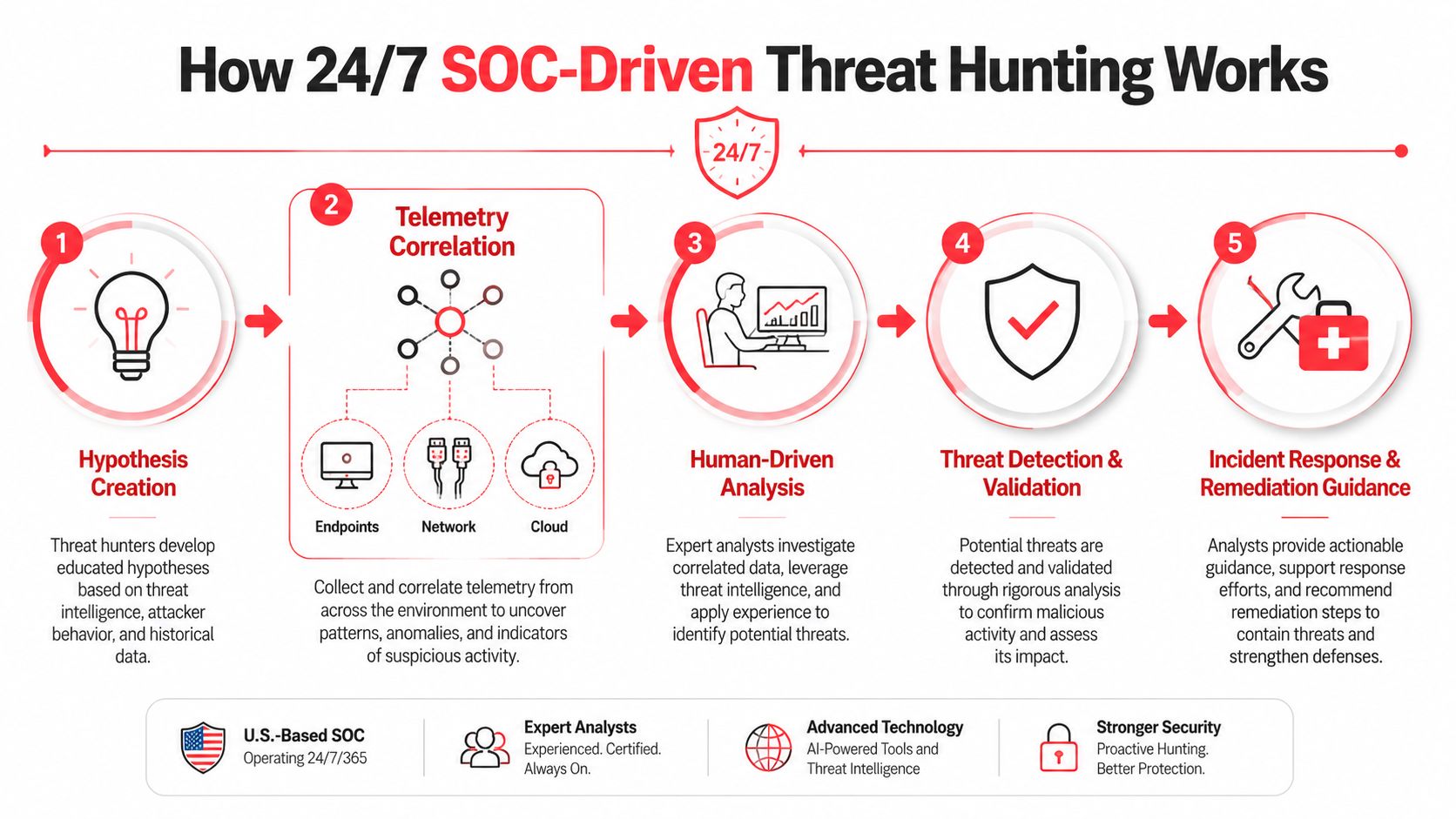
How Does AI Support Proactive Threat Hunting?

AI supports proactive threat hunting by automating the identification of potential vulnerabilities and emerging threat patterns long before they culminate into full-blown attacks. Proactive threat hunting involves actively searching for signs of compromise within network logs, endpoint data, and external threat feeds. AI algorithms sift through terabytes of data to uncover anomalies and subtle indicators that might escape typical security measures.

By continuously monitoring network behavior, AI systems can flag suspicious activities that deviate from established baselines, providing early warnings of potential cyber intrusions. Moreover, advanced machine learning models can predict and recommend specific threat-hunting strategies based on historical trends and external intelligence. For instance, if a similar pattern of attacks was observed in other organizations within the same industry, the AI system can alert security analysts to search for correlated indicators within their own logs. This proactive approach not only bolsters the organization’s defenses but also minimizes the likelihood of breakthrough attacks, ensuring that potential threats are addressed before they cause disruption or data loss.

What Role Does AI-Driven Security Analytics Play in Threat Detection?

AI-driven security analytics plays a pivotal role in threat detection by converting raw security data into actionable insights. These advanced analytics tools integrate machine learning algorithms, statistical analysis, and behavioral modeling to analyze security logs and network traffic data, resulting in a comprehensive picture of an organization’s threat landscape. By harnessing the power of data, AI-driven security analytics enable security teams to identify emerging threats, prioritize security alerts, and allocate resources more effectively.

a sleek, modern office environment displays multiple high-resolution monitors showcasing vibrant visualizations of ai-driven security analytics data, with a professional analyst intently examining the complex threat landscape illuminated by soft, focused lighting.

How Does AI Analyze Security Logs for Anomalies?

AI analyzes security logs for anomalies by applying sophisticated machine learning models that detect deviations from normal operational patterns. These models process large volumes of historical and real-time log data, identifying irregularities that could signal potential cyber incidents. For example, sudden spikes in network traffic or atypical user activity patterns that do not align with standard behavior can trigger alerts for further investigation.

The process involves several stages: data ingestion, normalization, feature extraction, and anomaly detection. During data ingestion, logs from various sources—such as firewalls, intrusion detection systems (IDS), and antivirus software—are consolidated. Normalization transforms disparate data formats into a unified structure, making it easier for machine learning algorithms to analyze. Feature extraction identifies key attributes including IP addresses, timestamps, and user behavior metrics, which are then compared against established baselines. This continuous monitoring and analysis enable organizations to detect even subtle anomalies and initiate timely responses to mitigate risks.

How Does Machine Learning Identify Emerging Threat Patterns?

Machine learning identifies emerging threat patterns by continuously learning from historical attack data and adapting its algorithms to recognize new, previously unseen behaviors. By analyzing patterns across multiple data sources, ML models can detect early indicators of sophisticated attacks such as zero-day exploits, advanced persistent threats (APTs), and insider threats. These models are trained to differentiate between typical network activities and suspicious actions, enabling them to identify subtle deviations that might otherwise go unnoticed.

Furthermore, machine learning models are capable of correlating contextual data from diverse sources such as threat intelligence feeds, social media activity, and dark web alerts. This integrated approach allows the AI to predict potential attack vectors and assign risk levels to identified patterns. For instance, if a particular malware strain is observed spreading in a specific geographic region, the AI system can identify similar patterns within its network logs and preemptively alert the security team. This dynamic process not only improves detection rates but also provides security teams with the actionable insights necessary to implement timely, effective countermeasures.

How Do AI Analytics Help Prioritize Security Alerts?

AI analytics help prioritize security alerts by assigning risk scores to detected anomalies based on their likelihood of being a genuine threat and the potential impact on the organization. By leveraging contextual information such as historical incident data, asset criticality, user behavior, and threat intelligence feeds, AI systems differentiate between low-risk and high-risk alerts. This prioritization ensures that security teams can focus their efforts on the most pressing threats without being overwhelmed by a flood of false positives.

For example, an AI system may score an alert triggered by an external user attempting to access sensitive files during off-hours significantly higher than one caused by a routine update. This risk-based prioritization enables immediate escalation of critical threats while batching less urgent alerts for routine review. Additionally, these systems provide detailed, contextualized reports that assist security analysts in rapidly assessing the severity of each alert, thus optimizing resource allocation and enhancing overall incident response efficiency.

What Are the Challenges and Limitations of Using AI and ML in Cybersecurity?

Despite their numerous benefits, the implementation of AI and ML in cybersecurity is not without challenges. Organizations face hurdles such as data quality issues, the complexity of model training, and the risk of adversaries attempting to manipulate AI systems. The dynamic nature of cyber threats means that AI models must be perpetually updated and fine-tuned to stay ahead of emerging risks. Additionally, the potential for false negatives and overreliance on automated systems raises concerns about missed threats and reduced human oversight.

What Are Common AI Limitations in Threat Detection?

Common limitations include the risk of overfitting, data bias, and the difficulty in interpreting complex machine learning models. Overfitting occurs when a model is excessively tailored to historical datasets and fails to generalize to new, unseen threats. Data bias may result from imbalanced datasets, leading to skewed predictions that either overestimate or underestimate risk. Moreover, the inherent complexity of deep learning models can make it challenging for security teams to understand the decision-making process. This “black box” issue sometimes hinders the ability to validate detected threats, potentially leaving gaps in the defense strategy.

Furthermore, AI-driven systems require substantial computational resources and continuous access to quality data, which can be particularly challenging for SMBs with limited IT budgets. The need for regular updates, retraining, and expert oversight to maintain efficacy also poses scalability issues. In practical scenarios, these limitations can reduce overall responsiveness and create blind spots in threat detection that need to be addressed through a balanced combination of automation and expert human intervention.

How Can False Negatives Impact AI-Based Security?

False negatives—where real threats go undetected—pose significant risks because they can allow cyberattacks to progress unnoticed until substantial damage has occurred. Even a highly accurate AI system with a low false positive rate can miss certain threats if its training data does not encompass the full spectrum of potential attack vectors. In such cases, low false negatives may lead to overconfidence in the system, with human analysts possibly neglecting to perform additional verifications. The impact of false negatives is particularly severe in critical environments, where even a single undetected breach can result in major financial losses, compromised data integrity, or damage to an organization’s reputation.

To mitigate these risks, a layered security approach that integrates AI with traditional threat detection methods and human expertise is crucial. Regular audits, system recalibrations, and comprehensive incident response protocols must be implemented to compensate for potential AI shortcomings. Ultimately, addressing false negatives requires continuous refinement of machine learning models, robust data quality assurance, and a harmonious balance between automated systems and manual oversight.

What Are Ethical and Privacy Concerns With AI in Cybersecurity?

Ethical and privacy concerns arise when AI systems handle sensitive personal and organizational data, often resulting in debates around surveillance, data usage, and consent. The deployment of AI in cybersecurity frequently involves extensive monitoring of user behavior, which can raise questions about privacy infringement and the extent of permissible surveillance under data protection laws. There is also the challenge of ensuring that AI algorithms do not inadvertently discriminate against certain groups due to biased training data. Furthermore, legal frameworks and regulatory requirements may not keep pace with the rapid evolution of AI technologies, leading to uncertainties about accountability and ethical standards. These concerns necessitate stringent data governance policies, transparent algorithmic auditing, and adherence to international privacy standards to ensure that AI is used responsibly and ethically within the realm of cybersecurity.

How Can Organizations Implement AI and ML for Effective Threat Detection and Response?

For organizations to leverage the full potential of AI and ML in cybersecurity, a methodical implementation strategy is essential. This involves not only deploying advanced tools but also adapting security processes and training teams to handle an AI-driven environment. Effective adoption of these technologies requires careful integration with existing security infrastructure, as well as continuous monitoring and evaluation to ensure that AI tools remain effective against evolving threats.

a modern, high-tech cybersecurity operations center buzzes with activity, featuring multiple screens displaying ai analytics and threat detection graphs, while focused professionals collaborate in a sleek, dimly lit environment.

What Are Best Practices for Integrating AI Cybersecurity Tools?

Best practices include ensuring that AI cybersecurity tools are integrated seamlessly with existing security information and event management (SIEM) systems, and that the data flowing into AI models is comprehensive and free of biases. Organizations should prioritize a phased implementation, starting with pilot projects to evaluate performance, followed by iterative refinements based on real-world feedback. Regular training sessions for security teams and establishing clear protocols for manual intervention when anomalies are detected further enhance the effectiveness of these tools. It is also important to incorporate a layered defense strategy that uses AI alongside traditional methods, so that weaknesses in automated systems can be offset by human expertise. Continuous audits, performance metrics, and incident reviews also help optimize the integration process, ensuring that the AI-driven solutions adapt effectively to changing threat landscapes.

How Should Security Teams Adapt to AI-Driven Workflows?

Security teams must adapt by acquiring new skills in data analysis, machine learning, and algorithmic problem-solving. This includes updating organizational policies and training personnel to oversee AI-powered systems while maintaining a strong human-in-the-loop for critical decision-making. Collaboration between IT, cybersecurity experts, and data scientists is essential to interpret AI outputs accurately and address unexpected anomalies. Furthermore, fostering a culture of continual learning and adaptation enables teams to respond dynamically to evolving threats. By integrating AI-driven tools into their workflows, security teams can automate routine tasks and focus on strategic threat management while ensuring that human oversight remains a crucial part of the cybersecurity process.

What Training Is Needed for AI-Powered Security Platforms?

Training should focus on familiarizing security teams with machine learning concepts, understanding the functionalities of specific AI tools, and learning how to interpret analytics outputs effectively. Hands-on training sessions, simulation exercises, and ongoing professional development opportunities are essential to maintain proficiency in managing AI-driven cybersecurity systems. Additionally, training programs should address ethical considerations, data privacy issues, and best practices for incident response within an AI-enhanced environment. Equipping security teams with these skills not only improves their technical proficiency but also enables them to better collaborate with data scientists and developers to continuously optimize AI systems. This comprehensive training ensures that the organization remains capable of responding swiftly to threats and leveraging cutting-edge technologies to protect its digital assets.

The future of AI and ML in cybersecurity looks promising, with continuous advancements anticipated to further refine threat detection, incident response, and overall cyber resilience. Emerging trends include the development of more sophisticated predictive analytics, the integration of quantum computing with AI models, and the increasing convergence of cybersecurity with other emerging technologies such as the Internet of Things (IoT) and 5G. These trends are expected to lead to faster, more accurate threat identification and a more proactive defensive posture.

How Will AI Evolve to Counter Advanced Cyber Threats?

AI will evolve by incorporating more complex algorithms and larger, more diverse datasets that allow models to better predict and counter advanced cyber threats. Future AI systems are expected to use federated learning models that consolidate data from various organizations without compromising privacy, providing a broader perspective on emerging attack vectors. This evolution will enable AI to spot nuanced patterns and subtle indicators of compromise that traditional systems might miss. Additionally, advances in natural language processing (NLP) and deep learning will allow AI systems to better understand and contextualize threat intelligence, providing more robust and adaptive defenses against complex and rapidly changing cyberattacks.

What Emerging Technologies Complement AI in Cybersecurity?

Emerging technologies such as blockchain, quantum cryptography, and advanced behavioral biometrics are set to complement AI in cybersecurity. Blockchain, with its decentralized and tamper-proof nature, can enhance data integrity and secure information exchange between entities. Quantum cryptography promises to deliver robust encryption methods that will be essential as computing power continues to grow. Meanwhile, advanced behavioral biometrics provides additional layers of security by continuously authenticating users based on their unique interaction patterns. When partnered with AI, these technologies can form an integrated, multi-layered security framework that significantly raises the barrier against cyber intrusions, ensuring more comprehensive protection for organizations.

How Will AI Impact the Role of Human Analysts?

AI is expected to transform the role of human analysts by shifting their focus from routine monitoring to strategic decision-making and threat analysis. Instead of manually sifting through countless alerts, human analysts will increasingly concentrate on complex cases that require contextual understanding and judgment. AI’s ability to automate data collection and analysis frees up resources, enabling security teams to dedicate more time to refining defensive strategies and conducting proactive threat hunting. As a result, the relationship between AI and human analysts will evolve into a synergistic partnership, where AI handles the heavy computational tasks and human expertise guides the overall security posture. This dynamic collaboration not only enhances efficiency but also improves the accuracy of threat detection and the sophistication of incident responses.

Frequently Asked Questions

Q: How does AI improve overall threat detection in cybersecurity? A: AI improves threat detection by processing vast amounts of data in real-time and identifying anomalies using machine learning algorithms. It learns from historical incidents, reduces false positives, and prioritizes high-risk alerts, enabling faster response and better mitigation of emerging cyber threats. This proactive analysis is critical for minimizing the damage from advanced attacks.

Q: What are the key machine learning techniques used in AI-driven threat detection? A: The primary techniques include supervised learning, unsupervised learning, and reinforcement learning. Supervised learning relies on labeled data to detect known threats, while unsupervised learning uncovers unknown patterns through clustering. Reinforcement learning adapts to new threats by continuously updating its strategies based on feedback, ensuring a dynamic defense against evolving cyber risks.

Q: How do automated incident response workflows enhance cybersecurity operations? A: Automated incident response workflows enable rapid containment and remediation of cyber incidents by executing predefined actions based on real-time data analysis. These systems isolate affected endpoints, block malicious activities, and generate alerts for security teams, reducing response times dramatically. This automation not only decreases system downtime and damage but also frees up valuable resources for strategic threat management.

Q: What challenges do organizations face when implementing AI in cybersecurity? A: Organizations often encounter challenges such as data quality issues, model overfitting, and the “black box” problem where AI decisions lack transparency. There are also concerns regarding false negatives and ethical implications related to privacy and surveillance. Addressing these challenges requires continuous model training, robust data governance, human oversight, and integrating AI as part of a comprehensive, multi-layered security strategy.

Q: What future trends can we expect in AI and ML for cybersecurity? A: Future trends include the use of more sophisticated predictive analytics, integration with emerging technologies like blockchain and quantum cryptography, and advancements in behavioral biometrics. These innovations will further enhance the speed, accuracy, and resilience of cybersecurity measures, transforming the role of human analysts and leading to more proactive and adaptive security systems that can counter increasingly complex cyber threats.

Q: How should security teams prepare for integrating AI-powered tools? A: Security teams should invest in training programs that enhance their understanding of AI and machine learning concepts and familiarize them with the new tools. Establishing strong collaborative processes between IT, cybersecurity experts, and data scientists is essential. Adopting a phased implementation strategy, combined with continuous monitoring and regular audits of AI system performance, will help ensure a smooth transition and maximize the benefits of an AI-driven approach.

Q: In what ways can AI analytics prioritize security alerts to improve response times? A: AI analytics prioritize alerts by evaluating the risk level of identified threats based on contextual data, historical incident patterns, and real-time behavior analysis. This risk scoring system allows security teams to focus on high-priority alerts and reduces the overload of false positives. By providing detailed context and actionable insights, AI-driven prioritization significantly enhances response times and improves overall incident management efficiency.

Table: AI-Driven Cybersecurity Features and Their Benefits

FeatureFunctionBenefitExample/Metric
Real-Time MonitoringContinuous data analysisEarly threat detection; near-instant alertsReduces response times by 50%
Anomaly DetectionIdentifies deviations from normal activityDetects unknown threats and zero-day attacksImproves detection accuracy by 35%
Automated Incident ResponseExecutes predefined containment measuresMinimizes damage and reduces system downtimeIncident response in minutes
Risk-Based Alert PrioritizationAssigns risk scores to alertsFocuses attention on high-priority threatsReduces false positives by 40%
Threat Intelligence IntegrationCorrelates internal data with global trendsEnhances predictive analysis and proactive defenseDetects emerging threat patterns
Adaptive Machine LearningContinuously updates detection modelsImproves accuracy and minimizes false negativesOngoing model improvement
Automated Compliance ReportingGenerates detailed incident reportsStreamlines audits and ensures regulatory complianceAutomated report generation

Before implementing AI-driven cybersecurity, organizations should evaluate these features based on their specific needs and regulatory requirements, ensuring that the chosen strategies align with overall risk management goals. The table above provides an overview of essential AI capabilities and the tangible benefits they offer, emphasizing the critical role of data-driven security mechanisms in protecting modern digital infrastructures.

List: Best Practices for Integrating AI Cybersecurity Tools

  1. Assess Data Quality – Ensure high-quality, unbiased datasets: Prioritize comprehensive and regular data collection to support effective machine learning model training. High-quality data reduces misdetections and ensures accurate threat analysis by AI systems.
  2. Conduct Pilot Implementations – Start with small-scale tests: Deploy AI cybersecurity tools on a limited basis to evaluate performance, tune algorithms, and gather feedback before organization-wide adoption.
  3. Integrate with Existing Systems – Ensure seamless compatibility: AI tools must work cohesively with existing SIEM, IDS, and other cyber defense systems to maximize real-time detection and response capabilities.
  4. Establish Clear Workflows – Define incident response protocols: Create structured processes that allow AI-driven automated responses to be complemented by human oversight, ensuring that critical threats are managed effectively.
  5. Invest in Training – Build expert capabilities: Train security teams in AI, machine learning, and data analysis to foster effective management of new tools and to aid in continuously refining detection models.
  6. Monitor Performance Regularly – Use ongoing audits and updates: Continuously assess the accuracy, false-positive/negative rates, and overall impact of AI systems, adjusting algorithms as needed to maintain optimal performance.
  7. Foster Collaboration – Encourage cross-functional teams: Enable cooperation among IT staff, data scientists, and cybersecurity experts for holistic threat management and to ensure seamless integration of AI tools into broader security strategies.

By following these best practices, organizations can harness the power of AI while addressing potential challenges and ensuring sustained improvements in their threat detection and incident response processes.

By embracing AI and ML technologies, businesses can transform their cybersecurity operations from reactive to proactive, enabling faster, more precise threat detection and response. Integrating these tools into existing security frameworks empowers organizations to reduce human workload, lower the risk of cyber breaches, and maintain a robust security posture. Through continuous learning, adaptive responses, and predictive analytics, AI-driven systems provide a dynamic and resilient defense that evolves alongside emerging threats, ensuring that organizations stay ahead in the rapidly changing cyber landscape.

Navigating the Choice of IT Managed Services Firms


6 Key Considerations for Partnering with a Managed IT Services Provider – A Comprehensive Guide for Small Business Owners

Managed IT services are critical for small and mid businesses that need to ensure uninterrupted productivity, robust security, and a flexible, scalable technology infrastructure. Having a reliable provider enables companies to focus on their core operations while experts handle hardware and software challenges. In today’s competitive market, managed service providers (MSPs) like Cyber Command offer comprehensive support such as endpoint security, cloud infrastructure management, vulnerability management, and rapid problem resolution. In this article, I outline six key factors that small business owners must evaluate when choosing a managed IT services partner. By understanding these parameters, you will be better positioned to invest in technology resources that drive your business forward and enhance your operational efficiency.

Cyber Command provides IT support throughout Orlando, Winter Park, Altamonte Springs, Winter Springs, and surrounding areas. Their expert team excels in on-site support, continuous monitoring, and providing technology solutions tailored to your business needs. As a small business owner, partnering with a knowledgeable and experienced MSP not only safeguards your digital infrastructure against threats like ransomware, phishing, and data breaches but also ensures seamless productivity through minimized downtime and efficient workflow management.

In this guide, I cover the following considerations: 1. Understand Your Business Requirements and IT Objectives 2. Evaluate a Provider’s Industry Expertise and Experience 3. Examine the Range of Offered Managed Service Capabilities 4. Measure the Quality of Customer Support and Communication 5. Assess Provider Scalability and Future-Proofing Strategies 6. Analyze Pricing Models and Long-Term Partnership Value

Each of these points is discussed in detail below, with supporting data, real-world examples, and a table summarizing key benefits. This comprehensive checklist not only helps you make an informed decision when contracting IT services but also highlights why Cyber Command stands out as a top-tier partner in the region.

1. What Are Your Business Requirements and IT Objectives?

a dynamic office environment featuring it professionals engaged in a collaborative discussion around a sleek conference table, with visible digital maps of network architecture and servers displayed on high-definition screens, emphasizing the strategic alignment of business requirements with advanced technology solutions.

The first step in selecting a managed IT services provider is to clearly define your business requirements and IT objectives. In the fast-paced digital landscape, understanding your unique needs is crucial for aligning technology strategies with business goals.

Direct Answer: Establishing clear business requirements and IT objectives ensures that your provider can deliver the technical solutions necessary for your company’s growth and operational efficiency.

Small businesses have distinct IT landscapes that depend on factors like the number of workstations, the complexity of software applications, and security requirements. For instance, your organization may need a robust voice over IP system that integrates with secure managed IT services to streamline internal and external communications. Additionally, if your business handles sensitive customer data, your IT objectives must include strong computer security measures such as managed firewall services, endpoint protection, and vulnerability management.

To better assess your requirements, consider the following factors: – Core Operations: Identify mission-critical applications and the technologies essential for daily operations. – Regulatory Compliance: Ensure the provider’s services meet compliance standards such as HIPAA, GDPR, or industry-specific regulations. – Scalability Needs: Evaluate current operational capacity and forecast future growth, taking into account potential increases in data volume and user count. – Risk Management: Determine what security measures are necessary for data protection and minimization of downtime.

A clear roadmap that identifies these requirements prepares you to have strategic discussions with potential MSPs. Moreover, having defined IT objectives—whether it’s increasing system uptime by 99.9% or reducing help desk response times by 50%—allows you to measure performance improvements after the contract is in place.

2. How Can You Evaluate a Provider’s Industry Expertise and Experience?

a dynamic office environment showcasing it professionals collaborating around sleek servers and multiple monitors, highlighting the expertise and innovative solutions offered by a managed it service provider.

Understanding the provider’s industry expertise and track record is critical in acquiring reliable managed IT services. Competitive providers back their services with years of experience, technical certifications, and client testimonials that prove their capability to handle complex IT challenges.

Direct Answer: Evaluating a provider’s industry expertise and experience gives you confidence that they can understand your needs and deliver the technical solutions necessary to enhance your operational capabilities.

When analyzing an MSP’s experience, look for: – Certifications and Partnerships: Providers with certifications from major IT vendors like Microsoft, Cisco, and Microsoft Azure demonstrate their technical proficiency and commitment to best practices. – Case Studies and Testimonials: Real stories from comparable small businesses, including metrics such as reduction in downtime or improvements in network speed, provide tangible evidence of success. – Specialization Areas: Whether it’s managed security services, cloud computing, or unified communications, ensure the provider has specialized experience that aligns with your operational needs. – Reputation and Reviews: Look for unbiased industry reviews and third-party assessments (such as from venturebeat or industry-specific publications). Positive reviews indicate a solid reputation.

Cyber Command, for example, has built a strong client base through its consistent delivery of reliable IT support and innovative managed service solutions. Their extensive experience in serving diverse small business sectors ensures their solutions are backed by both technical expertise and tailored strategies. With a proven record of minimizing risk factors and managing complex IT infrastructures, a provider experienced like Cyber Command can help you mitigate cybersecurity threats while enhancing your overall productivity.

3. What Is the Range of Offered Managed Service Capabilities?

a dynamic office environment features it professionals collaborating around high-tech servers and data screens, illustrating the comprehensive range of managed service capabilities in action for streamlined cybersecurity, network management, and cloud solutions.

It is important to interpret the comprehensive range of managed service capabilities, as this directly impacts how well a provider can handle your entire IT landscape. Managed service capabilities can include network monitoring, backup and disaster recovery, endpoint security, cloud computing support, and unified communications.

Direct Answer: A provider’s range of offered managed service capabilities determines its ability to manage and support your complete IT environment under one roof, ensuring streamlined operations and centralized control.

Key service areas to evaluate include: – Network and Infrastructure Management: Continuous monitoring, proactive maintenance, and rapid incident response are essential for minimizing downtime and ensuring the smooth operation of your IT environment. – Cybersecurity Services: Managed security services address threats such as malware, ransomware, phishing, vulnerability management, and risk assessment. Providers should offer advanced features like encryption, firewall management, and intrusion detection. – Cloud and Remote Work Solutions: As remote work becomes increasingly prevalent, your MSP must support cloud-based solutions, remote desktop services, and secure virtual private networks (VPNs). – Unified Communications and Collaboration Tools: Integration of voice over IP, video conferencing, and collaboration software ensures streamlined communication across your teams. – Backup, Recovery, and Data Management: Ensuring reliable data backup, disaster recovery planning, and easy retrieval processes minimizes business disruptions during unexpected events.

To illustrate how these service capabilities translate into business value, consider the following table that summarizes the key areas and benefits:

Service AreaKey FunctionsBusiness BenefitExample Metric or Outcome
Network & Infrastructure ManagementReal-time monitoring; proactive maintenanceReduced downtime and improved productivity99.9% system uptime target
CybersecurityManaged firewall; antivirus; threat detectionEnhanced data protection and compliance50% reduction in successful cyberattacks
Cloud & Remote Work SolutionsVPN support; cloud resource managementImproved flexibility and remote workforce efficiency30% increase in remote access performance
Unified CommunicationsVoIP systems; collaboration toolsStreamlined internal and external communication25% faster information sharing
Backup & RecoveryAutomated backups; disaster recovery planningEnsured data integrity and business continuityRecovery Point Objective (RPO) of under 1 hour

This table demonstrates not only product features but also the quantitative business advantages that come from a provider with a broad array of managed service capabilities. By ensuring that your MSP covers all these essential areas, you guarantee a holistic and integrated approach to IT management, helping your business remain agile and secure.

4. How Do You Measure the Quality of Customer Support and Communication?

a dynamic, modern office space showcases a diverse team of it professionals engaged in collaboration around sophisticated servers, emphasizing effective communication and swift problem-solving to optimize customer support quality.

Quality customer support and effective communication are the cornerstones of any successful managed IT services partnership. Rapid, reliable support minimizes operational risks and helps resolve issues before they escalate into significant disruptions.

Direct Answer: Measuring the quality of customer support and communication ensures that you receive prompt, professional assistance that meets your operational and strategic needs without delay.

When assessing customer support quality, consider the following factors: – Response Time: Evaluate typical response times for service requests and emergency issues. A provider should have a dedicated help desk with a guaranteed response SLA (Service Level Agreement) that aims for critical issue responses within one hour. – Technical Expertise: Ensure support teams are highly skilled and capable of resolving complex IT issues, from simple hardware glitches to advanced cybersecurity breaches. – Availability: Round-the-clock support is essential for businesses operating beyond standard office hours or across multiple time zones. Look for providers that offer 24/7 help desk services. – Communication Clarity: Effective communication should be clear, concise, and free of technical jargon that could confuse non-IT personnel. Regular updates, progress reports, and proactive communication are vital to maintaining transparency. – Feedback and Reviews: Customer testimonials and performance reviews often reveal real-world support quality. Look for case studies where support interventions significantly reduced downtime or improved user satisfaction.

Cyber Command, for example, prides itself on its responsive, friendly, and technically proficient customer support team. With rapid escalation procedures and a commitment to clear communication and regular reporting, they ensure that IT issues are addressed swiftly, which directly contributes to minimizing business disruptions and maximizing productivity.

5. How Can You Assess Provider Scalability and Future-Proofing Strategies?

a modern office space filled with diverse it professionals collaboratively assessing a digital dashboard showcasing scalable infrastructure solutions and future-proofing strategies, illuminated by dynamic ambient lighting.

Scalability and future-proofing are essential when choosing a managed IT services provider, as they determine the provider’s ability to support your company’s growth while keeping up with technological innovations. Small businesses that experience growth need an MSP that can easily scale its support, infrastructure, and security services accordingly.

Direct Answer: Assessing a provider’s scalability and future-proofing strategies confirms that they have the capabilities to adapt to evolving business demands and technological advancements, protecting your investment over time.

Key elements to evaluate for scalability include: – Flexible Service Models: A provider should offer both fixed and scalable service options, adapting to changes such as increased user count, higher data volumes, or new application requirements. – Technology Roadmap: Future-proofing strategies should include regular updates, infrastructure modernization plans, and emerging technology adoption (such as the integration of cloud computing and IoT devices). – Investment in Innovation: Evaluate whether the provider invests in continuous staff training, emerging technologies, and research and development. A commitment to innovation indicates readiness to support evolving challenges like advanced cyber threats and digital transformation initiatives. – Modular Solutions: Scalable solutions often feature modular design, meaning you can easily add or remove services as needed. This is particularly important for businesses with fluctuating IT demands. – Case Study Evidence: Look for documented success stories where the provider has scaled services for growing clients or adapted to new technology requirements without compromising service quality.

For instance, Cyber Command’s approach includes a dynamic infrastructure that supports seamless migration to cloud environments, integration with advanced cybersecurity tools, and continuous service improvement protocols. Their scalable service model means that when your business grows—from adding new employees to launching additional locations—their IT support seamlessly expands with you.

6. How Do You Analyze Pricing Models and Long-Term Partnership Value?

in a modern office environment, a diverse team of it professionals collaborates around sleek computer workstations, analyzing data on large screens while discussing competitive pricing models and long-term partnership strategies, accentuated by ambient lighting that highlights their focused expressions.

Price is a key consideration, but it should be evaluated alongside the overall value and long-term benefits of partnering with a managed IT services provider. An affordable pricing model that does not compromise quality or scalability is ideal, especially for small businesses that must maximize every dollar.

Direct Answer: Analyzing pricing models and long-term partnership value enables you to determine the true cost-effectiveness of an MSP, ensuring that your investment generates high returns in terms of efficiency, reduced downtime, and improved productivity.

Important pricing considerations include: – Transparent Fee Structures: Ensure fees are clearly outlined, with no hidden costs. Providers often offer flexible pricing options including monthly subscriptions, pay-per-incident, or comprehensive service bundles. – Return on Investment (ROI): Evaluate how the managed IT services will reduce risks such as downtime, data breaches, and inefficient workflows, which in turn minimizes losses and improves overall profitability. – Value-Added Services: Consider extra benefits such as proactive system monitoring, cybersecurity enhancements, quality help desk support, and regular performance audits. These add-ons can greatly increase the overall service value. – Contract Terms: Look into the contract duration, cancellation policies, and terms for future service upgrades. Long-term partnerships should come with performance guarantees and regular reviews to align with evolving business needs. – Customization: A provider who can tailor their services to your unique operational requirements offers greater long-term value than a one-size-fits-all solution.

Cyber Command distinguishes itself by offering competitive, transparent pricing that is based on your specific IT needs. Their service contracts are designed to ensure long-term partnership value with regular performance reviews, scalable add-on options, and a focus on continuous improvement. When you evaluate pricing information against potential cost savings from avoiding downtime and costly security breaches, you will find a compelling return on investment.

Table: Comparison of Key Managed IT Service Factors

a modern office environment showcases a diverse team of it professionals collaborating around a sleek conference table, analyzing a digital screen displaying key metrics and outcomes from managed it services, with sophisticated servers in the background to emphasize technology and teamwork.

Before proceeding further, consider the following summary table that compares the key factors in choosing a managed IT services provider:

CriterionKey ConsiderationsSample Metrics / OutcomesBusiness Impact
Business Requirements & IT ObjectivesCore operations, risk management, compliance99.9% uptime, 50% reduction in cyberattacksStreamlined processes, increased productivity
Industry Expertise & ExperienceCertifications, testimonials, case studies10+ years experience, vendor certificationsConfidence in technical capability
Range of Service CapabilitiesNetwork management, cybersecurity, cloud support24/7 monitoring, immediate incident responseHolistic IT infrastructure support
Customer Support & Communication QualitySLA response times, round‑the‑clock help deskResponse within 1 hour, clear updatesReduced downtime, quick problem resolution
Scalability & Future-Proofing StrategiesFlexible models, innovation, modular solutionsSeamless growth support, future technology integrationLong-term growth alignment and adaptability
Pricing Models & Partnership ValueTransparent fees, ROI, value‑added servicesCompetitive pricing, measurable ROI benchmarksCost-efficiency and enhanced service quality

Before you sign any agreement, review this table and ensure that your prospective MSP meets or exceeds these standards. An investment in the right managed IT services partner can ultimately lead to lower overhead costs, fewer security incidents, and a more resilient and agile business.

Frequently Asked Questions

a dynamic office setting showcases a diverse team of it professionals collaborating around a large server rack, analyzing data on sleek digital displays, with a bright, modern workspace emphasizing innovation and teamwork amidst advanced technology.

Q: What are the primary benefits of using managed IT services? A: Managed IT services improve system reliability, streamline operations, enhance cybersecurity, and provide scalable support. They allow small businesses to focus on growth while experts manage their IT infrastructure and resolve complex technical challenges.

Q: How does Cyber Command ensure rapid problem resolution? A: Cyber Command offers 24/7 support with guaranteed response time SLAs, experienced on-site and remote technicians, and proactive monitoring to address issues before they impact your business. Their clear communication protocols and fast escalation procedures minimize downtime.

Q: Can a managed IT services provider support my company’s growth? A: Yes, providers like Cyber Command offer scalable solutions with modular service options that can easily adapt to increased technology demands as your business expands. Their future-proofing strategies, including investment in emerging technologies, ensure long-term alignment with your business objectives.

Q: How do managed IT services help improve cybersecurity? A: Managed IT services include comprehensive cybersecurity measures such as managed firewall, intrusion detection, antivirus, and regular vulnerability assessments. This multi-layered approach protects your system from cyberattacks, reduces the risk of data breaches, and ensures compliance with industry regulations.

Q: What guarantees should I look for in an MSP contract? A: Look for performance guarantees such as defined SLAs for issue resolution, transparent fee structures, and regular performance reviews. Contracts should also include option for scalable services, clear cancellation policies, and measurable KPIs to ensure the provider meets your business objectives.

Q: How important is customer support in choosing an MSP? A: Customer support is critical since rapid resolution of IT issues minimizes downtime. A provider with 24/7 help desk support, experienced technical staff, and clear communication protocols offers significant advantages over those with limited support availability.

Key Takeaways

a dynamic office setting showcases it professionals engaged in collaborative discussions around advanced server technology, emphasizing strategic planning for scalable solutions and 24/7 support systems.
  • Define Needs Clearly: Establish your business requirements and IT objectives to align technology strategies with your growth plans.
  • Evaluate Experience: Trusted providers with industry certifications, strong case studies, and a proven track record are essential for reliable service.
  • Comprehensive Capabilities: Ensure your MSP supports network management, cybersecurity, cloud-based solutions, and unified communications for holistic IT support.
  • Quality Support: Prompt, 24/7 customer support and clear communication are critical to minimizing downtime and maximizing productivity.
  • Scalability & Value: Choose a provider with scalable service models, transparent pricing, and robust long-term partnership benefits.

Final Thoughts

a modern office environment showcases a diverse team of it professionals collaborating over sleek laptops and advanced servers, reflecting strategic decision-making and proactive technology management for small businesses.

Choosing a managed IT services provider is a strategic decision that can shape the future of your small business’s IT infrastructure. By focusing on clear business requirements, evaluating industry expertise, examining service capabilities, ensuring top-notch support, assessing scalability, and analyzing pricing models, you can secure a partner that truly adds value. Cyber Command exemplifies these qualities by delivering reliable, scalable, and transparent IT solutions tailored to the needs of small businesses in the Orlando region. With a proactive approach to technology management, you elevate your operations, mitigate risks, and stay ahead in today’s competitive landscape.